Even a 90% Ultra-Processed Diet Can Still Be Healthy
The label describes how food is made, not whether it will harm you.
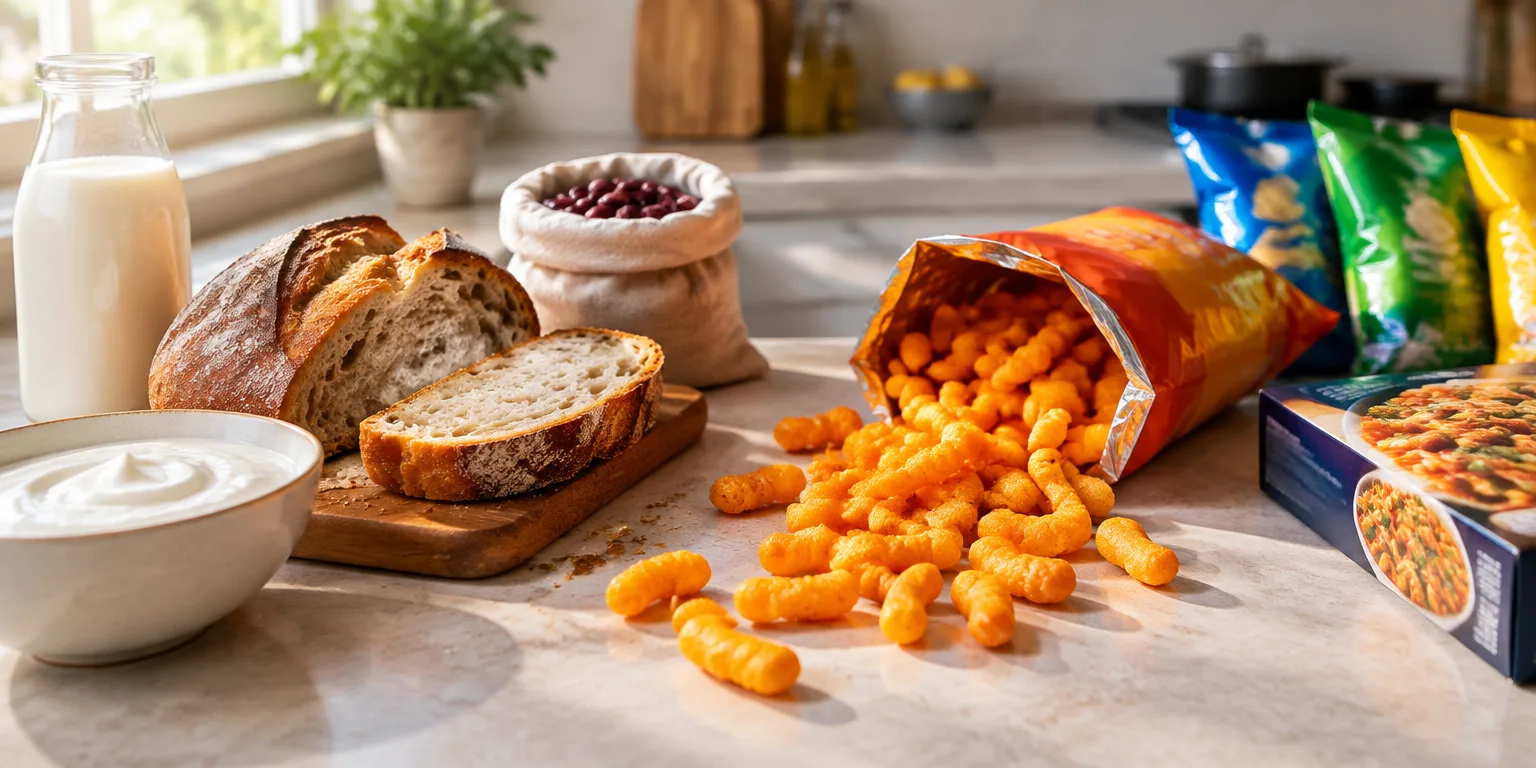
 Kurzgesagt – In a Nutshell · Processed Food Won’t Kill You
You can get 90% of your calories from ultra-processed food and still meet healthy eating guidelines.
Processed simply means changed, like milk turned into yogurt or grain baked into bread. The extra prefix kicks in when manufacturers add ingredients you would not normally keep in your own kitchen, such as artificial colors or flavorings.
That label describes how food is made, not whether it is dangerous. Many preservatives are there to prevent food poisoning, with preservatives such as benzoic acid holding off mold and sodium nitrite holding off certain dangerous bacteria.
The catch is not toxicity but appetite. Even when each preservative and manufacturing step looks safe by itself, the combination can add up to food that makes people eat more than they meant to. Ultra-processed does not automatically mean unhealthy, but it can mean hard to stop.
Questions people ask
What does it mean to meet healthy eating guidelines?
In the United States, the Dietary Guidelines focus on nutrient needs, with enough fiber, vitamins, and minerals, and limits on added sugars, salt, and saturated fat. A diet is judged by that overall pattern, so fortified bread, canned beans, flavored yogurt, and frozen meals can fit if the totals land in the right ranges.
If a 90% ultra-processed diet can be healthy, why is ultra-processed food linked to disease?
The link likely comes from eating too many calories too fast, not from one toxic ingredient. Population studies tie heavy ultra-processed diets to obesity and other health problems. A carefully planned ultra-processed diet can check the nutrition boxes, while a typical one encourages extra bites and extra calories.
What makes ultra-processed food so easy to overeat?
Researchers point to combinations of soft textures, intense flavors, added sugars and fats, and large, ready to eat portions. Those traits can make food go down fast, delay fullness, and invite another bite before the body signals that it has had enough.