Even a Regular Ticket at Disney Tracks You
Your wristband checks in all day, logging rides, purchases, and companions.
 Proton · How Theme Parks Spy on You
The plastic band that opens your hotel door and pays for your ice cream is also talking about you all day.
Disney's MagicBand is built for convenience. Matt Roseboom of Attractions Magazine says convenience is the main draw. The band works as a ticket, hotel key, and wallet for cashless payments.
It does that by constantly checking in with sensors hidden around the park. The band exchanges short radio signals with listening posts tucked into rides, stores, hotels, and restaurants. RFID is a tiny radio chip that identifies you to a nearby reader. Bluetooth beacons are small wireless sensors that notice when your band passes.
Each check-in adds to a running record of location, rides, purchases, and companions. On It's a Small World, names appeared on screens at the ride's end, showing the system could link a band to a guest's name.
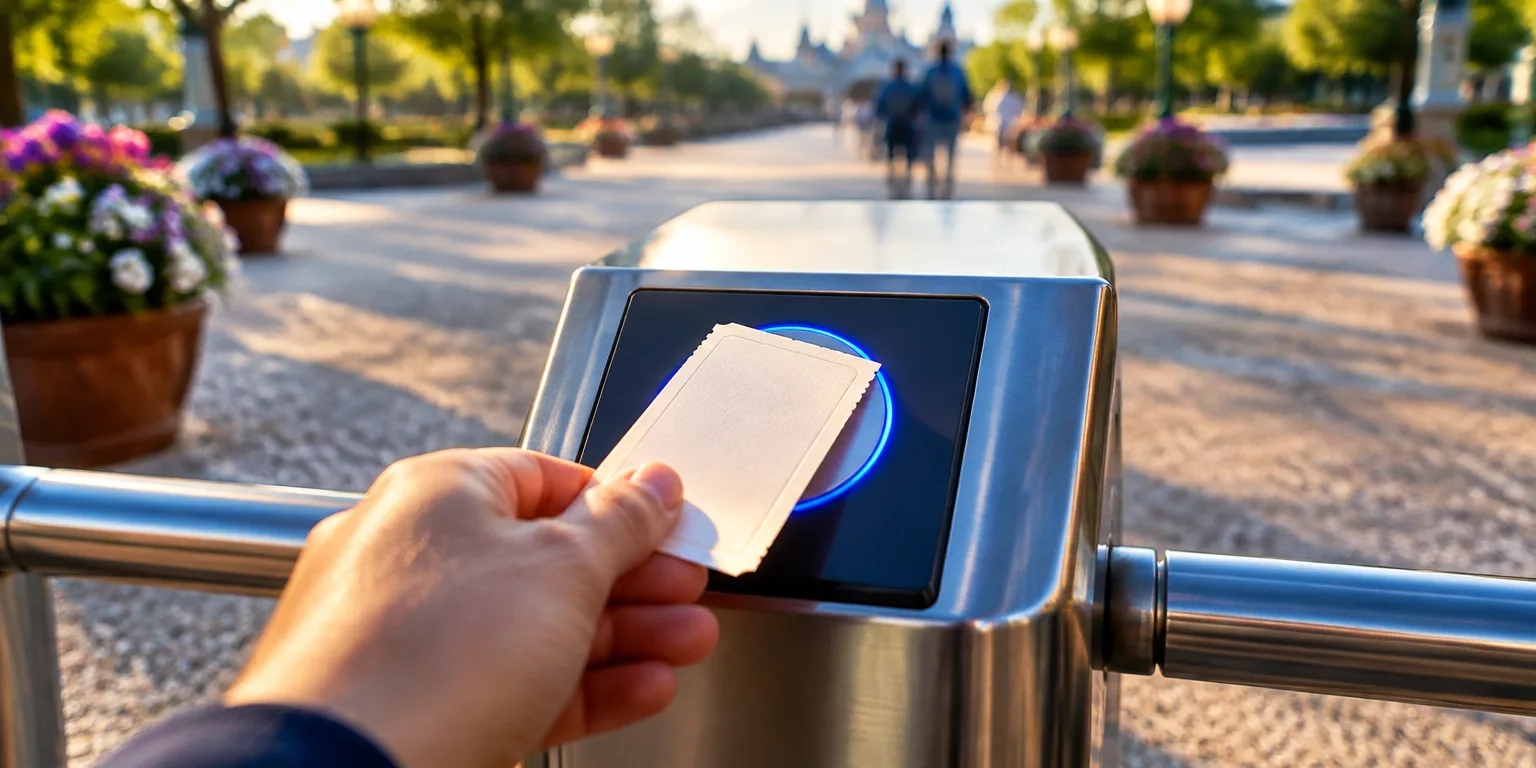
Skipping the wristband does not stop the logging. If you use a regular ticket at a major park like Disney World, that ticket still holds an RFID chip linked to your profile.
The same signal that lets you breeze through the gate also tells the park where you went and who came along. X-Connect sells an AI dashboard that shows guest locations and Lightning Lane use. A park could post a short wait for a far-corner ride to nudge crowds there, though this is speculation.
Questions people ask
What exactly is RFID?
RFID stands for radio frequency identification. A tiny chip with an antenna broadcasts a short ID number when a nearby reader powers it up, so no battery or screen is needed. In a park, that number is matched to your ticket profile, which is how a tap opens a gate or pays for food.
Can I visit a major park without being tracked this way?
Not completely if you use their ticket media. You can leave the MagicBand at home, but the standard ticket still contains an RFID chip tied to your name. Visitors who want less tracking often minimize app use, pay in ways not linked to their profile, and accept longer lines for regular entry.
Why do parks care where I walk?
Crowd flow decides everything from staffing to food sales. Knowing the paths guests actually take, and which rides and lanes they use, helps operators staff rides, place shops, and spread out lines. The same data could also be used to steer guests by advertising short waits where managers want people to go.