Even Brushing Your Teeth Is Hard in Space
In a 10-minute call from orbit, astronaut Joshua Kutryk told Scottish schoolchildren why coffee disappoints and the first days feel like carsickness.
 Global News Podcast · US military execution to be livestreamed
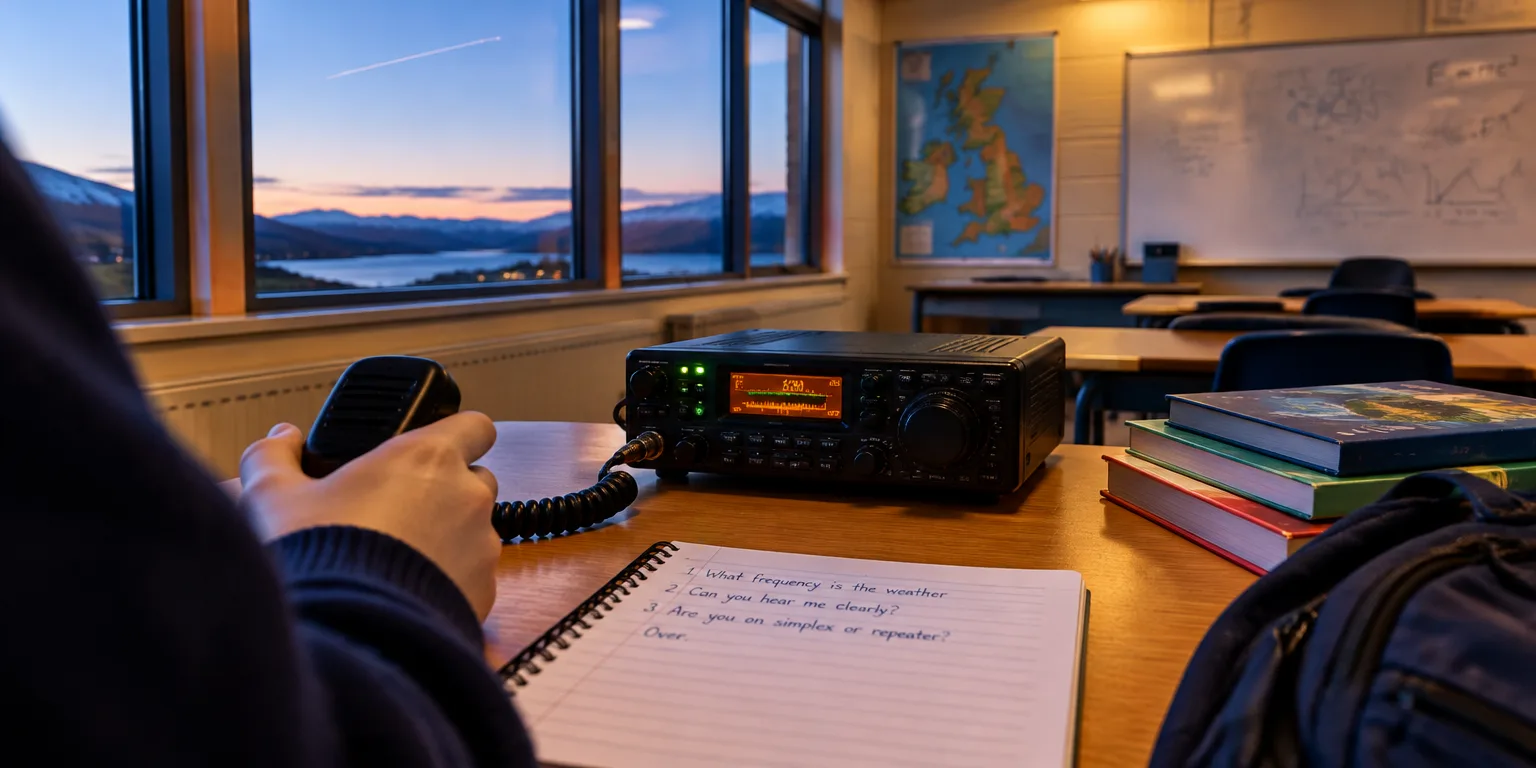
The voice from orbit had only minutes before it would vanish. In a classroom at Wick High School in Scotland, pupils took turns at the radio, ending each question with "Over," while astronaut Joshua Kutryk answered from the International Space Station, laughing at his first answer.
The call lasted about 10 minutes, during a pass above far northern Scotland with the station traveling at 27,500 kilometers an hour. It was a short window, and the children used it to ask about daily life, food, sickness, and science.
Kutryk kept saying that small tasks are hard in orbit. Asked by a boy named Rory what movies get wrong, he said they make everything look easy, when living and working in orbit is stubbornly hard in small ways. "Nothing up here is easy," he said. "Everything is hard, even brushing your teeth." He added that films gloss over a lot of those small points.
Eating and drinking show the same trouble. Asked by a girl named Florence how food compares with meals on Earth, he explained that weightlessness affects the sinuses, so flavor shifts. "Everything tastes a little bit different, sometimes good, sometimes bad," he said. One example is coffee. He loves coffee on Earth, but in orbit it does not taste quite like coffee to him, and that is causing him to drink less of it.
Adjusting to orbit can be queasy as well. Asked by a girl named Isabella about space sickness, Kutryk said, "We typically get sick at the start of the missions as we adapt to microgravity, so it's like a couple of days of basically being car sick."
He also described his other work in orbit. Kutryk said, "I'm working on a lot of experiments that are designed to enable astronauts to live in space for longer periods of time, so someday maybe on the Moon for, say, a year." Much science still has to be figured out first, he said, and that research is part of what he enjoys up there.
Then the 10 minutes ran out and the voice cut out.
Questions people ask
So how do astronauts actually brush their teeth without a sink?
You cannot spit into a sink or rinse as usual, because loose water would float away in droplets that could damage equipment or be inhaled. Astronauts use a small amount of water, brush, and then swallow the toothpaste or spit into a towel. It takes practice to do it without making a mess.
Why does weightlessness change the way food tastes?
Without gravity pulling blood downward, more fluid shifts toward the head, and tissues in the nose and sinuses swell slightly. That congestion dulls smell, which is a large part of taste, so familiar foods can seem bland or off. The effect usually eases somewhat after the body adjusts, but flavor often does not fully match Earth.
What causes space sickness in the first few days?
The inner ear, which controls balance, expects gravity's pull and gets confusing signals when everything floats. The brain interprets that mismatch much as it does motion sickness, with nausea and dizziness for a day or two. Most astronauts adapt quickly as the brain learns the new normal.