Every Barrel of Permian Oil Comes With Up to Five Barrels of Toxic Brine
Almost all of it is pumped back underground, where it can help trigger earthquakes.
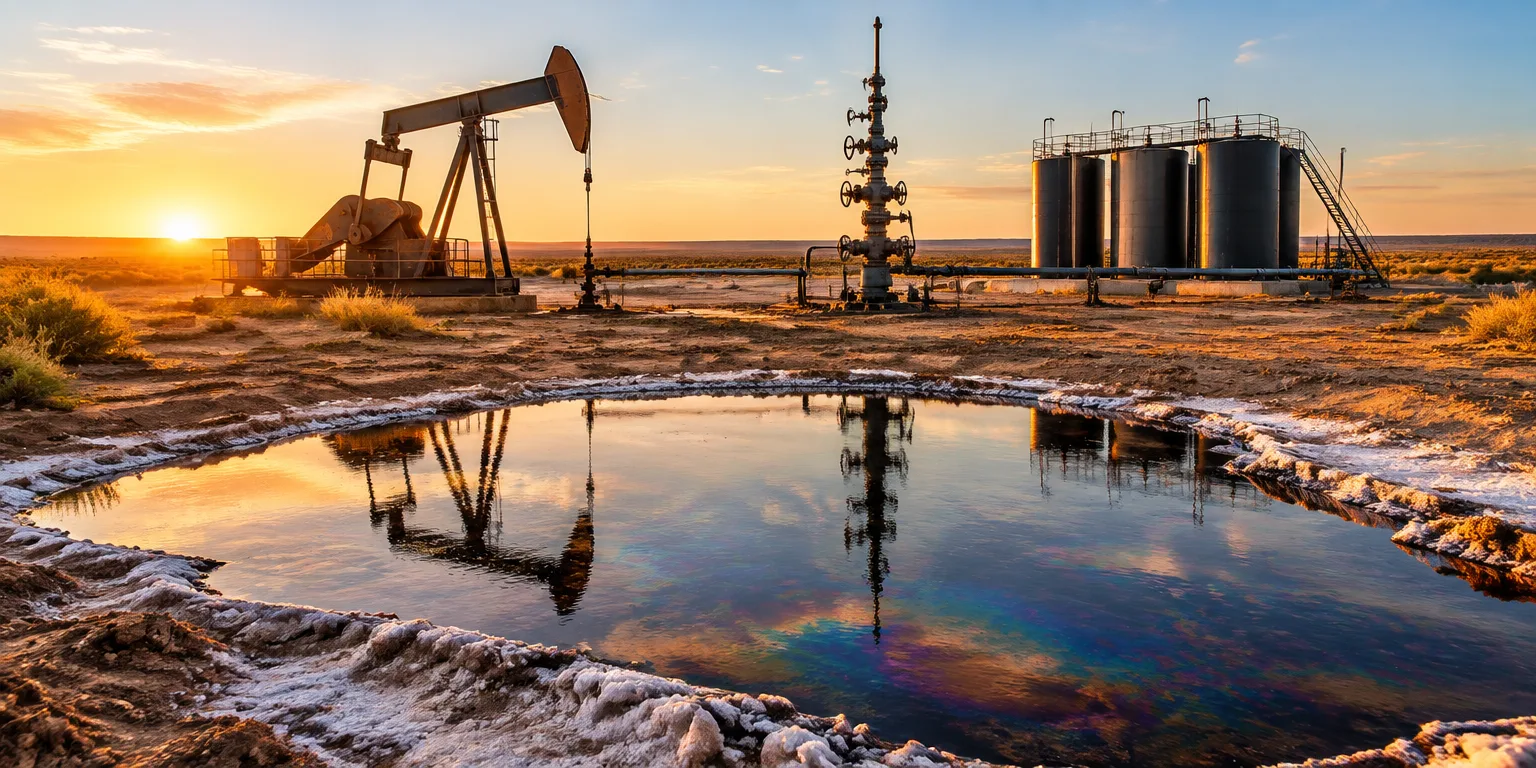
 Bloomberg Originals · The Looming Disaster Under America’s Biggest Oil Field
For every barrel of oil produced in the Permian Basin, three to five barrels of wastewater come up with it.
The Permian is the huge shale oil field in West Texas that helped revolutionize the American oil industry over the past decade. Its wastewater, also known as produced water, contains up to five times as much salt as the ocean, plus oil and gas residue, toxic metals, and radioactive substances.
Almost all of it is pumped back underground for disposal, and that reinjection changes underground pressures and reactivates faults, helping drive earthquakes in Texas.
The fluid is toxic and would need extensive treatment before it could be reused for farming or other uses.
Questions people ask
Why does an oil field produce so much water?
The material does not give a detailed reason for why so much water comes up. The Permian is a layer cake of rock where oil and gas formed, and wells there bring up oil and wastewater together. Older horizontal wells produce more water per barrel of oil, so the water share grows over time.
How salty is water with five times as much salt as the ocean?
Ocean water holds about 35 grams of salt per liter, so five times that is about 175 grams per liter. The brine is toxic and contains oil residue and other contaminants.
Can that wastewater ever be reused?
Treatment can turn the brine into essentially distilled-quality water. That cleaned water could supplement freshwater for farming, cooling towers, and construction materials. The hurdle is making treatment cheap and reliable at scale, when the field produces 25 to 30 million barrels of wastewater a day.