Every extra 10 grams of fiber a day was tied to 10% lower risk of dying
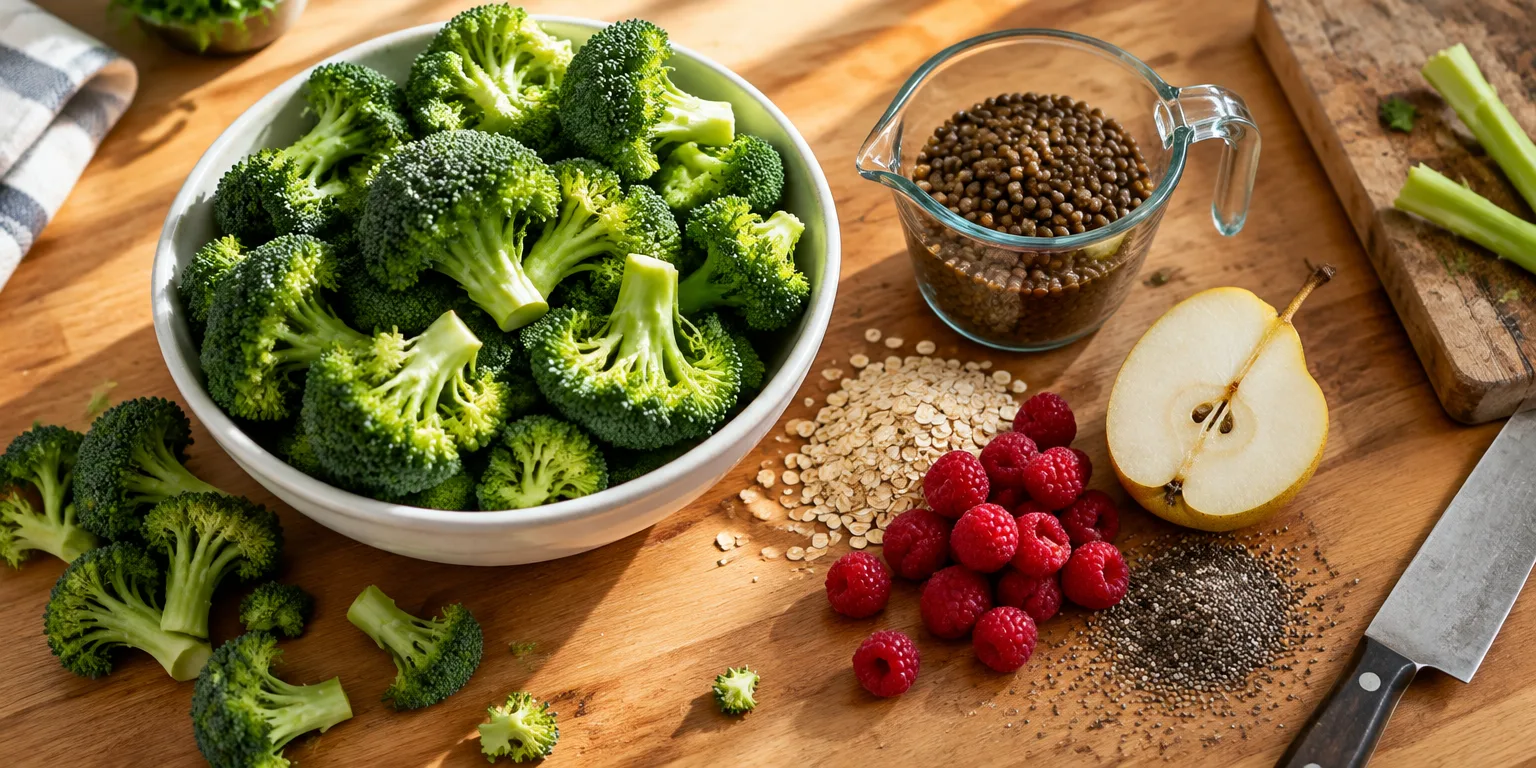
The benefit covered heart disease and cancer deaths, with no ceiling found yet, but even a big pile of broccoli has only five or six grams.
 Andrew Huberman · The Science of Eating for Health, Fat Loss & Lean Muscle | Dr. Layne Norton
Every extra 10 grams of fiber a day was linked to about a 10% lower risk of dying. Nutrition researcher Layne Norton calls fiber "the longevity hack." The figure comes from a recent large combined analysis of more than a million people.
Those were observational studies, so they show a link, not proof. The lower risk included deaths from heart disease and cancer. Norton says the studies show no clear upper limit.
Norton says he asks people, "Are you eating like over 50, 60 grams of fiber a day?" Reaching that is hard, especially on a low-calorie diet, where fiber is harder to fit in. When asked what that looks like on a plate, Norton said about 200 grams of broccoli, roughly two cups, has only five or six grams. The usual recommendation is about 15 grams for every 1,000 calories eaten.
Questions people ask
What exactly is fiber?
Fiber is the part of plant foods that human digestive enzymes cannot break down. It adds bulk, feeds gut bacteria, and is found in beans, lentils, oats, barley, fruits, vegetables, nuts, and seeds.
Which foods make 50 or 60 grams realistic?
Beans, lentils, and split peas are among the most concentrated, with roughly 6 to 8 grams per half cup cooked. Raspberries, pears, oats, barley, chia seeds, and avocados are also strong sources, and many people combine several to reach higher intakes.
Why would fiber be tied to living longer?
Researchers think several paths may contribute, including better cholesterol and blood sugar control, lower inflammation, healthier body weight, and fermentation by gut bacteria into short chain fatty acids. Because the data come from observational cohorts, they show a link, not proof that fiber alone causes the lower risk.