Every Plant Milk Studied Beats Cow's Milk on Greenhouse Gases
Almond milk is the lone outlier, and only on water, with California's thirsty orchards muddying an otherwise clear climate win.
 Gastropod · Plant Milk Proliferation: Oat, Soy, Almond, and More, But Which Is Best?
Every plant milk studied has a lower greenhouse-gas footprint than cow's milk, in the words of Brent Kim, "sometimes an order of magnitude lower."
Kim, a health scientist at the Johns Hopkins Center for a Livable Future, found it held across several plant milks.
Cynthia Graber in California noted dairy's climate cost partly comes from cow burps full of methane, which warms the planet "30 times more than carbon dioxide ton for ton," and that agriculture is "one of the top five contributors to all greenhouse gas emissions."
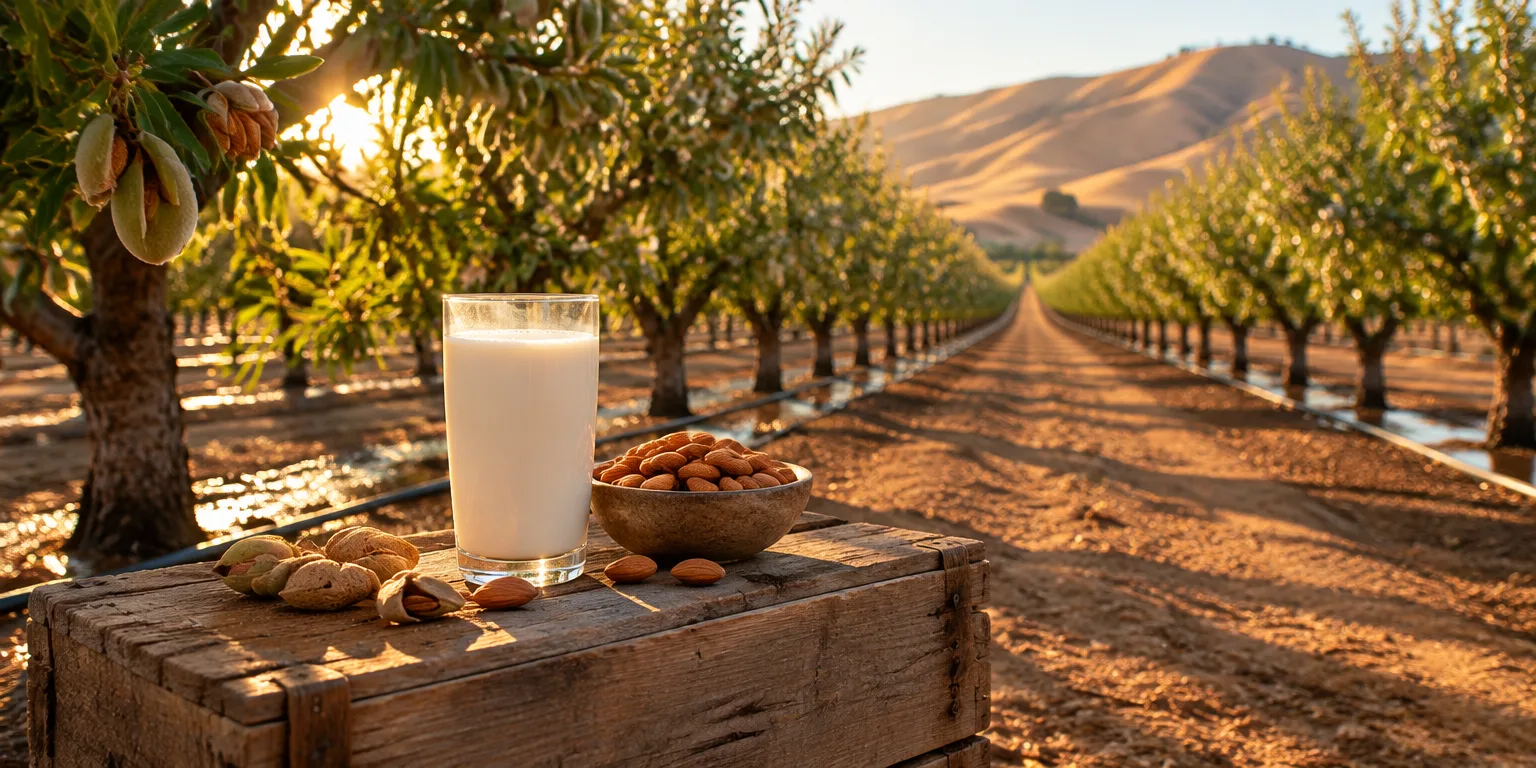
Almond milk was the water caveat. Kim said that "depending on how we measure fresh water use, it could either be higher, lower, or similar to milk from cows," while Graber noted "where all of America's commercially grown almonds are raised" in California and that "they have to be irrigated year-round."
Kim said, "I wouldn't want folks to get lost in the weeds." Graber called plant milk the right choice.
Questions people ask
Where does most of dairy's climate footprint come from?
Cows release methane when microbes in their stomachs ferment feed, and the gas escapes mainly through burping. Methane traps far more heat than carbon dioxide in the near term, so dairy herds add a large climate load before milk ever leaves the farm.
Why does almond milk stand out on water?
Almond trees need irrigation, and nearly all American almonds grow in California, where water supplies are tight. Whether almond milk looks better or worse than dairy depends on how the water is measured. Other plant milks showed a lower freshwater footprint than dairy.
Does it matter which plant milk I pick for the climate?
Not much for the climate. Researchers found the gap between any plant milk and dairy was much larger than the gaps among plant milks. Soy and pea plants add some benefit by fixing nitrogen in soil, but the overall message was to avoid getting lost in small differences.