Factory-Built Apartments Can Go Up Faster and Cost Less
A Bay Area startup builds boxy apartment pieces indoors, trucks them to the site, and stacks them into a finished building.
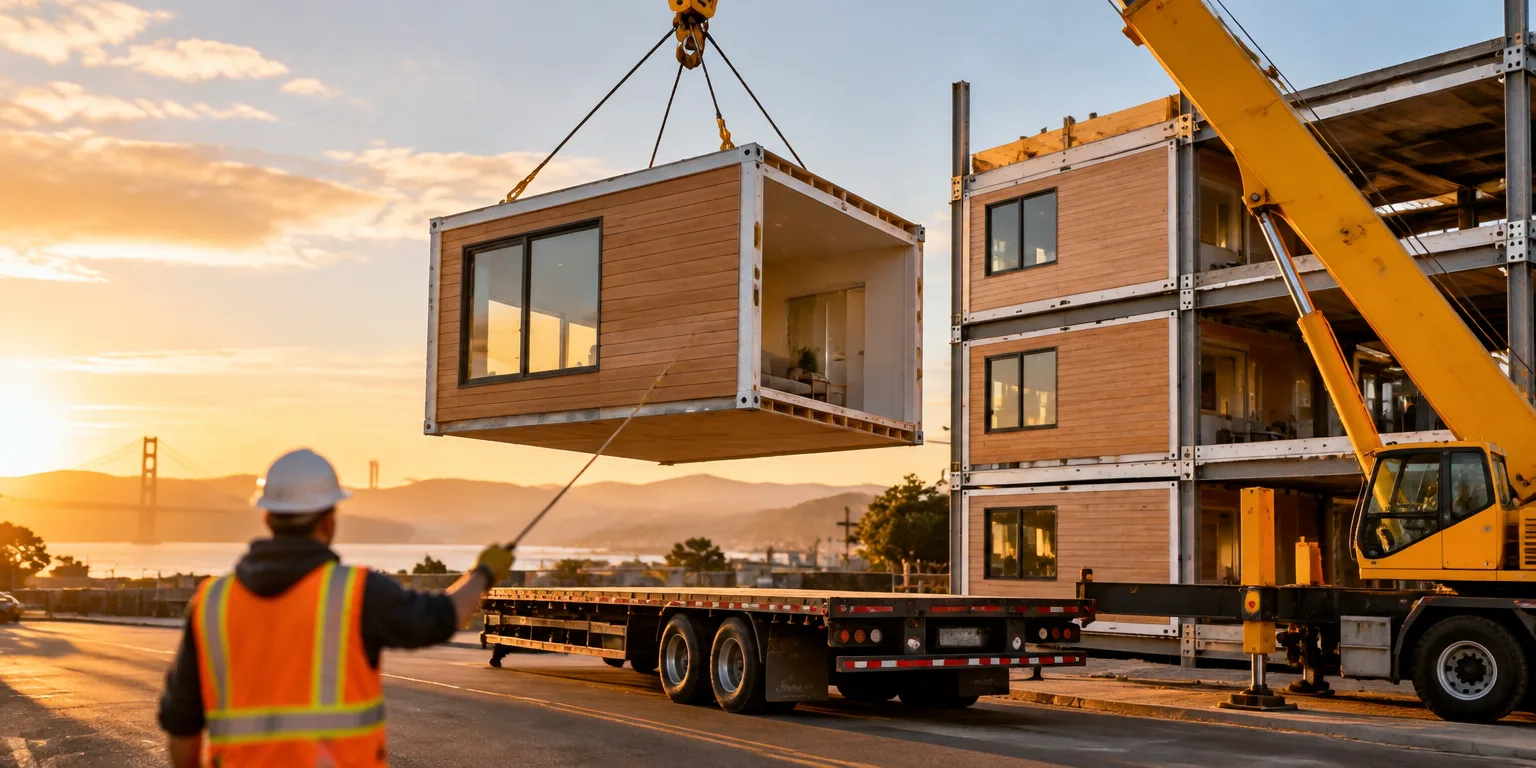
 Business Insider · I toured an apartment built in a factory, and I'm convinced that these high-tech homes are the future of city living
An apartment building does not have to be built where you will live in it. It can be built in a factory, hauled down the highway, and stacked into place like boxes.
That is the approach being tested by Cloud Apartments, a two-year-old startup in the San Francisco Bay Area that has raised $3 million. In its version, workers build rectangular units, called modules, indoors. Each module is essentially one finished piece of an apartment. The modules are then trucked to the building site, where crews stack and combine them to make the final structure.
The process runs in a different order from conventional construction. Instead of bringing lumber, drywall, and plumbers to an open lot and building floor by floor in the rain and wind, much of the work happens at tables and stations inside. The site work and the building work can move forward at the same time, and the indoor work is not stopped by weather.
The payoff, according to Curtis Wong, the founder of Cloud Apartments, is speed and money. He says modular construction is faster than traditional on-site building, and that it can reduce what it costs to construct an apartment building by 30%. Because construction is a large share of what a landlord must pay off, he argues that lower building costs can translate into rents that are about 30% lower.
A recent tour of a finished model suggested the savings do not have to mean flimsy housing. The reporter who toured it came away convinced by the quality and caliber of the construction, and concluded that factory-built units could deliver "high-quality housing faster and at discounted costs" for both landlords and renters. If that proves true at scale, city apartments could start to look less like construction projects and more like manufactured products.
Questions people ask
Don't the boxes break or rattle apart on the highway?
They are built for it. Modular units are framed more stiffly than site-built rooms, with extra bracing so they can be lifted by crane, ride on a truck, and be set down without warping. Once stacked, crews bolt the modules together and seal the seams, so the finished building acts as one structure.
Where does the 30% savings come from?
Mostly from time, labor, and waste. Factory work allows the same crews to do the same tasks repeatedly, materials can be bought in bulk and cut with less scrap, and weather delays are rare. Developers also save on financing costs because a faster project means fewer months paying interest on a construction loan.
Would a factory-built apartment feel different to live in?
In a finished building, usually not. The walls, kitchens, bathrooms, wiring, and plumbing are installed in the factory, then connected on-site to city utilities. You may notice straighter walls and tighter doors, because indoor machines can cut and fit parts more precisely than work done outdoors.