Fake Reef Sounds Can Trick Baby Coral Into Rebuilding a Dead Reef
Healthy reefs crackle with life, and drifting coral larvae use that noise to pick a home.
 Global News Podcast · Israel election too close to call
Put a microphone on a healthy coral reef and it crackles and hums, with the clicks of snapping prawns and the thrum of fish.
Coral begins life as a larva that drifts in the water and must pick one spot to settle for life. Experiments have shown that young fish, and later young coral, respond to sound cues from a reef when choosing where to settle.
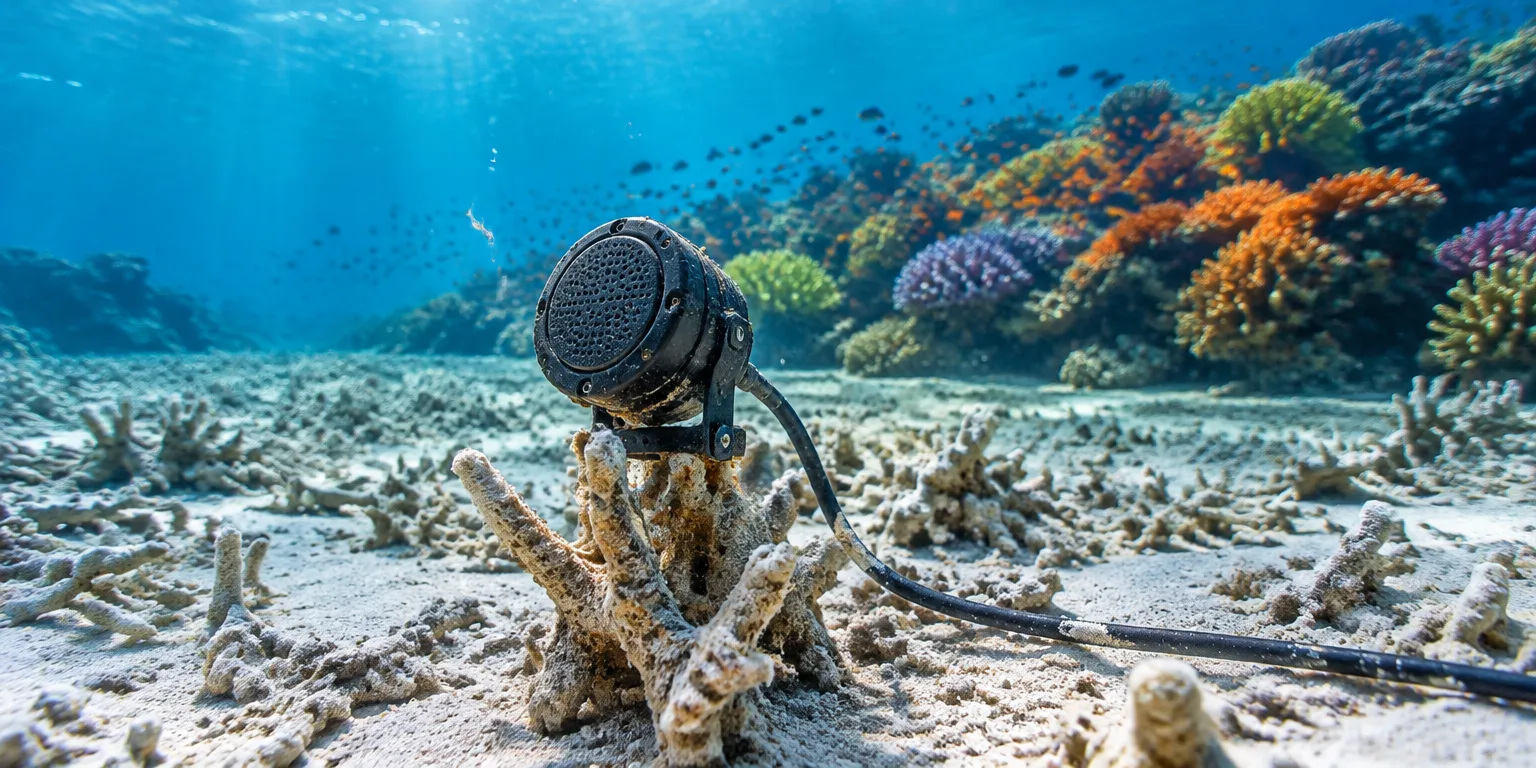
So scientists are placing underwater speakers on degraded reefs and playing back the soundtrack of a healthy one, hoping to lure young coral into settling there and helping the reef recover. Michael Sweet, a professor at the University of Derby who studies reefs, says the approach has been tried in the water and can be done.
The idea is not new. Sweet says the first study showing that young fish were attracted to sound was published in 2000, and the first evidence for coral larvae followed in 2010. What has changed is that heat waves at sea now come year after year and stay around longer, and reefs are degrading significantly.
Sweet says half of coral reef types have moved into a more endangered category since the last big assessment in 1998. Some models warn that by 2030, 90 percent of the world's reefs could be functionally extinct, meaning they no longer deliver their usual benefits for fish, sea life, and coasts.
Sound is only one tool among many, and Sweet says it is not a silver bullet. It sits in the middle on cost because it needs speakers and gear, and it must sit alongside work to tackle climate change. Researchers are still testing how well the playback works on degraded reefs.
Questions people ask
Can baby coral actually hear?
Not the way we do. Coral larvae have no ears, but they can sense vibrations and respond to sound cues in the water, much as they respond to light and chemicals. In experiments, more larvae settled near speakers playing reef noise than near silent speakers.
What does a marine heat wave do to coral?
Coral lives with tiny algae inside it that provide food and color. When water stays too warm too long, coral expels the algae and turns white, a process called bleaching. If heat persists, the coral starves, dies, and leaves a quiet, bare skeleton behind.
What happens after coral settles?
Once a larva glues itself to rock or dead coral, it grows into a polyp and divides to form a colony, laying down limestone skeleton. If it survives grazing fish, storms, and heat, that colony can, over years, build the three-dimensional structure fish and other sea life need.