Family Mattered More Than School Resources, a Survey of 600,000 Found
A tiny team met a 16-month deadline despite boycotts and lost questionnaires, only to learn home life outweighed school spending.
 Throughline · The school report that changed public education
The boxes went one way, and James Coleman went the other.
A postdoctoral researcher on his team had brought boxes of school questionnaires onto a train and then left them on a train seat. They rolled in one direction while Coleman went in the other, and he had to scramble to get them back. It was the fall of 1965, and each box held part of the largest school survey America had ever tried.
In 1966, after surveying 600,000 students, Coleman finished a report of more than 700 pages that delivered a surprise nobody expected. Family socioeconomic background and educational aspirations, along with the socioeconomic mix of the classroom, emerged as the most important predictors of achievement, more than school resources.
The job had started in the summer of 1964, when Congress demanded a nationwide survey of unequal schooling and gave the government two years to deliver it. The federal education commissioner needed someone who had handled big school data before, and he found Coleman, a gifted and well respected mathematical sociologist. Coleman had just finished a large study of how high school students behaved, the nerds and the jocks, which gave him credibility for an even bigger count.
Even today, the math looks punishing. Thomas Kane, a Harvard economist who leads research on education policy there, said if someone told him, "Go out and design a study and survey 600,000 students and have a report ready in the next 16 months," that "that's gonna be really hard to pull off."
Coleman pushed ahead anyway with his team, working with the Educational Testing Service, a nonprofit that develops and scores school tests, to send questionnaires to schools serving young children through teenagers around the nation. Students answered questions by grade. Teachers got a short written vocabulary quiz to gauge verbal skills.
At first, no one answered. The initial request brought zero responses, until a student on Coleman's team sent schools a blunt note: "This is an act of Congress. Please call ETS this week." Replies finally started rolling in.
In the historical account, many Southern schools refused to take part, afraid they would be seen as deeply segregated. Chicago and Los Angeles withheld data too. Still, by the end of the collection, Coleman had questionnaires from 600,000 students in first, third, sixth, ninth, and twelfth grades, plus 60,000 teachers and roughly 4,000 schools. No one had ever launched a national school data collection like it.
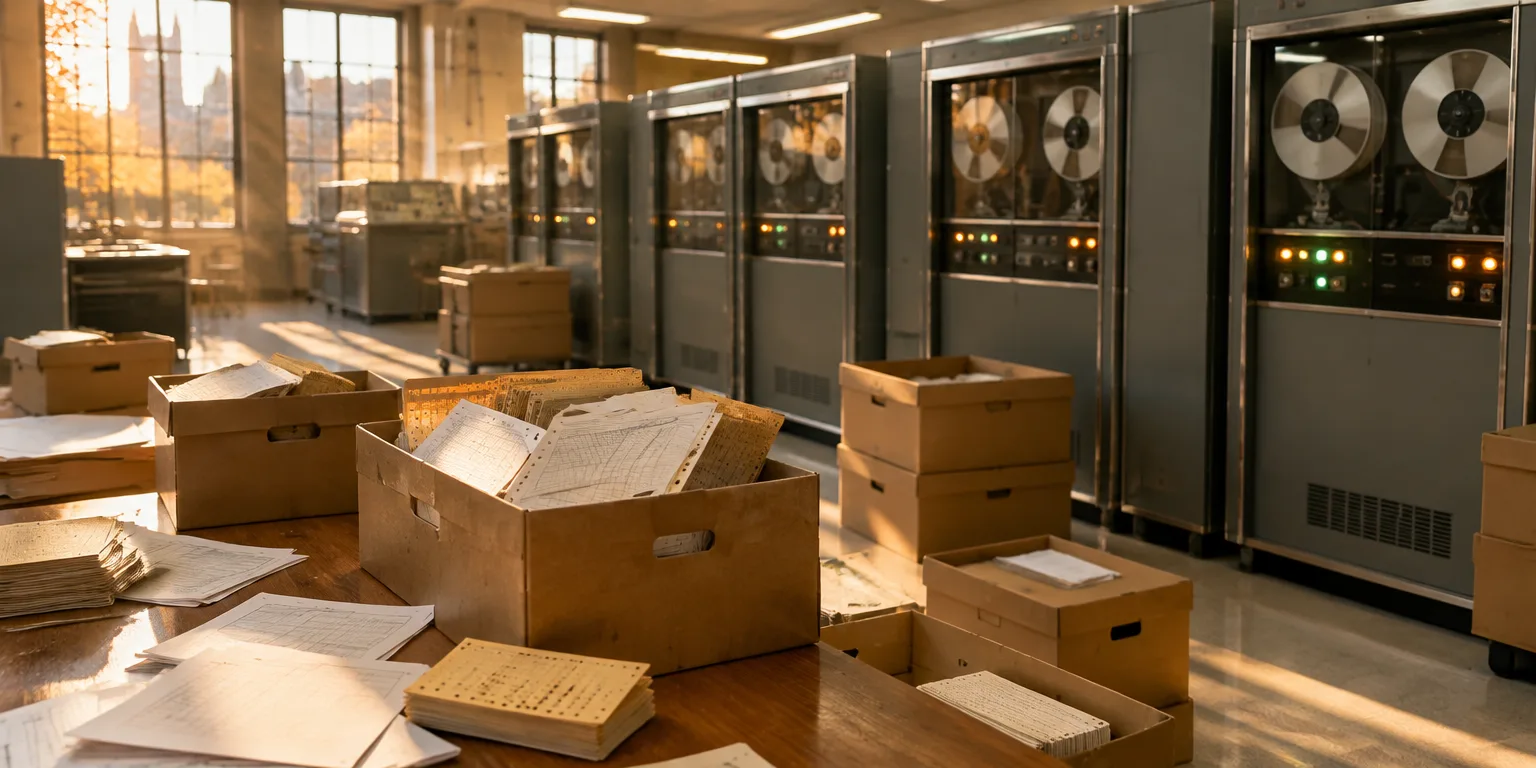
Then came the counting. Coleman worked on huge mainframe computers in Princeton, New Jersey. Those machines were primitive, with less computing power than a modern phone holds today. He did not have today's statistical tools, just boxes and thousands of pages to compile.
Historian Victoria Cain describes Coleman locked up and surrounded by boxes, with "bottles of bourbon to take the edge off at night," while the team labored through the nights to work through the huge pile of tests.
What they found was explosive. Schools remained segregated nationwide, in Southern states as well as Northern ones, and Black students lagged white students by several grade levels. The deeper explanation lay in two factors: a family's background and hopes for schooling, and whether poor students sat beside more affluent classmates who took graduation, college, and honors classes as a given.
Questions people ask
Why did Congress order the survey in the first place?
Congress tucked the requirement into the Civil Rights Act of 1964. Lawmakers had just approved more than a billion dollars for schools and wanted hard evidence of segregation and inequality to justify cutting off money to segregated districts.
What was so hard about using a mainframe computer in 1965?
Mainframes filled rooms, read punched cards or magnetic tape, and ran one job at a time. Researchers often waited hours for results, and a simple sorting or cross-tabulation that takes seconds today could take days.
What is the Educational Testing Service?
ETS is a private nonprofit best known for tests like the SAT and GRE. The government used it because it already knew how to print, ship, score, and process tests at national scale.