Farm robots have three jobs: spray less, replace spray, and do the work people will not do
On a California test farm, a driverless sprayer shows the first job, while lasers and pickers handle the other two.
 This Week in Startups · Danny Bernstein left Big Tech to fund farm-bots | E2310
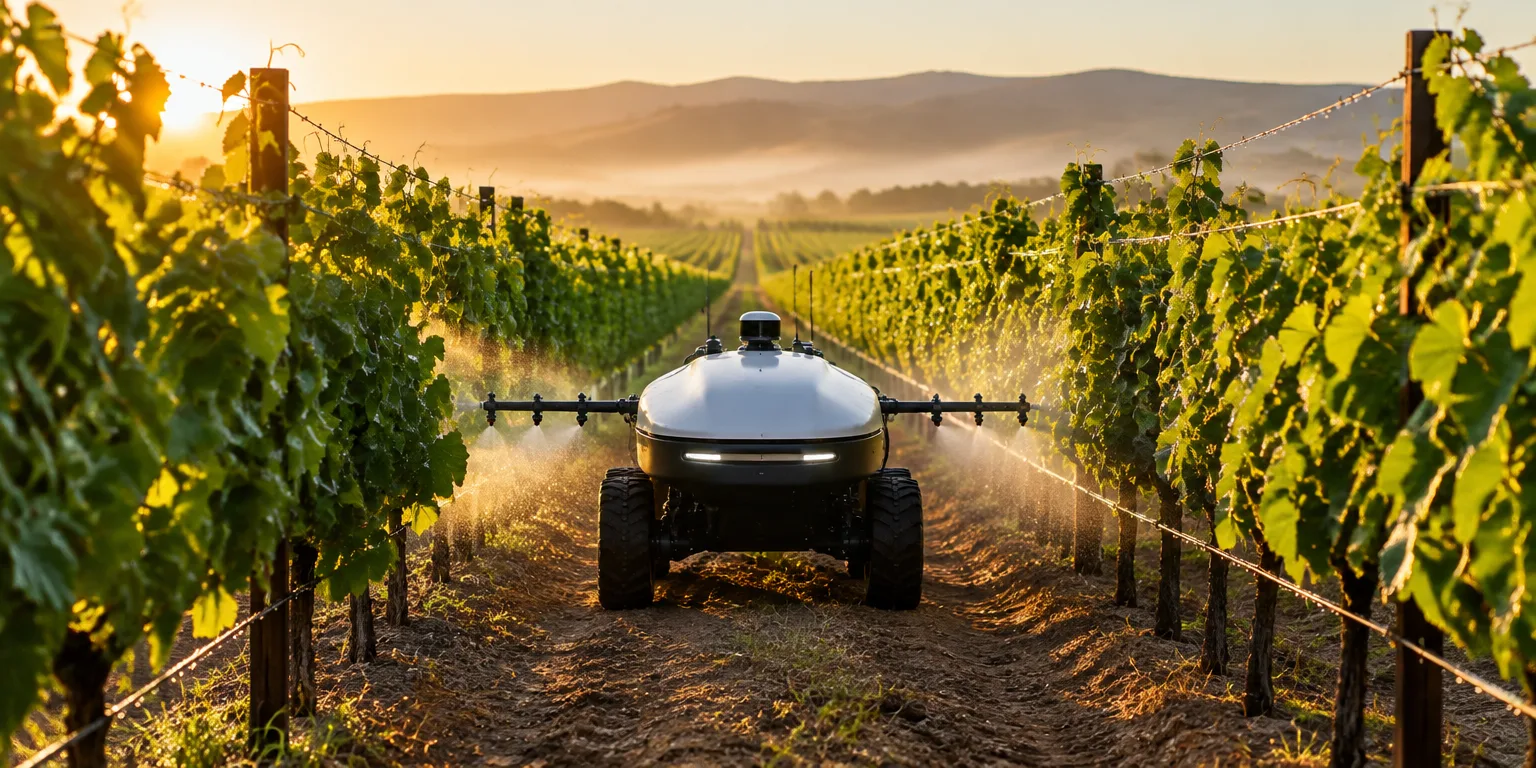
At dawn on a working farm near Salinas, California, a crew was about to run a trial with a machine driving itself through vineyard rows with no one on board. The machine was doing precision application of biologicals, bio-based alternatives to pesticides, during the test.
Danny Bernstein, a former Google employee of 10 years who now runs Reservoir Farms, a 40-acre test farm and startup incubator for agricultural technology, says farm robots fall into three groups. By specialty crops, he means fresh produce such as fruits, vegetables, and tree nuts, and his farm works on technology for that kind of produce.
The first job is to use fewer chemicals. The driverless machine in the vineyard, built by a company called Bonsai Robotics, is an example. Instead of a person driving a tractor or carrying a backpack sprayer, the robot does precision application of biologicals, which are bio-based alternatives to pesticides. It puts less material in a more exact place.
The second job is to replace chemicals entirely. Bernstein's examples are "electric weeders, laser weeders, steam fumigators," plus using UV light to kill pathogens. The idea is not to spray better, but to replace that spray step with heat, light, or electricity.
The third job is to automate the hardest to fill jobs. Bernstein says these are jobs domestic workers categorically do not want to do, citing American Farm Bureau data on more than 400,000 farm jobs posted last year with less than 1% receiving a domestic applicant. Labor is still 40% of production costs in specialty crop agriculture, and Bernstein says it reaches 60% to 70% for strawberries and 80% for table grapes. Bernstein calls strawberry harvest "the white whale" of farm technology, a race that draws two or three startups every year.
Questions people ask
What is a biological alternative to a pesticide?
Biologicals are pest and disease controls made from living things or natural materials, such as helpful bacteria, fungi, or plant extracts, rather than synthetic chemistry. Farmers use them to suppress insects, weeds, or disease, often with less residue and less risk to workers. A precision sprayer helps because many biologicals work only if they land in the right spot.
How does a laser weeder actually kill a weed?
A laser weeder uses cameras to find weeds among crops, then aims a brief burst of heat to kill the weed. Electric weeders do similar work by touching weeds with an electrode that sends electricity through the plant. Both let farmers kill weeds without leaving chemical residue in the soil.
Why is strawberry picking so hard to automate?
Strawberries are soft, grow close to the ground, ripen unevenly, and bruise easily, so a picker must judge color and feel and move quickly. That combination of vision, gentleness, and speed is hard for a robot hand and eye to match. Table grapes and other fresh fruit are also costly because people must cut, carry, and pack them by hand.