Farming villages share work like ancient complex cells
Wheat does for a village something like what chloroplasts do for a cell.
 On Humans · How Do Humans Fit into the Story of Life? ~ Jonathan Loh
Conservation biologist Jonathan Loh applies an idea from cell biology to farming. Loh puts it this way: “There’s this sort of very pleasing symmetry between the plastids and crops and between mitochondria and livestock.”
A complex cell is a partnership that divides the work. Mitochondria are tiny structures inside the cell that burn food to release usable energy. The host cell handles the rest of the work, such as running its genes and upkeep. Neither partner can survive alone. Because mitochondria specialize in energy, the whole cell gets far more energy than it could alone.
Plastids formed the same way. An early complex cell took in sun-using bacteria called cyanobacteria. The captives kept doing photosynthesis inside the host and became plastids. Chloroplasts, the green plastids in plants, are one kind. Their DNA, the set of genes that tells a cell what to do, lost the genes for other jobs and kept only the ones for photosynthesis.
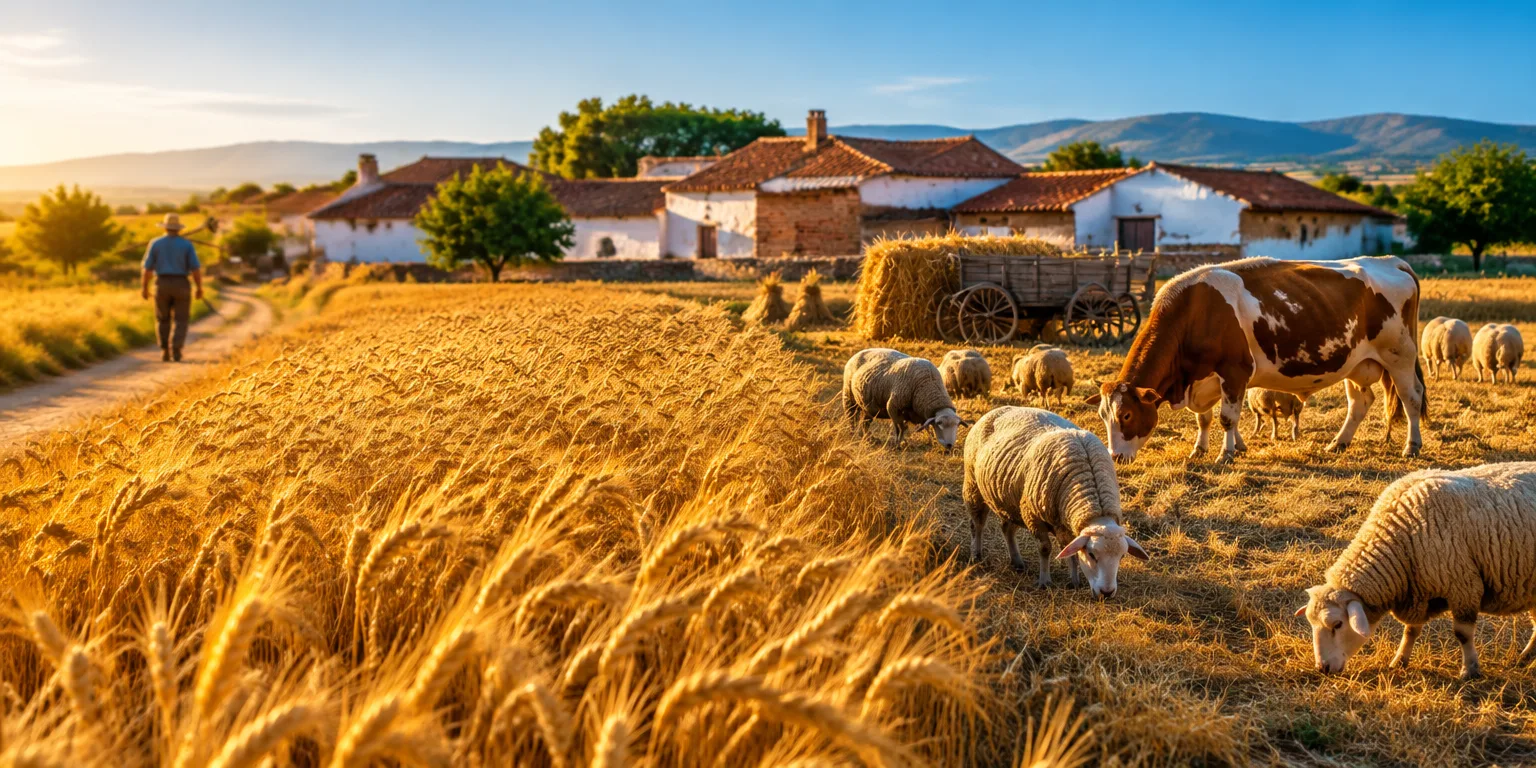
Loh argues that a human community is a cultural cell that works the same way. The hunter-gatherer groups formed the host when, about 12,000 years ago, they began to control the reproduction of plants and animals. The village that grew up around farming is the resulting cultural cell. The crops and herds came to depend on people for survival and to supply the community’s energy.
In that setup, wheat does for a village something like what a chloroplast does for a cell, which is photosynthesis. Cattle and sheep do a job much like mitochondria, because they eat grass people cannot digest and turn it into meat and milk people can eat. That extra energy meant farmers displaced hunter-gatherers in the places where farming arose. Farming began independently in different parts of the world, including the Fertile Crescent, China, New Guinea, the Andes, and Mesoamerica.
Questions people ask
Do mitochondria really used to be bacteria?
Yes. Mitochondria still carry a tiny loop of DNA of their own, separate from the DNA in the cell nucleus, and biologists read it as leftover bacterial genes for making energy. Most of the original bacterial genes moved into the nucleus over time, which is why mitochondria cannot live on their own. Chloroplasts carry their own remnant DNA for the same reason.
Can today's crops survive without farmers?
Many do. Modern corn, wheat, and bananas have been bred for large seeds, soft kernels, or seedless fruit that spread poorly in the wild, and they depend on planting, watering, weeding, and protection. Some can survive untended for a while, but they compete poorly without people. That dependence is central to Loh's comparison with mitochondria and chloroplasts.
How does farming capture more energy than hunting and gathering?
By getting more edible calories from each acre. A field of wheat or rice channels sunlight, water, and soil into grain people can eat, rather than into many wild species people cannot use. Animals add another step by turning grass and scraps into milk, meat, and pull power. The result supports many more people per square mile than foraging.