Federal Payment for School Lunches Is Capped at $4.85 a Meal
A federal payment capped at $4.85 must cover food, workers, and kitchens, even as produce prices climb and SNAP enrollment falls.
 Marketplace · A divided government could shift the bond market
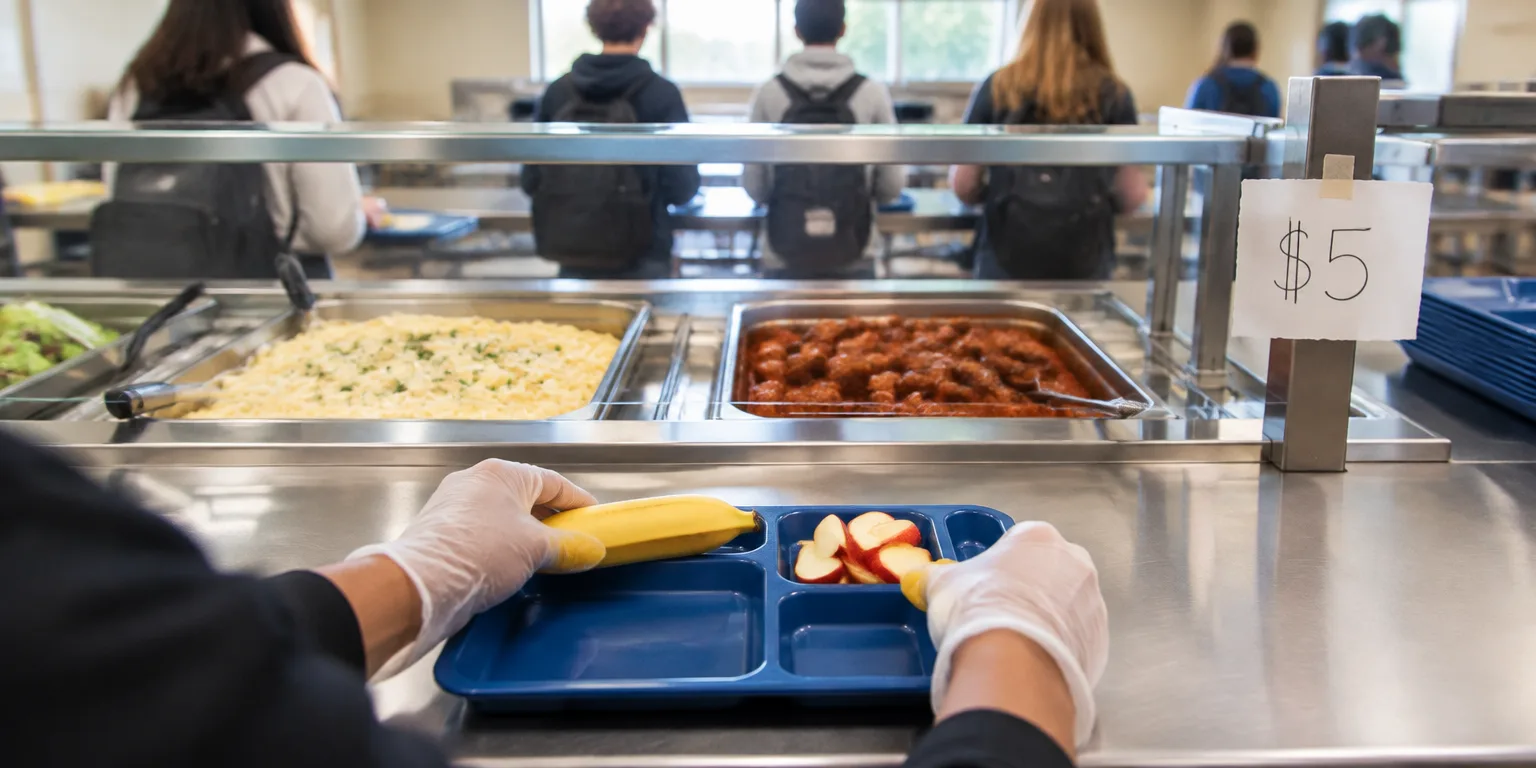
At South Elgin High School in northern Illinois, a junior named Caitlin sat down to chicken alfredo, with meatballs as the other option. Her tray is one of about 30 million lunches American schools serve every weekday.
The math behind that tray is tight. School meal programs must pay for themselves through lunch sales and federal payments, which are capped at $4.85 per meal this school year.
That $4.85 has to cover more than food. Diane Pratt-Hevner, of the School Nutrition Association, said for less than the price of a latte, schools must provide milk, fruits, vegetables, whole grains, and protein, plus pay kitchen staff and buy tools and equipment.
Food and labor both cost more now. Grocery prices are up 30 percent since 2020, and one district leader says a serving of fruit or vegetables rose from about 25 cents to 40 or 50 cents. Ryan Mikulajczyk, who helps feed 66,000 children a day in Austin, Texas, is among the 95 percent of nutrition leaders who say they are worried about "their food program's financial sustainability," in a survey by the School Nutrition Association.
Because programs must balance their budgets, many are cutting back. One leader described cutting a kitchen position and asking the remaining staff to do more, and serving bananas once instead of twice.
Rules add another squeeze. Schools face limits on salt and sugar, requirements to buy a share of food from American growers, and pressure to prepare more food starting with raw ingredients.
That last goal runs into old buildings. Aaron Nowak, a food program leader in South Elgin, says many elementary schools have only warming kitchens, with no proper setup to cook on site. New equipment and infrastructure cost money.
The pool schools use to qualify for free meals is shrinking because SNAP enrollment is falling. More than 55,000 schools offer free meals to all students through the Community Eligibility Provision, a federal program that bases qualification on enrollment in SNAP, the federal food aid program.
Federal food aid enrollment is down by more than five million people compared with last year, and one district says its qualifying count changed by 10 to 15 percent in six or seven months. Districts in Texas, Illinois and Kentucky are among those that have ended free meals for all students because it is not financially feasible anymore.
In Kansas City, Missouri, food leader Donna Hoover says programs like hers feel set up to fail. She still reminds her workers daily that they cannot afford not to feed students.
Questions people ask
What is SNAP and how is it connected to school lunches?
SNAP, formerly called food stamps, helps low income households buy groceries. Children in households that receive SNAP are automatically eligible for free school meals, and schools use that enrollment count to qualify for universal free meal programs.
How does universal free lunch work?
The Community Eligibility Provision lets high need schools serve free breakfast and lunch to every student without collecting applications. Schools qualify when a set share of students are already approved for help through programs like SNAP or Medicaid, and the share determines how much the federal government repays.
Why can't schools just spend more to cover higher food costs?
Most school meal programs operate as separate nonprofit accounts that must break even. They cannot routinely draw on a district's general classroom funds, so when food or labor costs rise faster than meal payments, they must cut staff, change menus, or raise paid meal prices.