Federal Retirement Takes Months Because the Record Lives in a Mine
There is no single career record until retirement, so clerks rebuild it by hand from mailed forms.
 David Senra · a16z's First Employee on the History of a16z, Venture Capital & Fixing the Government | Scott Kupor
Scott Kupor, who leads the Office of Personnel Management, the federal personnel office, says a worker who files a complete retirement application online should get a full pension check within 15 days. That goal is not yet the norm for paper files, which have often taken three months to more than a year, because proof of a decades-long career ends up on paper in a former limestone mine in Boyers, Pennsylvania.
Kupor says the government assembles a worker's career history only at retirement. Someone may work more than 30 years across several agencies, and each agency has kept separate personnel and payroll systems, so there is no single record to consult.
Until recently, retirement meant filling out forms, putting a stamp on them, and mailing them to the personnel office. That office mailed them to a separate payroll office, which mailed them to the mine in rural Butler County.
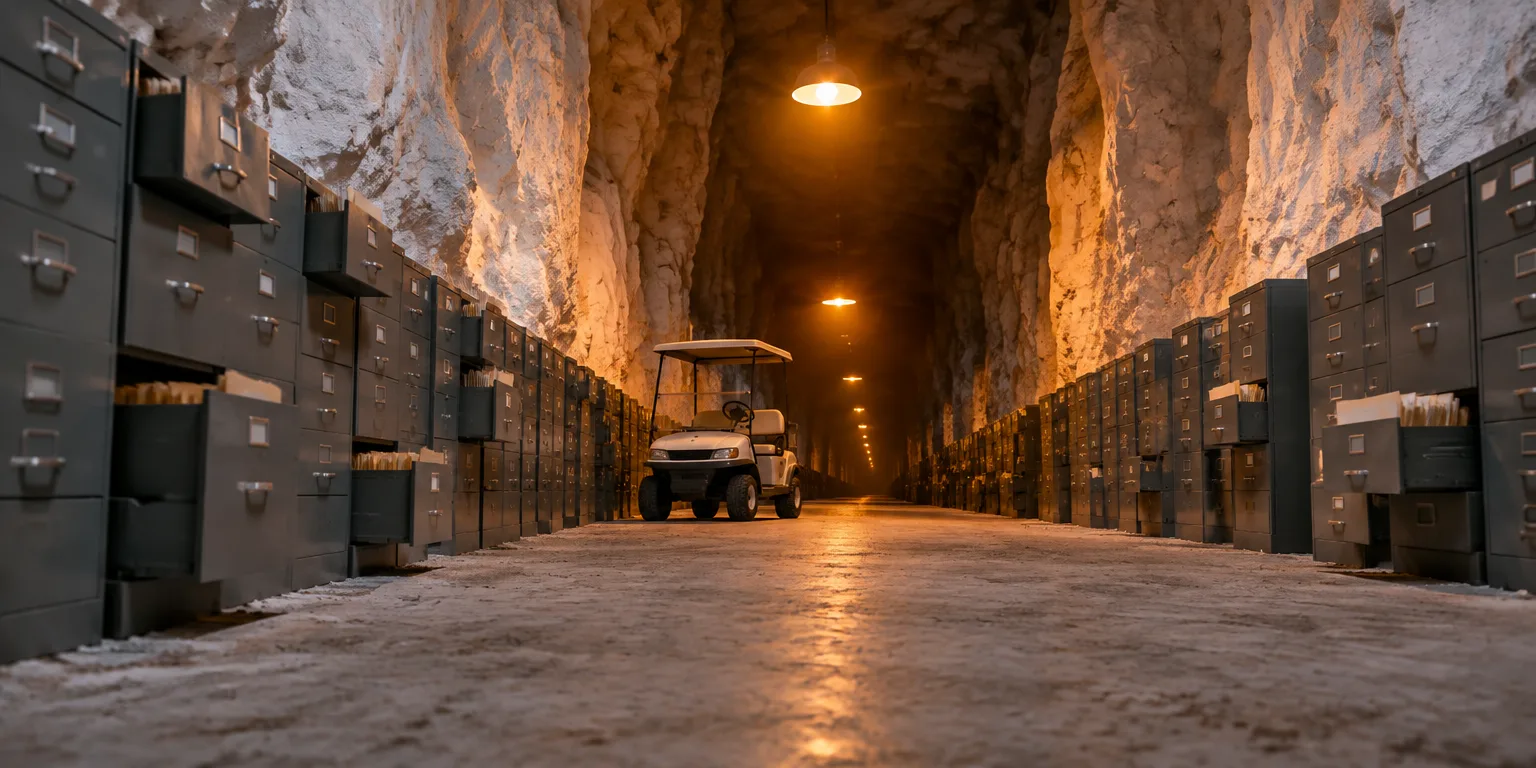
Inside the mine, workers drive golf carts between limestone walls under heavy security. Kupor says his retirement services organization has 800 people who open the files, read them by hand, and do manual calculations to set the pension. If a signature is missing, the papers go back by mail, adding about another month.
Even a later phone question can require what the mine calls a runner, a worker whose job is to walk to a metal filing cabinet, pull the file, and carry it to the person deciding the case. Some of those cabinets hold papers dating to the 1950s.
Kupor says articles describing the mine as ridiculous date to the 1970s and 1980s. His explanation is that nobody tried to solve it because officials feared congressional blame if a replacement failed, so they preferred poor service to the risk of a fix blamed on them.
New applications are now filed online, and Kupor says June 30 was the last day new paper entered the mine. He says processing time has already fallen by more than half, with a goal of cutting processing time by 90 percent. The harder job is digitizing 400 million old papers with room size scanners so the storage part of the mine can eventually close and workers can answer questions from scanned records.
Questions people ask
Will the mine close once everything is scanned?
That is Kupor's stated plan once 400 million old papers are scanned. He says digitizing the backlog should let the agency eventually shut down the storage part of the mine and let service workers resolve cases without waiting for a file to be carried to them.
What is the single personnel system Kupor describes?
It is a separate project to combine about 120 personnel systems into one. Kupor says that would create a continuously updated career record and cut related technology spending sharply, which would remove the need to rebuild a history at retirement.