First sight helped set off the explosion of animal life
Within 10 million years came a burst of new species, and it is estimated that vision involves about half the brain's outer layer activity.
 Andrew Huberman · Using AI to Increase Your Intelligence & Enrich Humanity | Dr. Fei-Fei Li
Animals first sensed light about 540 million years ago, and that sense helped spark the boom in animal kinds that later included advanced intelligence, in the view of Fei-Fei Li, an artificial intelligence researcher.
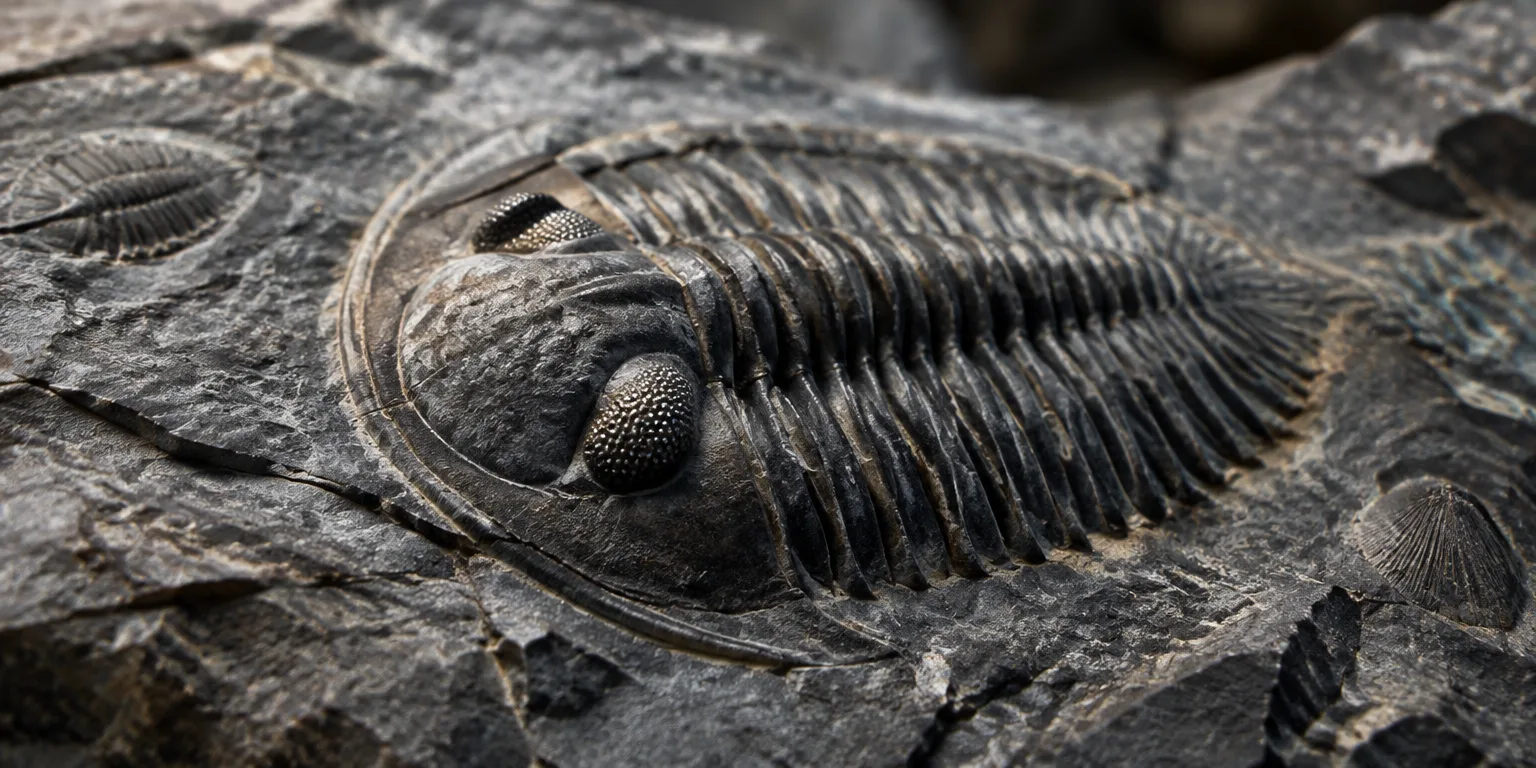
The first light sensors appeared in simple animals that lived in the ocean, including trilobites, ancient sea creatures with hard outer shells related to today's crabs and insects, and their close cousins. Before that, she says, there was very little sensing.
Once animals could sense light, they could find food and mates and spot predators, which changed how they related to the outside world. Evolution then sped up sharply.
Fossil studies show that about 10 million years after animals first sensed light came what scientists call the Cambrian explosion, a burst of new animal species. Li says it is estimated that about half the activity in the outer layer of the human brain involves vision, and that children use sight before they use words.
Questions people ask
What was the Cambrian explosion?
It was a period starting about 541 million years ago when most major groups of animals first appear in the fossil record. It lasted roughly 20 million years, a short time in geologic history, and produced arthropods, mollusks, early vertebrates, and many stranger body plans.
How do scientists know when vision first evolved?
They combine fossils and genetics. Fossil trilobites show some of the oldest preserved eyes, made of the mineral calcite, while molecular clocks that track mutations in light-sensitive proteins point to light sensors arising near the same time.
Do any animals today live without vision?
Yes. Many cave fish, cave salamanders, and deep-sea and underground animals have reduced eyes or none at all. They navigate with touch, smell, hearing, or electric fields, showing that once vision exists, evolution can also leave it behind when darkness makes it costly.