Flood Walls Can Make Future Floods More Deadly
Once dry land feels safe, people build on it, and the next flood has far more to destroy.
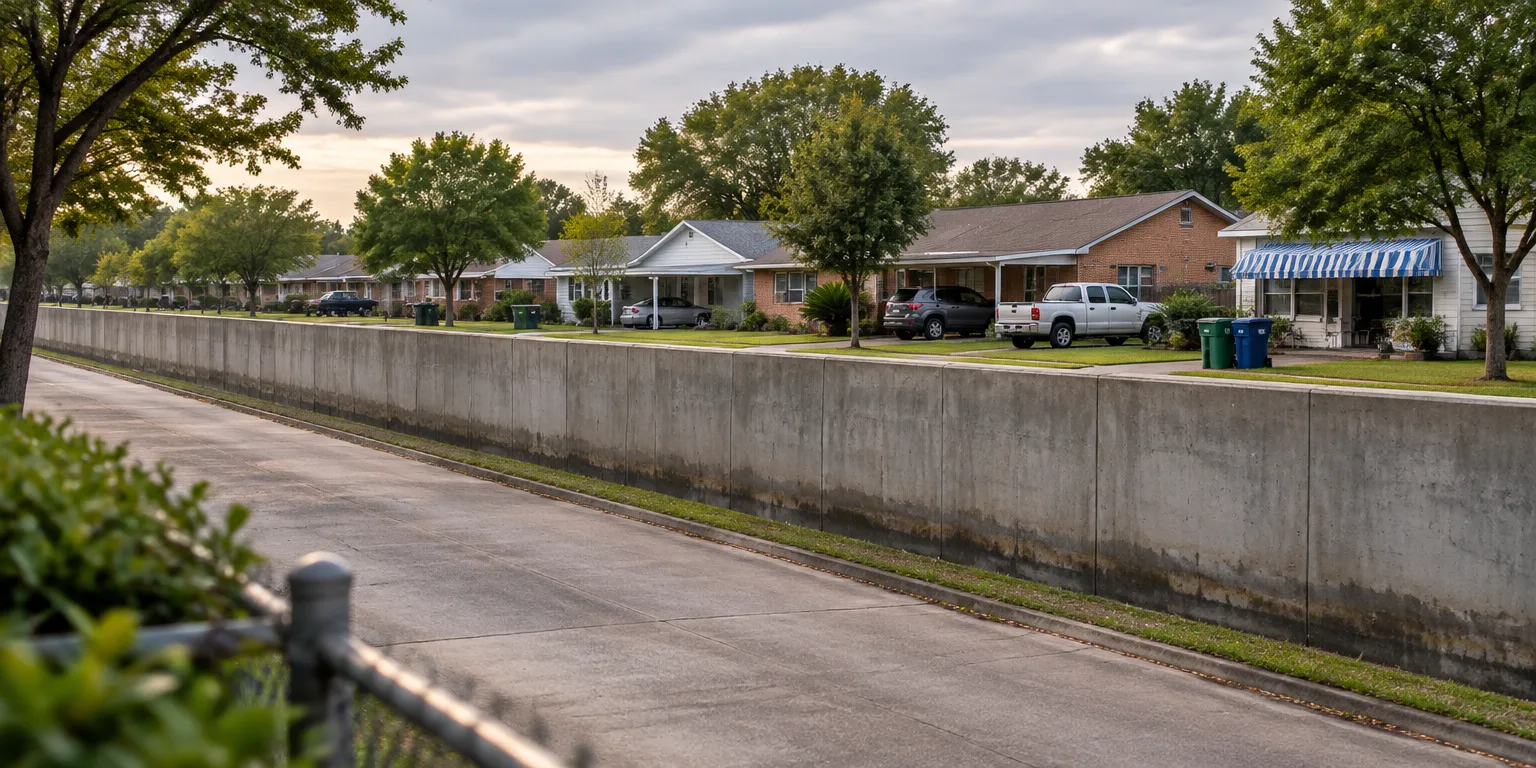
 Practical Engineering · The Mind-Blowing Flaw That Flooded New Orleans
Flood walls can leave a city worse off over decades than if they had never been built. That is the argument of Grady, a civil engineer who studied New Orleans during Hurricane Katrina in 2005. Safety, in his account, is always a compromise.
A city cannot pay for absolute safety, in his phrase, “you can’t build a 100-foot tall invincible wall around the city,” so engineers set protection at a level that is economically feasible. Below that level, a levee largely eliminates damage. Above it, water comes over the top and protected land floods much as it would have without a wall.
The difference builds over quiet years. Before protection, the lowest ground flooded regularly, and people understood the risk and left it mostly empty. After years with no flooding, homes, businesses, and other valuable property filled the former floodplain. Even shallow water over the top then causes huge losses because the old floodplain is fully built out. Over many decades, the expected toll can therefore surpass the toll without levees.
Grady calls the pattern hazard creep, and argues the system meant to protect New Orleans ended up magnifying the harm. Federal engineers calculated that about two in three deaths in Hurricane Katrina might have been avoided if the floodwalls had held. His broader point is separate: by inviting intensive development onto low land, the protections created conditions where damage and loss of life could exceed what an unprotected area would have suffered. Protection works until water finds its limit, and then everything built behind it is at stake.
Questions people ask
If levees can increase long-term damage, should cities just remove them?
No, and Grady does not argue for that. Levees prevent frequent, smaller floods and buy time for cities to function, but engineers now pair them with zoning limits, building codes, insurance that reflects real risk, and evacuation plans so that protection does not silently invite more danger.
Why did so many people live on such low land in New Orleans?
Much of New Orleans sits below sea level in a bowl between the Mississippi River and Lake Pontchartrain, and pumps normally keep it dry. After federal levees were expanded starting in the 1960s, low neighborhoods like Lakeview grew rapidly because the land was flat, available, and, for years, stayed dry.
Did New Orleans fix the problem after Katrina?
Yes, in part. The canal walls that failed were replaced with stronger walls, giant gates were added at the mouths of the outfall canals to keep surge from Lake Pontchartrain out, and federal levee design rules were rewritten. But much of the city remains below sea level, so the residual risk from a storm larger than the design storm remains.