Florida Is the Only Place Where Crocodiles and Alligators Live Side by Side
A vast maze of manmade canals beside a nuclear plant has become an unlikely stronghold for one of America's rarest predators.
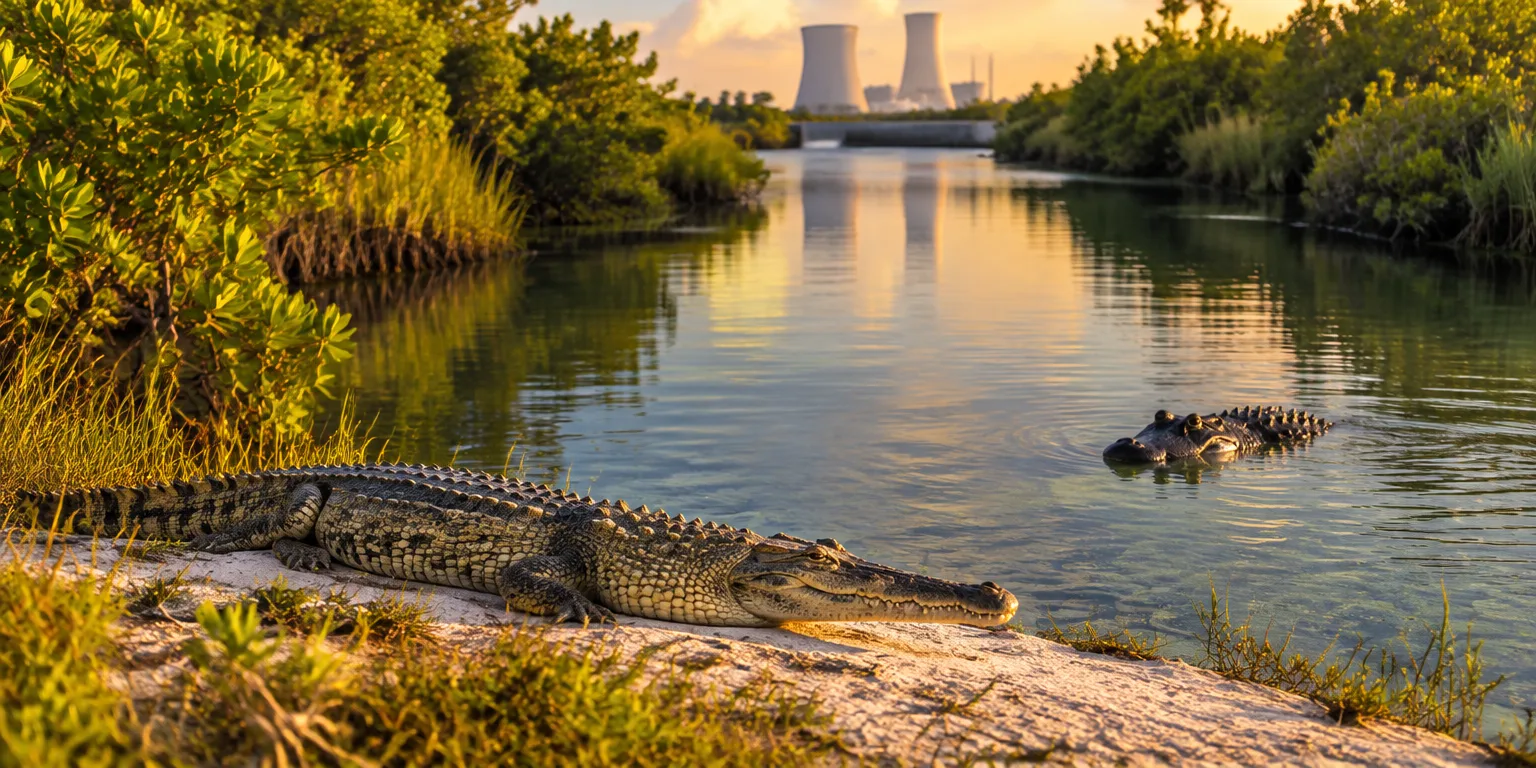
 PBS Terra · Why Crocodiles Are Thriving in the Shadow of A Nuclear Plant
Florida is the only state with wild native crocodiles. In South Florida, those crocodiles share wetlands with the more common alligator; the two do not share habitat anywhere else.
A key home is the cooling canals at Turkey Point Nuclear Power Plant just south of Miami. Those canals have become a refuge for one of the rarest predators in the country.
The plant was built in the 1960s to generate electricity, not to shelter wildlife. The canals happen to offer what crocodiles need: plenty of prey, raised banks for nesting, and no public access. The water cycles through without touching radioactive equipment. A nest was found there in 1978.
Questions people ask
How can you tell a crocodile from an alligator?
Look at the snout and teeth. Alligators have broad, rounded snouts, and when the mouth is closed you mostly see upper teeth. Crocodiles have narrower, more pointed snouts, and the fourth tooth on each side of the lower jaw shows outside the upper jaw.
Are Florida's crocodiles dangerous to people?
American crocodiles are shy and generally avoid people. Attacks are extremely rare in Florida, far less common than alligator incidents, and most animals flee when approached. Wildlife officials still advise giving them space and never feeding them.
Why are they only found in South Florida?
American crocodiles need warm winters and brackish coastal water, with sandy banks for nesting. South Florida is the only part of the country that stays warm enough year round and has that mix of saltwater and freshwater habitat. Farther north, cold snaps can be lethal to them.