For Now, AI Is Not Killing Jobs. It Is Sorting Them.
The top 1% of companies spend $7,449 per worker a month on AI, versus $11.38 at the median firm.
 Alex Lieberman · AI Isn't Killing Jobs. It's Sorting Them.
A recent post on AI and jobs opens with a new meta-analysis of labor markets. The author says the debate over job loss and job growth misses the real story, which they sum up this way: "AI barely moves the total. It explodes the gap."
By that, the author means AI is sorting jobs, with leverage going unevenly to some companies, rather than adding or removing them overall. Their version of the line is direct: "It isn't creating jobs or killing them on net." They add the hedge that this is true "Not meaningfully from a macro perspective yet," calling AI "a leverage machine" whose benefits are handed out unevenly.
The spending figures they point to show how uneven that handoff is. The top 1% of companies spend $7,449 per employee per month on AI, while the median company spends $11.38. "That's not a gap. That's a chasm," the author writes, arguing that the disparity shows where the advantage is flowing.
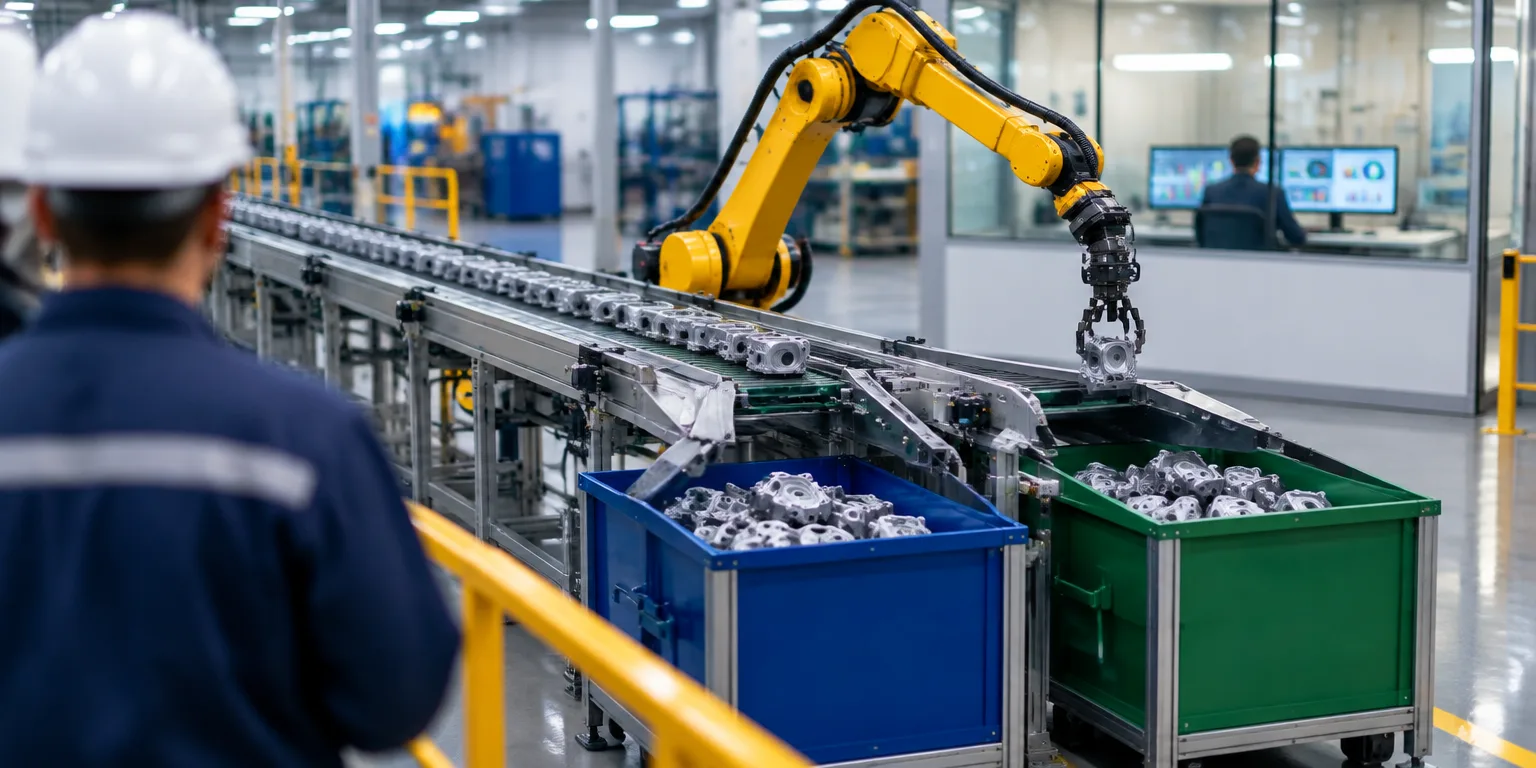
In a separate observation, the post notes that hiring is spreading beyond tech. More than half of AI roles sit outside core tech, with 21% in manufacturing alone, plus finance, education, and healthcare. If you are looking for high ROI uses for AI, the author says, "they're showing up in industries you might not expect."
That reshuffling, in the author's view, will not hold. At the moment AI is mainly shifting existing work around rather than adding or eliminating it in total, but the current equilibrium is temporary. "Sorting is just the first move," they write. "We're in the early innings of a much bigger shift." As they put it, "The question isn't whether AI will impact your work," but whether you will end up "on the leveraged side of the sort" or on the other side.
Questions people ask
What is a meta-analysis?
A meta-analysis pools the results of many separate studies on the same question and analyzes them together. It is useful because any single study of jobs and AI can be skewed by the industry, time period, or method it uses. Combining them gives a clearer picture of the average effect.
Why would manufacturers hire so many AI workers?
Modern factories generate large amounts of data from equipment, supply chains, and quality checks, and machine learning is well suited to predicting maintenance needs and spotting defects. Manufacturers also face persistent shortages of skilled labor, which gives them an incentive to automate scheduling, design, and inspection. Those roles often show up as AI or data jobs even though the employer is not a tech company.
Does spending more on AI guarantee better business results?
No. Research on technology adoption consistently finds that spending only pays off when it is paired with training, redesigned workflows, and clear problems to solve. Companies that buy powerful tools without those changes often see little gain. That is why economists distinguish between investment and effective use.