For Thousands of Years, Tea Was Eaten, Not Drunk
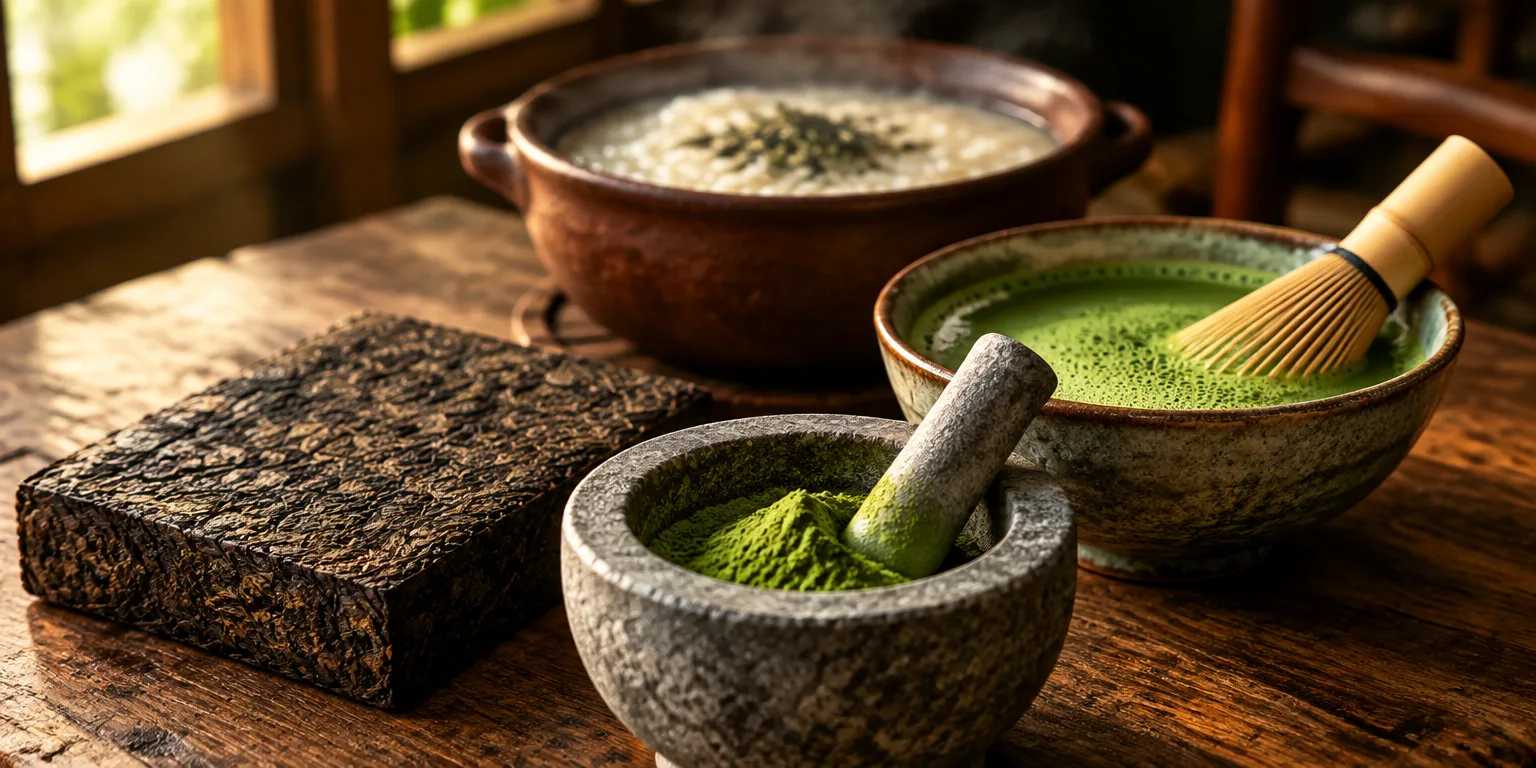
Heat and moisture unlocked its flavor, turning a vegetable cooked with porridge into whisked matcha.
 TED-Ed · The history of tea - Shunan Teng
For thousands of years, tea was food, not drink. In China, the same plant grown around the world today was served as a vegetable or stirred into grain porridge.
That changed about fifteen centuries back, after people learned that warming the leaves and adding water brought out deeper and more changeable flavors. After centuries of experimenting, they settled on a method: heat the tea, press it into compact blocks for carrying, crush those blocks into powder, and mix the powder with hot water.
The result was muo cha, now known as matcha. As it grew popular, books and poems followed, marking the start of a distinct Chinese tea culture.
Questions people ask
Do people still eat tea today?
Yes, though it is rare. In Myanmar, fermented tea leaves are served as lahpet, a savory salad with peanuts and sesame. In parts of China and Tibet, tea leaves are also still cooked into soups and grain dishes.
Why do heat and water change how tea tastes?
Fresh tea leaves are bitter and grassy because of compounds called catechins and caffeine. Heat tames some of that bitterness, releases aromatic oils, and triggers chemical reactions that create sweeter, roastier, and more floral flavors. Water then dissolves those flavors so you can taste them all at once.
How is matcha different from regular brewed tea?
With brewed tea, you steep the leaves and then remove them, drinking only the infusion. With matcha, shade-grown leaves are stone-ground into a fine powder that you whisk directly into hot water and consume whole. That makes it frothier, stronger, and higher in caffeine than most steeped teas.