Forty years after Challenger, an engineer still carries the guilt
He never got a vote, but he typed the approval, and he has spent decades making sure quiet objections get heard.
 Throughline · Forty years of what if
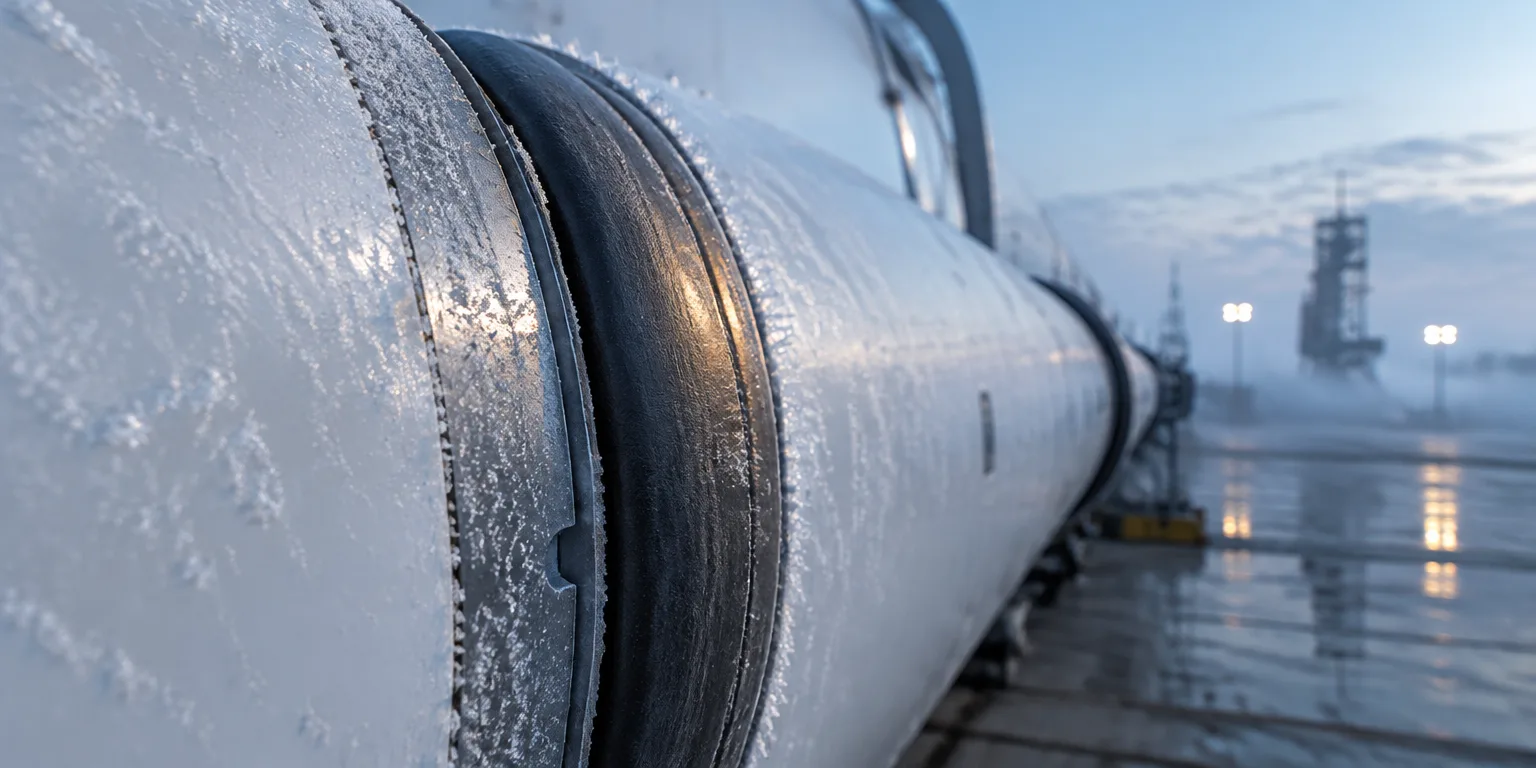
The morning the space shuttle Challenger launched, Brian Russell, then a young engineer at Morton Thiokol, the company that built the shuttle's solid rocket boosters, says he was "sitting on the floor toward the back" of a conference room to watch on television. His stomach was in knots. He got up on his knees as the countdown closed because he and his colleagues feared the rubber seals in the boosters, called O-rings, would fail in the cold and cause an explosion on the launchpad.
Russell is the engineer who, the night before, had typed the chart that cleared Challenger to fly, and who has spent 40 years living with what followed.
He had come home around 11:30 the night before, after a long and tense debate over whether the cold would stiffen those seals and let hot gas escape. His children were in bed and his wife was still up, and he talked for 45 minutes straight, a mile a minute, too worked up to sleep. The next morning, when Challenger cleared the tower, the manager sitting next to him turned and said, "We dodged a bullet." Russell remembers thinking, "I wish I could be sure."
Shortly after the shuttle passed the call for full power, there was an explosion. When the replay confirmed what he had seen, Russell thought, "That's our problem." He watched his colleague, engineer Roger Boisjoly, get up from the front of the room and leave, and after a second viewing he followed him downstairs to his office. Both men were in tears. Russell went back to his cubicle and sat in a daze. No work was done that day, as people wandered in confusion, and all he could think about was the loss of the astronauts.
What came next, he says, changed who he was. For about four months, sadness, anger, disillusionment and confusion cycled through his mind, and he could think of nothing else. The image of the explosion seemed stuck behind his forehead. He says he was not a very good husband or a very good father during that time. He kept wishing that at the end of that final company discussion, even after the company had agreed to launch, he had spoken up and said, "There's a dissenting view here." The grief, and the guilt, he says, has remained.
Because he cannot change the past, Russell says he tried to change how he lives. He encourages others to take part in important decisions, whether in engineering or in family life, and to share their thoughts and feelings. He asks for them, and respects them, so a quiet objection has a chance to be heard.
He still watches rockets. The effort to return to the Moon, and eventually to reach Mars, he says, is fantastic, and humanity is still in the infancy of spaceflight. Forty years after the disaster he helped approve, he still feels the loss deeply, and he still gets excited when a rocket lifts off.
Questions people ask
What was an O-ring, and why did cold weather matter?
The O-rings were flexible rubber gaskets that sealed the joints between sections of the shuttle's solid rocket boosters, keeping superhot combustion gas inside. In freezing overnight temperatures before the launch, the rubber stiffened and sealed more slowly, allowing hot gas to blow past and burn through the casing. That burn-through led to the breakup of the shuttle 73 seconds after liftoff.
Who was aboard Challenger?
Seven crew members died: commander Francis Scobee, pilot Michael Smith, mission specialists Ronald McNair, Ellison Onizuka and Judith Resnik, payload specialist Gregory Jarvis, and Christa McAuliffe, a New Hampshire teacher who was to be the first private citizen in space. Their loss, watched live by schoolchildren across the country, grounded the shuttle fleet for nearly three years.
What did investigators conclude after the disaster?
Investigators concluded that cold-stiffened O-rings failed, and faulted both the seal design and a launch decision process that overruled engineer warnings under schedule pressure. Flights resumed in 1988 with a redesigned booster joint, stricter weather rules, and changes meant to make it easier for engineers to halt a launch over safety concerns.