Four Small Cleanings Keep an Espresso Machine Working
A daily wipe, a weekly flush, and regular deeper cleanings keep oils and scale from building up.
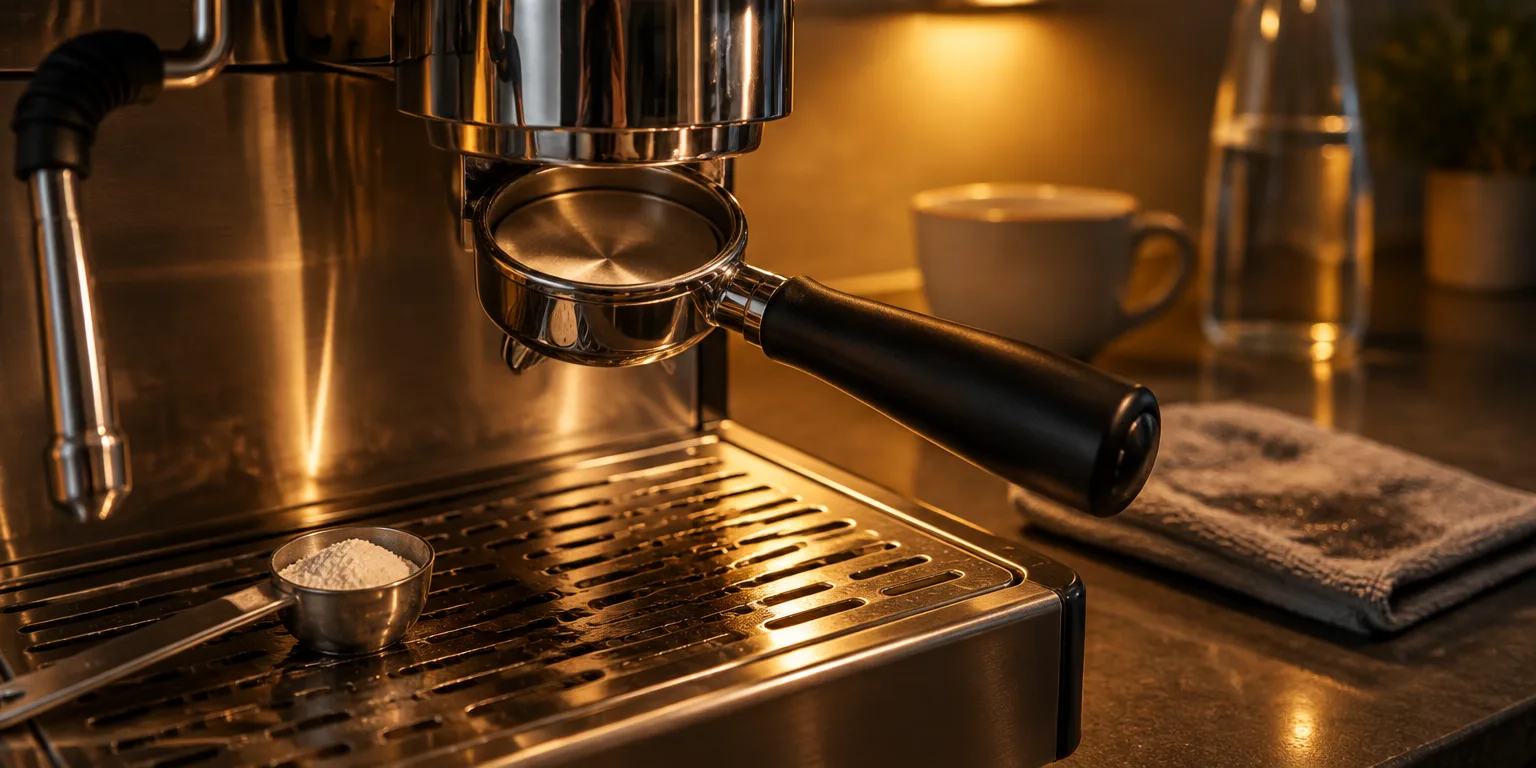
Coffee oils, milk residue, and water minerals build up inside an espresso machine with normal use. A set cleaning rhythm keeps that buildup from getting in the way.
The routine has one job for each interval: daily, weekly, monthly, and every two to three months.
Every day, wipe and clean the group head. That is the heavy metal piece where hot water meets the ground coffee, and it collects wet grounds and oil with every shot.
Once a week, backflush with cleaning powder. That means running water and espresso cleaner backward through the machine, using its blind filter basket, a basket with no holes, to dissolve oils you cannot wipe away. Check your manual for whether your model uses cleaner or water only.
Once a month, clean the steam wand thoroughly. That is the thin pipe that blasts steam into milk, and leftover milk can crust inside and on the tip.
Every two to three months, descale. That is a deeper cleaning cycle that dissolves mineral buildup from heated water inside the machine.
Begin tonight with the daily wipe. It is the first and most frequent job.
Questions people ask
What exactly is backflushing?
Backflushing pushes hot water backward through the brew path to wash out coffee oils. With cleaning powder, you lock in the basket without holes, add the powder, run the pump in short bursts, then rinse well. Check your manual first, since some small machines should only be rinsed with water.
What cleaning powder should I buy?
Use a cleaner made for espresso machines, often sold as espresso machine cleaning powder or tablets. Do not use dish soap or vinegar in the brew path, since they can leave flavors and harm seals. Your machine maker usually names a compatible brand.
How do I descale without damaging the machine?
Descaling uses a mild acid solution to dissolve calcium deposits inside boilers and pipes. You mix the descaler with water, run it through the machine following the instructions, then flush with fresh water. Very hard water may call for filtered water or more frequent descaling.