Four-Year-Olds Beat Adults at Finding an Unlikely Hidden Rule
The box takes two blocks together to light up, and preschoolers get it while grown-ups cannot let go of the simpler idea.
 Talks at Google · The Gardener and the Carpenter | Alison Gopnik | Talks at Google
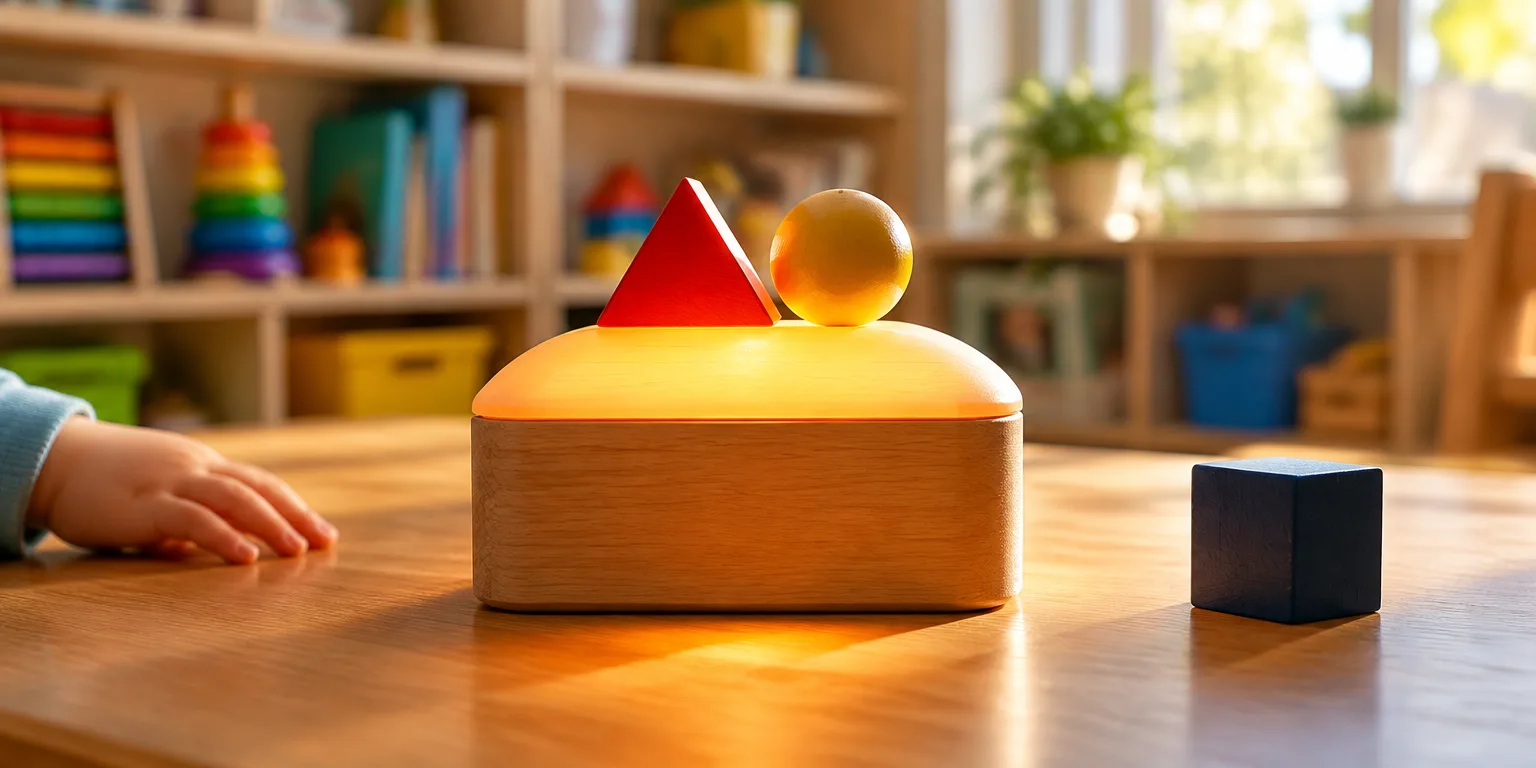
The girl on the screen is 4 years old. She is staring at a small box that flashes and makes a tune for only certain blocks placed on top.
A researcher, Alison Gopnik, who studies how children learn, puts a block she calls triangle on the box. Nothing happens. She puts it on again. Nothing happens. A third time, nothing happens. She puts a block called square on the box. Nothing happens. Then she puts triangle and a third block, ball, on together. The box lights up.
The girl watches without looking away. The researcher tries triangle, square, and ball all together. The box lights up again. She tries triangle and ball together once more. It lights up again.
Then come the questions. Is triangle a blicket, one of the blocks that makes the machine go? The girl says yes. Is square a blicket? No. Is ball a blicket? Yes. Which ones should be used to make the machine turn on? Those two, she says.
Gopnik uses the box, which she calls the Blicket detector, to test how people turn complicated patterns into guesses about cause and effect. Adults are famously bad at statistics from tables and formulas. Children, she argues, do the statistics by watching what happens.
The point of this test is not whether one block works. It is whether the box follows an obvious rule or an unlikely one. The obvious rule is that a single special block makes it go. The unlikely rule is that it takes a combination of two blocks together.
When the clues pointed to the obvious, single block rule, 4-year-olds and adults gave the same answer. When the clues pointed to the unlikely combination rule, they split. The 4-year-olds cracked the puzzle again and again and landed on the unlikely answer. The adults kept using the idea they had started with and stuck with the obvious solution, even when it did not fit. Gopnik cautioned that this particular comparison is still work in progress and has not yet been published.
It is hard to follow even for adults, Gopnik says. When she has shown this to most adults, they sit there wondering which block went on when, while the 4-year-old is focused, tracking it all, and getting it right.
Gopnik says this fits the idea that childhood is about finding unlikely solutions. When asked to make the machine go, the younger children picked the two blocks together.
Questions people ask
What exactly is a Blicket detector?
The Blicket detector is a simple research tool, a box that lights up and plays music for some objects and not others. Researchers show children different sequences, for example one block alone does nothing but two blocks together turn it on, then ask which objects have the special power. Because the child just has to make the machine go, the task reveals what causal rule the child inferred.
Does this mean 4-year-olds are smarter than adults?
No. On easy versions where one block alone makes the machine go, adults and 4-year-olds do equally well. The difference appears only when the true rule is unusual, in this case that two blocks are needed together. Adults tend to stay with the simpler, more familiar explanation, while young children consider the unusual one.
Why do adults do worse on the unlikely rule?
Gopnik ties the change to brain development. In early childhood the brain makes a huge number of connections and stays flexible, then later unused connections are pruned and used ones become faster and more efficient. The result is an adult brain built to act quickly and plan well, but less open to unlikely possibilities.