France advances a bill to keep radios in cars as the U.S. weighs one
In-car listening is up more than 50 percent in 20 years, and supporters of a mandate say broadcast radio still works when phones fail.
 Global News Podcast · Trump fires press secretary Katie Zacharia
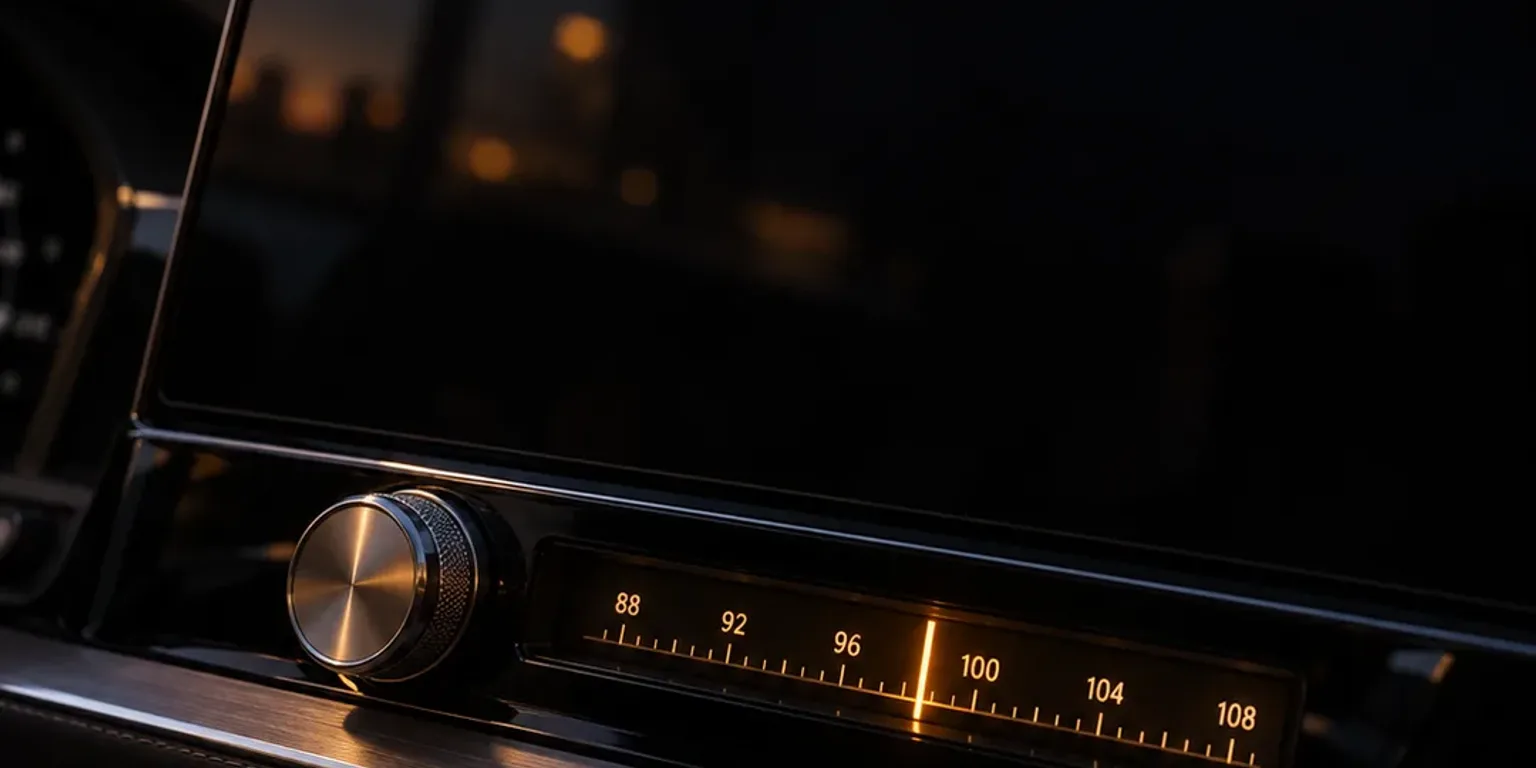
More dashboards are becoming touchscreens, with a few manufacturers seeming to omit radios entirely.
For almost 12 million people in Britain, they listen to radio only in the car. Since 2020, any radio fitted in a new car there must be able to receive digital stations, but no rule requires a new car to include a radio. The same question being debated in France and the United States is now being asked in Britain: whether new cars should be required to include one?
France is advancing a bill to require car radios, and the United States is considering one. The argument in both places is public safety and resilience.
The case became vivid during the massive blackout that hit Spain and Portugal, which crippled transport, cut off phone networks, and closed shops, offices, and restaurants. Pointing to that blackout and to the rise in natural disasters and cyberattacks, the president of Radio France argued that vehicles without broadcast radio leave a gap in emergency coverage.
The reason is simple. Phones and internet services can fail together when power goes and networks go dark. A car radio can still bring live, local information, from weather forecasts to traffic reports, without a phone signal or a subscription.
That need fits how listening has shifted. Listening at home has declined, but live radio listening in cars has grown by more than 50 percent in 20 years. Sean Street, emeritus professor of radio at Bournemouth University, traces the growth to motorways and long journeys, when drivers needed to be kept alert.
Broadcast listening on the road is almost a century old. The BBC started in 1922, and that year Daimler showed a wireless equipped car at Olympia. In the 1930s, an American company called Motorola built among the earliest car radios to sell widely, its very name a tribute to the automobile.
As Street put it: "In a car, that sense of being connected to a community is perhaps more important than any time, news program, or just, just a traffic report."
Questions people ask
Why would an automaker remove the radio at all?
A touchscreen can stream music, podcasts, and navigation from a phone, so some makers treat broadcast radio as redundant software rather than hardware. Dropping the tuner and antenna saves parts, licensing, and dashboard space, while pushing drivers toward the automaker's own apps and subscriptions.
Doesn't a smartphone do the same job in an emergency?
Usually, but not during a widespread outage. Mobile networks depend on powered towers and data centers, and they can overload or lose power, as happened in the Iberian blackout. Broadcast radio uses a few high-power transmitters that can reach many battery-powered or car-powered receivers at once.
What would a mandatory radio law actually require?
Proposals in the U.S. and France focus on keeping free, over-the-air AM and FM reception in every new car, alongside digital stations where available. In Britain, cars with radios must already receive digital stations, so a mandate would close the gap by requiring the radio itself.