Getting a Kilogram to Orbit Cost $50,000. SpaceX Cut It to $2,400.
Its giant Starship rocket could push the price to $100, or even $10, and change what is possible in space.
 We Study Billionaires - The Investor’s Podcast Network · RWH070: Hunting For Hidden Treasures w/ Christopher Begg
Putting a kilogram of anything into low Earth orbit, the busy band a few hundred miles up where most satellites fly, used to cost more than $50,000.
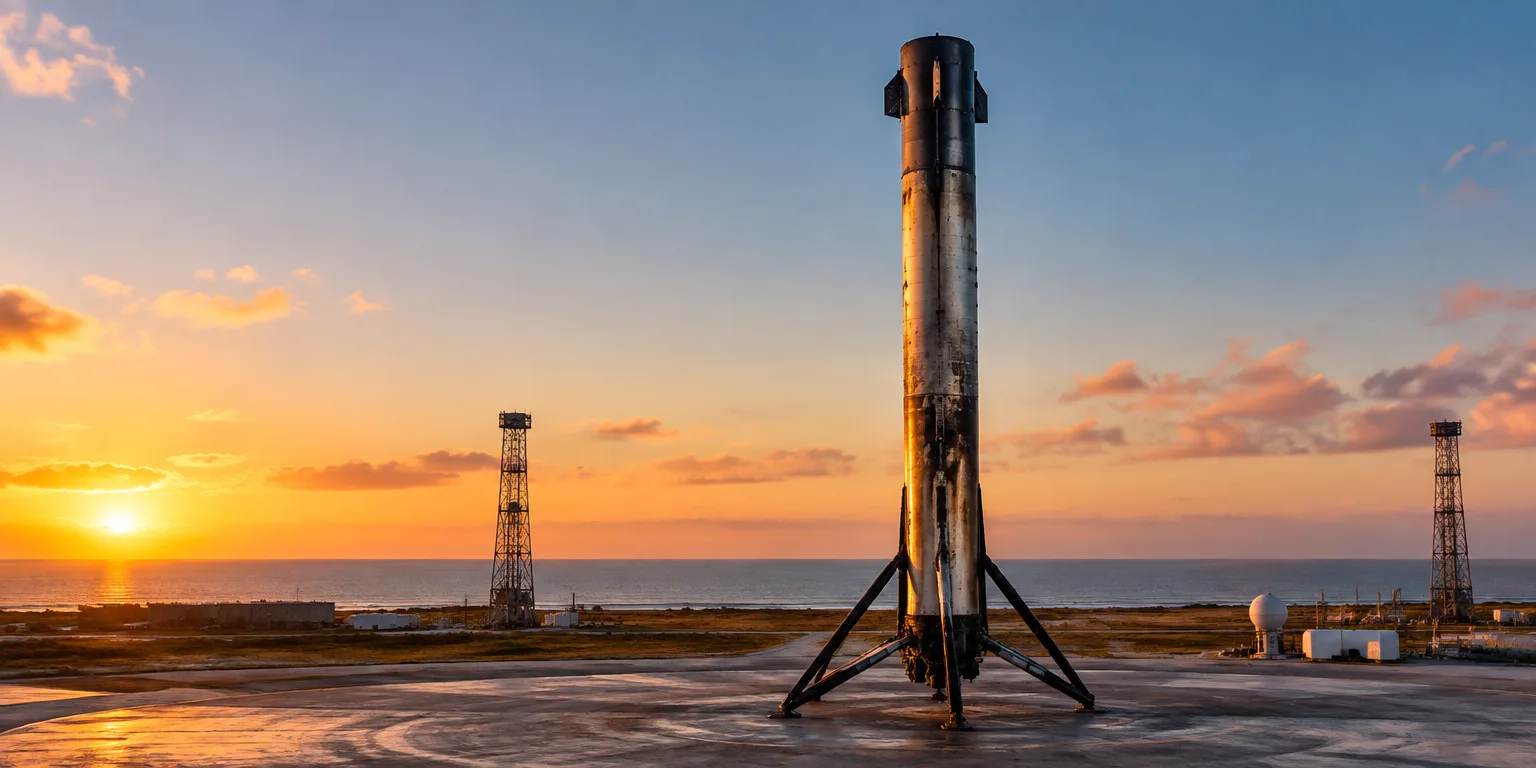
SpaceX changed that with a reusable rocket, the Falcon 9, which lands its booster back on Earth instead of throwing it away. The price fell to about $2,400 a kilogram, according to Christopher Begg, who runs East Coast Asset Management.
That lower price made Starlink possible, a mesh of more than 10,000 satellites beaming internet service down to Earth.
The next rocket, Starship, is bigger and designed to reuse both stages. If Starship succeeds, Begg estimates it could cut the cost to $100 a kilogram, and possibly as low as $10. His estimate rests on his view that key hurdles, including the engines and heat shield, are solved. He describes that kind of steep drop as a phase transition, when a big change in cost makes things possible in space that were not possible before.
Questions people ask
Why does reusing a rocket cut the cost so much?
A traditional rocket is used once, so every launch throws away millions of dollars of engines, tanks, and electronics. A reusable booster spreads that hardware cost over many flights, with fuel making up a relatively small share of each launch.
What makes Starship cheaper than Falcon 9?
Falcon 9 reuses only its first-stage booster, while the upper stage is discarded. Starship is designed to reuse both stages, and it is also much larger, so it can carry far more payload per flight and divide the cost over more kilograms.
What would $10 a kilogram actually unlock?
At $10 a kilogram, a 250-pound person would cost a little over $1,000 to lift to orbit in raw launch terms, before food, safety, and spacecraft. The bigger near-term effects are likely huge satellite networks, orbital manufacturing, and space-based data centers that only make sense when freight is cheap.