Ghost Investigators in the 1600s Tested Hauntings Like Scientists
Ministers borrowed the era's new habits of observation and documentation, and ruling out madness made a haunting more believable.
 After Dark: Myths, Misdeeds & the Paranormal · Scotland's Worst Poltergeist
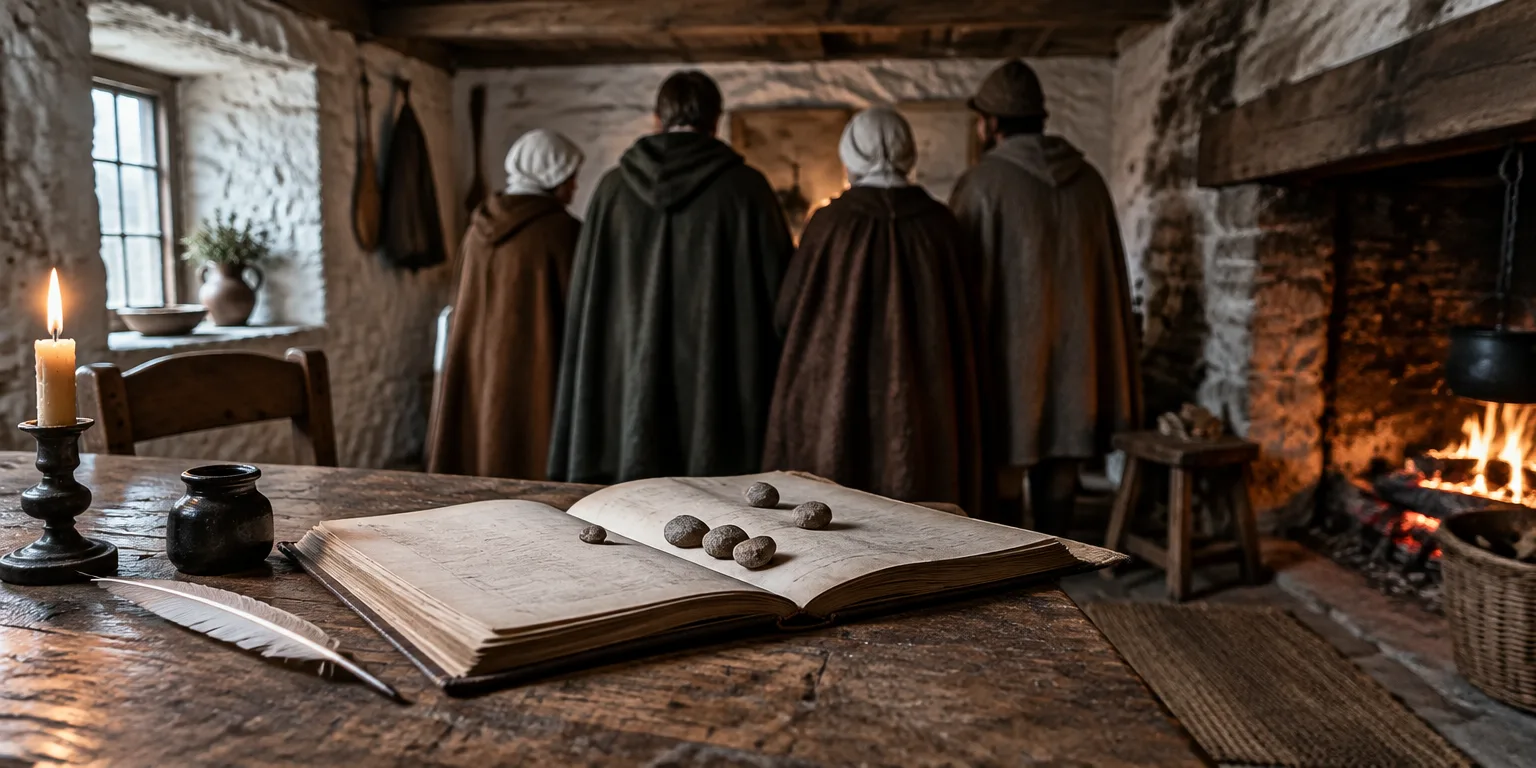
In the late 1600s, the way to test a ghost was to invite the neighbors in to watch.
That was the approach taken in southwest Scotland in 1695, when Presbyterian minister Alexander Telfair investigated strange disturbances at the home of stonemason Andrew Mackie and his family. He gathered local people to witness the events, wrote down what happened, and published their testimony as evidence.
It was not unusual. Historian Martha McGill says communities then relied on respected local people to prove that something was real. If prominent neighbors would attest to flying stones and strange apparitions, that counted as proof.
Telfair had an English precedent. English author Joseph Glanville had published a detailed investigation of a poltergeist case known as the Drummer of Tedworth in 1681. Like Telfair, Glanville visited the site, documented what he found, and collected statements from people willing to vouch for what they had seen.
The method matched the intellectual fashion of the time. Across Britain, thinkers were embracing empiricism, the idea that knowledge comes from careful observation and recording. McGill notes that leading intellectuals, including those connected with the Royal Society, were using observation and documentation to learn how the natural world operated.
Ghost investigators used methods that resembled those used to study nature, but applied them to a more unusual subject. Observation, note taking, and multiple witnesses fit the broader mood of methodical inquiry.
Skepticism was part of the test. McGill says a family reporting a haunting could not be sure the minister would believe them. He might conclude they were melancholy, the period's word for low spirits or gloom, or hallucinating, and send them to a doctor.
From today's perspective, when ministers and neighbors instead said they took the events seriously, that rejection of an ordinary explanation lends credence to the documentation. It shows that dismissal was a possible outcome, and was not chosen.
Questions people ask
What was the Drummer of Tedworth?
It was a famous English poltergeist case from the 1660s. A householder said his home was troubled by drumming noises and flying objects after a dispute with a drummer. Joseph Glanville investigated the claims and published the story as evidence that spirits were real.
Why did it matter whether the minister believed the family?
In a society that depended on communal relations, proof often came from the testimony of respected local people. A minister was a trusted authority who could interpret events for the community. His willingness to listen, visit, and gather witnesses signaled that the claims deserved to be taken seriously.
What did melancholy mean in the 1600s?
It meant low spirits, gloom, or depression, and it was often treated as a bodily condition. A minister might suggest that sadness or an unbalanced constitution had produced hallucinations. That offered a natural explanation that did not involve spirits.