Morning and Sunset Light Anchors the Body Clock for Better Sleep
Two brief periods outside frame the day for the central clock, and darker evenings help keep melatonin on schedule.
 Andrew Huberman · Master Your Sleep & Be More Alert When Awake
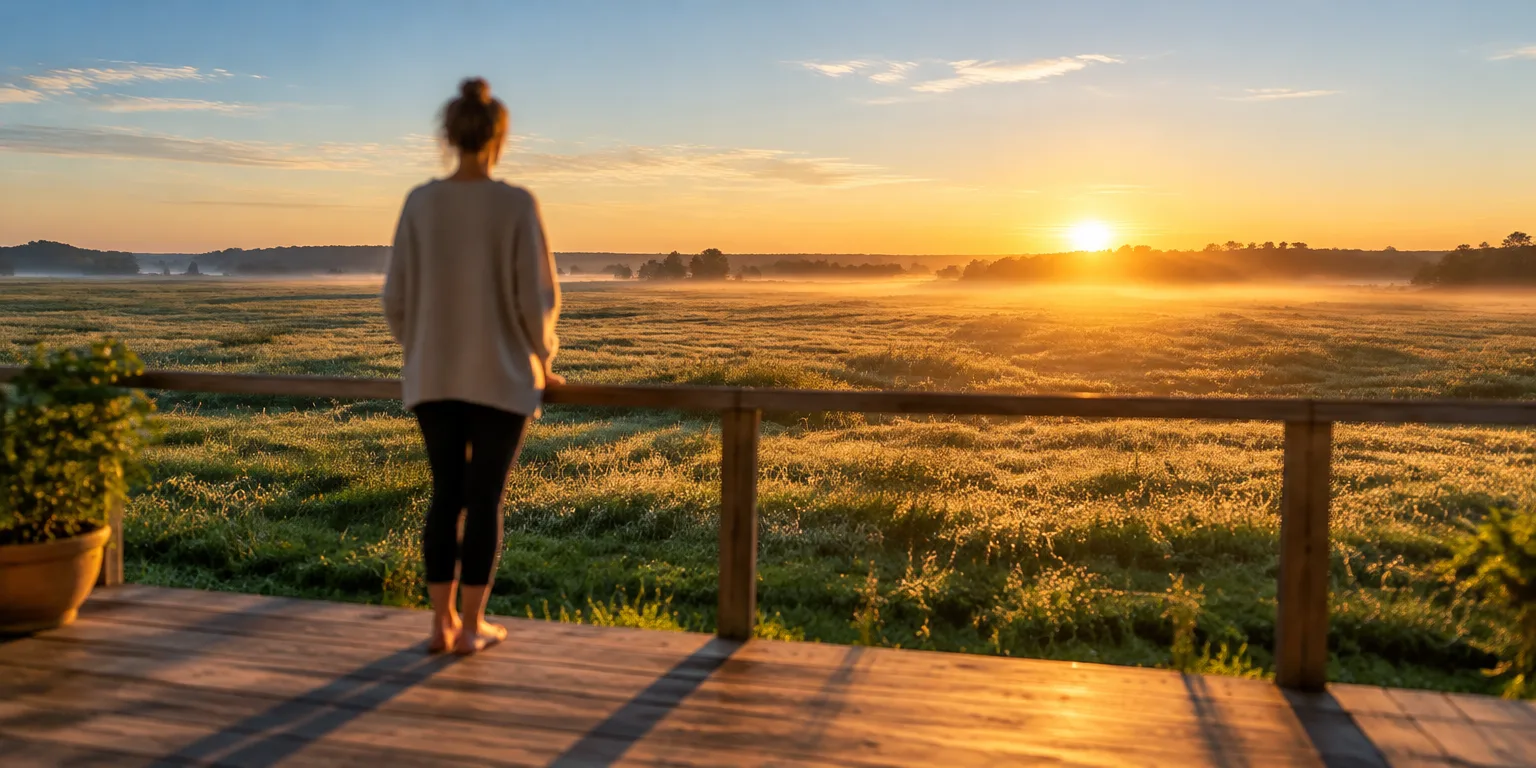
A Stanford professor of neurobiology and ophthalmology who studies sleep starts most mornings by going outside to let daylight into his eyes, even on days when he wakes a few hours after sunrise.
Light, and in particular sunlight, is the most powerful signal governing when sleep and wakefulness fall within each 24 hour cycle, according to the professor.
The morning part of the protocol calls for going outside soon after waking, without sunglasses, rather than viewing light through glass. Dr. Jamie Zeitzer, a Stanford psychiatry researcher who studies this, is cited as finding that viewing this light through a window or car windshield is 50 times less effective than being outside with no sunglasses.
There is no staring at the sun involved, since scattered photons present when the sun is low are sufficient. The time needed varies with brightness, from 30 to 60 seconds in bright conditions such as snow in Colorado with no cloud cover, to longer on dark winter mornings.
Even under dense cloud cover, a person is probably getting 10,000 to 50,000 lux, a unit of light brightness, which is thought to be enough to align the clock. Prescription lenses and contacts do not block the needed wavelengths, and safety comes first, so sunglasses are still worn when needed for safety.
A second signal comes within about an hour of sunset, for 2 to 10 minutes outside, again without sunglasses when it can be done safely. That evening light tells the central clock, the brain's main body clock, that the day is ending. With dark sunglasses, the exposure would probably take 100 to 1,000 times longer.
A study published in 2020 found that this sunset viewing helps protect nighttime release of melatonin, the hormone that brings sleepiness, from disruption by artificial light later that night.
The evening part of the protocol calls for as much safely possible bright light during the morning and day, as little artificial light as possible after about 8 p.m., and no bright light exposure between 11 p.m. and 4 a.m.
Questions people ask
Does the protocol require looking directly at the sun?
No. The researcher describes the relevant eye cells as responding to overall daylight, including scattered light when the sun is low, so facing the general direction while outside is the described method. He adds that no light that feels painful should be viewed.
What happens on cloudy mornings or dark winter days?
The recommendation is to spend more time outside in those conditions. Even dense cloud cover still delivers far more light energy than typical indoor lighting, and some people use sunlight-simulating lamps in very dark winters.
Do glasses or sunglasses interfere?
Prescription lenses and contacts are described as compatible with the protocol. Dark sunglasses weaken the signal substantially, so the brief morning and sunset viewing is done without them when safe, with safety taking priority.
Why does the protocol emphasize dim light in the evening?
The account holds that the eyes become more sensitive to light the longer a person has been awake. Late night bright light can shift the clock and interfere with melatonin, so low evening light helps preserve the regular timing of sleepiness.