Gold Hunters Kept Turning Up Headless in a Canadian Valley With No Roads
After the first headless bodies were found around 1907, prospectors kept going back for the gold, and kept dying in ways that did not add up.
 The Joe Rogan Experience · #2543 - MrBallen
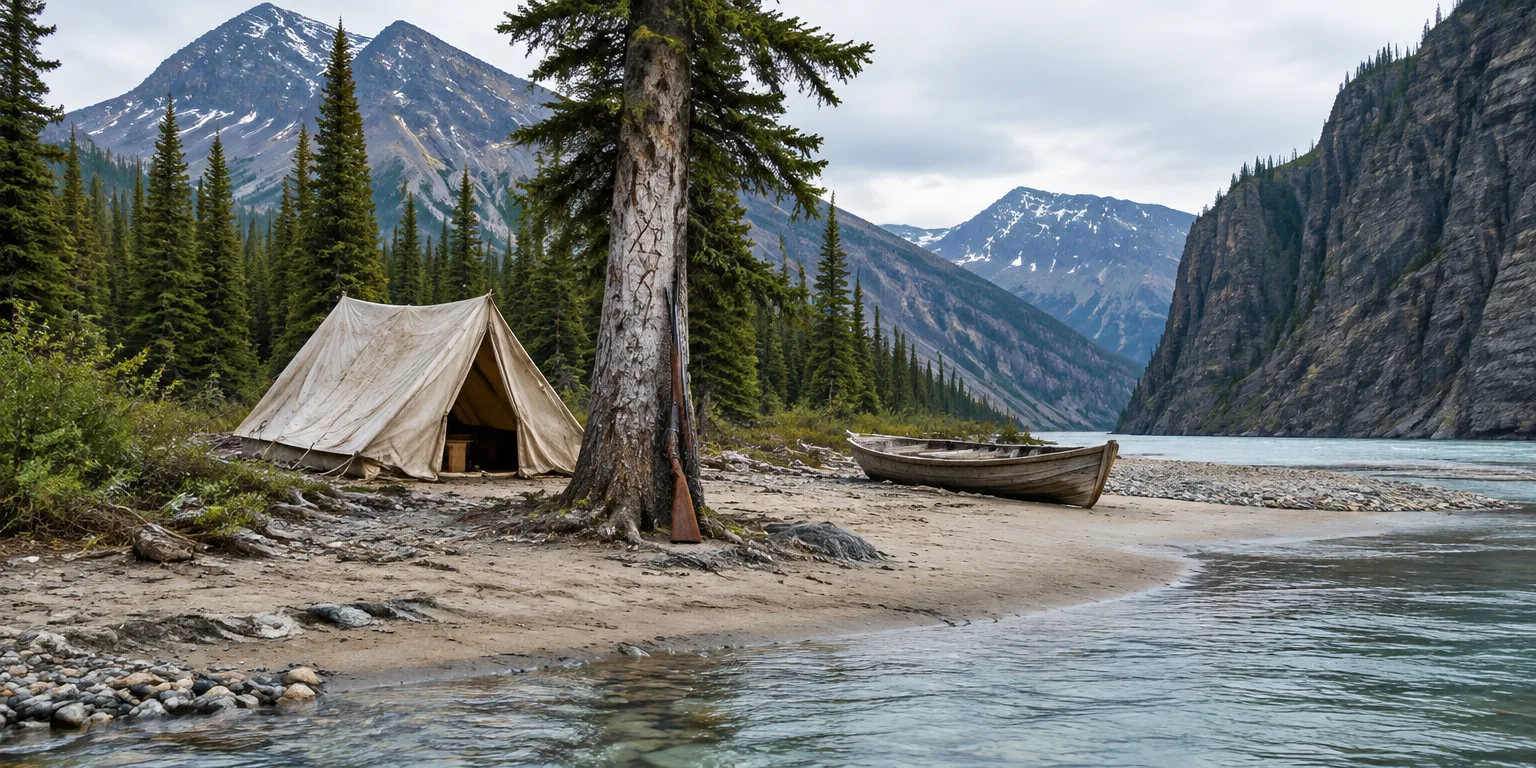
Charlie McLeod beached his boat where Second Canyon gives way to a sandy beach and walked toward his brothers' camp. There was a tent, a rifle propped against a tree, and two badly decomposed bodies. One man lay half in and half out of the tent, still reaching for the gun. Both men were missing their heads.
Charlie was a seasoned gold hunter, one of three brothers who had hauled a boat in pieces past waterfalls and rapids to reach this spot two years earlier, around 1905. They had camped on a narrow strip of sand backed by forest and mountains, sifted the river, and found gold everywhere in the sand. On the way out their boat capsized and they lost it all.
That loss is what brought Charlie back. He had refused to return, but his brothers Willie and Frank had gone back a year later with another prospector, Robert Weir, planning to live in the valley for a summer and work the deposit. After two years with no word, in a time with no way to call out, Charlie led a search party in through four canyons to find them.
What he had to pass through helps explain why the place earned its name. The Northwest Territories are about four times as large as Germany with only about 45,000 people, and the Nahanni Valley inside it had no roads then and has none now. To enter by river, travelers must run a 10 mile stretch called Second Canyon, described as water perhaps 100 feet deep running wall to wall against sheer cliffs. In the account, once inside, there is nowhere to stop until the end.
On the tree by the rifle, someone had etched, "We have found a fine prospect." A short distance away lay a skeleton believed to be Weir. The heads were never found. Officials put it down to starvation and animals, but Charlie never believed it.
Over the next 35 years, the pattern kept repeating. By 1913 the area was being called Headless Valley. A prospector named Martin Jorgensen built a cabin near the McLeod camp, missed his end of summer meeting with the businessmen who funded him, and was found headless in the burned remains of his cabin. Investigators were puzzled because the fire appeared to have started on the roof.
Others died differently but just as strangely. A prospector named Riley O'Brien was found sitting dead before a cold campfire, gripping either a match or a cigarette, after being gone only an hour or two. His partner said he looked flash frozen. At least two other prospectors had cabins burn down, one found nearly decapitated, and others found intact in burned cabins.
In 1926 a hunting party of about a dozen people camped near the Flat River. In the morning May Lafferty, believed to be the only woman in the group, was gone without a trace. A lone camper nearby unknown to them told police he had been woken that night by small rocks splashing into the river. He said he watched a woman crawl on all fours up a low rise, turn and stare at him in a way that looked possessed, then scamper away. Shown a photograph, he said he was nearly positive it was Lafferty. She was never found.
Around 1939, prospector John Patterson vanished. During the search, an Indigenous man emerged from the forest, warned the group that the Waheela were out that night, and left. The Waheela were tall, white, screeching creatures in the lore of the Naha tribe, said to live in high caves in the canyon walls that no person could reach. That night the searchers heard screaming and screeching from the canyon all night and quit the search the next day out of fear. People went in less after that, but no one ever proved what killed the McLeods, burned the cabins, or took Lafferty and Patterson.
Questions people ask
Can you visit the Nahanni Valley today?
Yes. It is now Nahanni National Park Reserve, a Canadian national park and UNESCO World Heritage site known for Virginia Falls and deep canyons. There are still no roads in, and most visitors arrive by chartered float plane or on guided river trips.
Did anyone ever get rich from the valley's gold?
No large new gold strike was ever confirmed there. The valley is valued today for wilderness, rivers, and wildlife rather than mining, and much of the surrounding area is protected from development.