Good Management Killed the World's Most Admired Computer Company
Digital Equipment listened to its customers and protected its profits, and the personal computer killed it anyway.
 Talks at Google · Where Does Growth Come From? | Clayton Christensen | Talks at Google
In the 1980s, managers at Digital Equipment Corporation could look out the window and see that everybody was buying personal computers. They heard nothing from their own customers suggesting that those small machines mattered, because to those customers they did not.
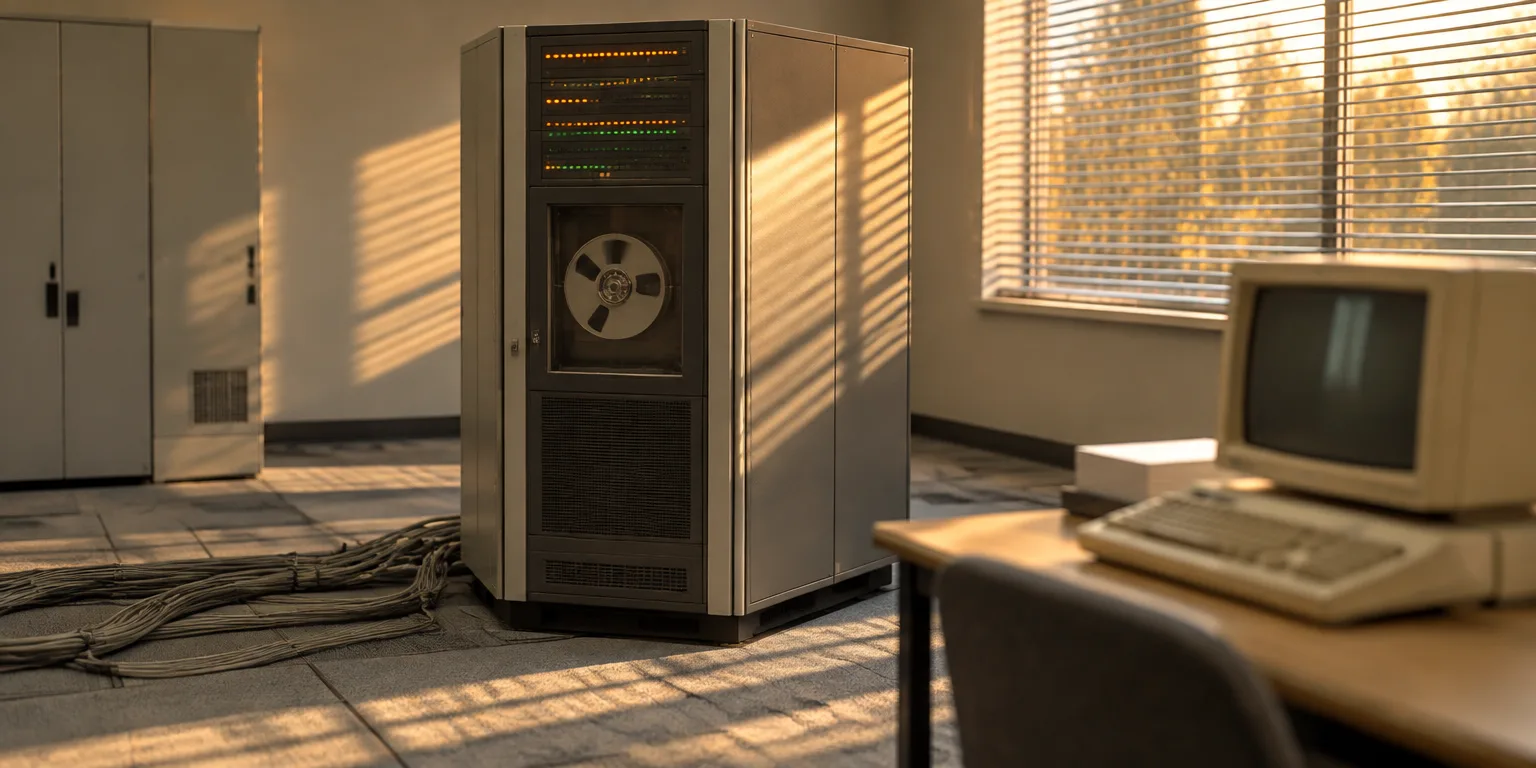
Digital, known as DEC, made minicomputers, machines about the size of a church pulpit that sold for about $250,000. In the 1970s and early 1980s, it was regarded as the most admired business on the planet, and its success was credited to the brilliance of its managers. Then, around 1988, it fell off a cliff and began to unravel.
That collapse is the heart of a puzzle described by Clayton Christensen, who studies why successful companies fail. Almost every company once seen as unbeatable ends up in the middle or at the bottom 10 or 20 years later, he said, and good management is what causes it to stumble.
The usual explanation was that DEC's managers had grown stupid. Christensen said that explanation never fit, because DEC did not fall alone. Every maker of the same kind of computer, including Data General, Prime, Wang, Nixdorf, Hewlett-Packard, and Honeywell, was killed at the same time. He said executives might be expected to match each other on pricing now and then, but the idea that they all agreed to collapse was a stretch.
What they shared was a choice that looked obvious at the time. People inside DEC kept bringing two kinds of ideas. One would make its machines even better, good enough to steal business from mainframe computers, with profit margins of 60% on even more expensive machines. DEC already needed margins of 45% to pay for its direct sales force, training, service, and software.
The other idea was to build personal computers. Those early machines were so limited that Apple sold its Apple II as a toy for children, and for their first 10 years not one of DEC's customers could use one for real work. The financials looked worse. Small computers earned margins of about 40%, headed quickly to 20%, and only on machines that sold for about $2,000.
So managers faced a question: should we make better products we can sell for higher profits to our best customers, or, as Christensen described their choice, "make worse products that none of our customers would buy that would ruin our margins"? They chose the first, exactly as careful management teaches. As Christensen put it, "doing the right thing is the wrong thing and doing the wrong thing is the right thing."
The worse product grew up until it could do what the minicomputer did, and DEC, which had listened to its customers and protected its profits, had no place left to go.
Questions people ask
What finally happened to Digital Equipment?
Digital Equipment shrank through layoffs and restructuring in the 1990s and was acquired by Compaq in 1998 for about $9.6 billion. Compaq was later acquired by Hewlett-Packard, once itself a minicomputer maker, in 2002.
What was a minicomputer?
A minicomputer was a midsize business computer, smaller and cheaper than a room-size mainframe but shared by an office through terminals. It was far larger, more expensive, and more powerful than a personal computer meant for one person.
Could a company like DEC have built both kinds of computers?
In theory, yes, by creating a separate unit with its own sales team, cost structure, and profit expectations. Christensen pointed to Hewlett-Packard, which separated its inkjet printer business in Vancouver with its own sales force when inkjets threatened its laser printers. He said very few leaders manage this kind of separation successfully.