Grocery pallets are packed in aisle order so clerks can shelve without sorting
Boxes wait on trays in a cavernous rack, then are stacked so the first item off is the first item shelved.
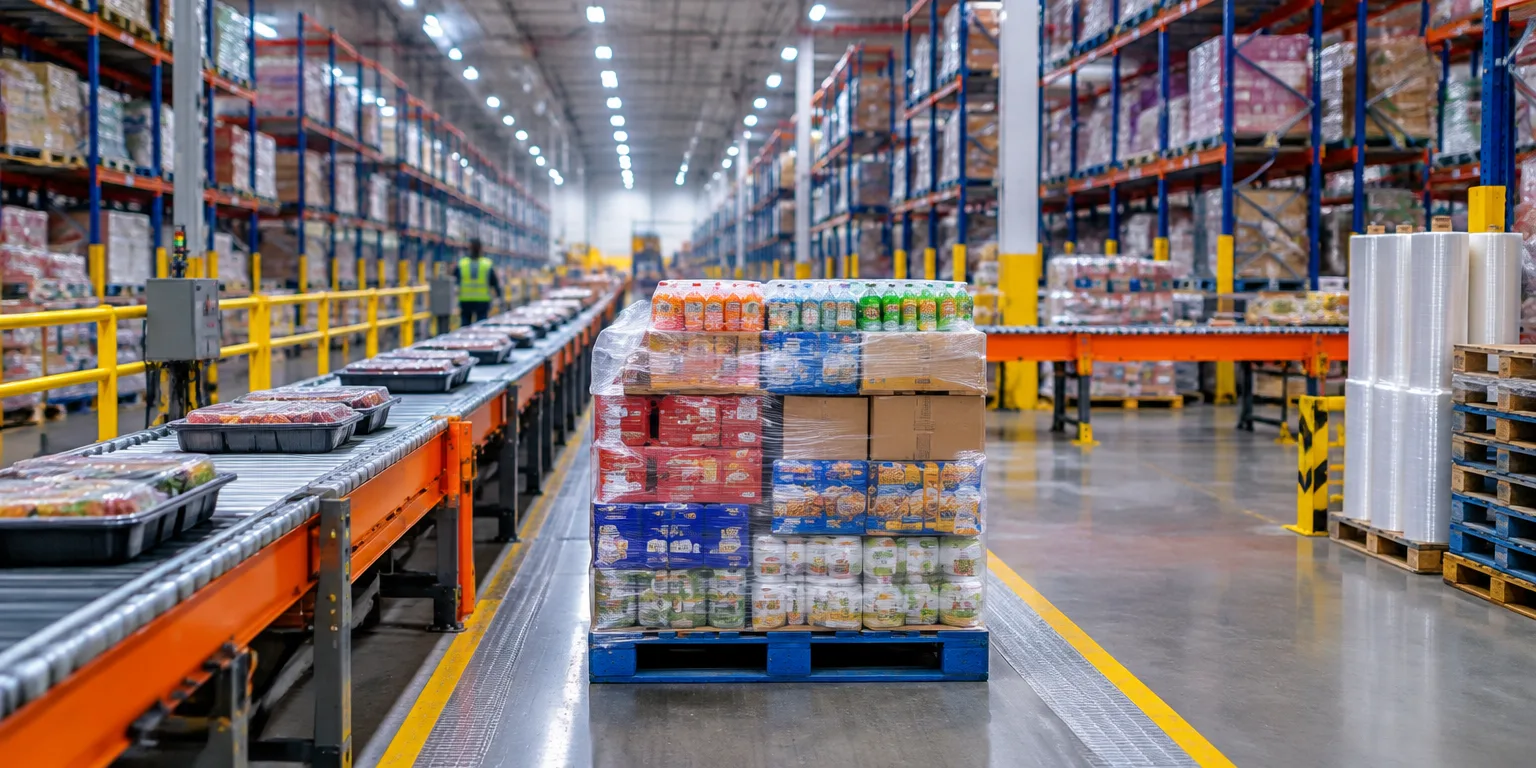
 Wendover Productions · The Incredible Logistics of Grocery Stores
Inside Kroger's distribution center in Aurora, Colorado, which serves its King Soopers and City Market chains, pallets bound for grocery stores are packed in the order of the store aisles themselves.
Trucks arrive there from across North America carrying pallets that each hold just one product, like Oreos from a Nabisco plant in Chicago. Each pallet rides onto an induction conveyor, where a scanner identifies it. Warehouse software then makes a simple call: will the system need more of this product soon, or can it wait.
If the answer is later, the pallet gets a quick stop at a machine that swaps it onto a fresh storage pallet, and conveyors carry it off to automated long term storage in another part of the building. If the answer is sooner, the pallet goes to a de-palletizing machine that breaks it down into boxes, each holding dozens of individual packages.
Those boxes ride conveyors to another machine that sets each one on its own tray. The tray is then filed away in a huge room of tall racks that works essentially like a massive vending machine, holding inventory that will be needed within days.
When a King Soopers or City Market store places a reorder, the software pulls the needed trays out of that rack and sends them by conveyor to a smaller set of shelves near the pallet building area. That is interim storage, holding items for just a few hours before shipping.
Then comes the careful part. The software knows the layout of the shelves in each store it serves, so it pulls trays in a specific sequence. Goods for one end of an aisle go on the bottom of the outbound pallet, goods for the middle of the aisle go in the middle, and goods for the other end go on top. A fully automated system builds the pallet in that order and delivers it to workers who load it onto an outbound truck. At the store, a stocker can break down the pallet and place items directly on the shelves, with the pallet built for the most efficient shelving.
After that, a truck makes the three-hour trip west to the City Market in Glenwood Springs, where a night crew refills the shelves.
Questions people ask
Do robots run the whole warehouse without people?
No. The machines do the heavy lifting of sorting, storing, retrieving, and stacking boxes, but people still load the finished pallets onto outbound trucks. In many grocery warehouses the whole break-down-and-rebuild process is still done by hand.
How does the warehouse know it will need something in three days?
The story cannot say how that three-day call is made. It says only that the software sorts each scanned pallet by whether it expects to need that product in the next three days. Pallets needed sooner are broken down into boxes for the rack, while the rest go to longer term storage.