Gulf Coast Refineries Spent Billions to Run Venezuela's Heavy Oil
Its Merey crude is heavy, sulfurous, and discounted, but Gulf Coast plants paid to process exactly that kind of barrel.
 Economics Explained · Where Has Venezuela's Oil Gone?
Venezuela's oil is bad oil, and that is exactly why refineries on the U.S. Gulf Coast want it.
Crude is judged by weight, sulfur, and impurities. The industry grades weight on a scale known as API gravity: higher scores mean lighter oil that flows and refines more easily. Venezuela's benchmark crude, called Merey 16, scores around 16 degrees, which is very heavy, and it contains roughly 2.5 to 3.4% sulfur, which makes it what the industry calls sour, plus high levels of metals like vanadium and nickel.
Sour, heavy oil is harder to clean and more corrosive to process, so buyers demand a discount. Venezuelan barrels normally sell for $6 or more below Brent crude, the global benchmark price, and the discount has stretched past $20 per barrel when sanctions made the trade riskier.
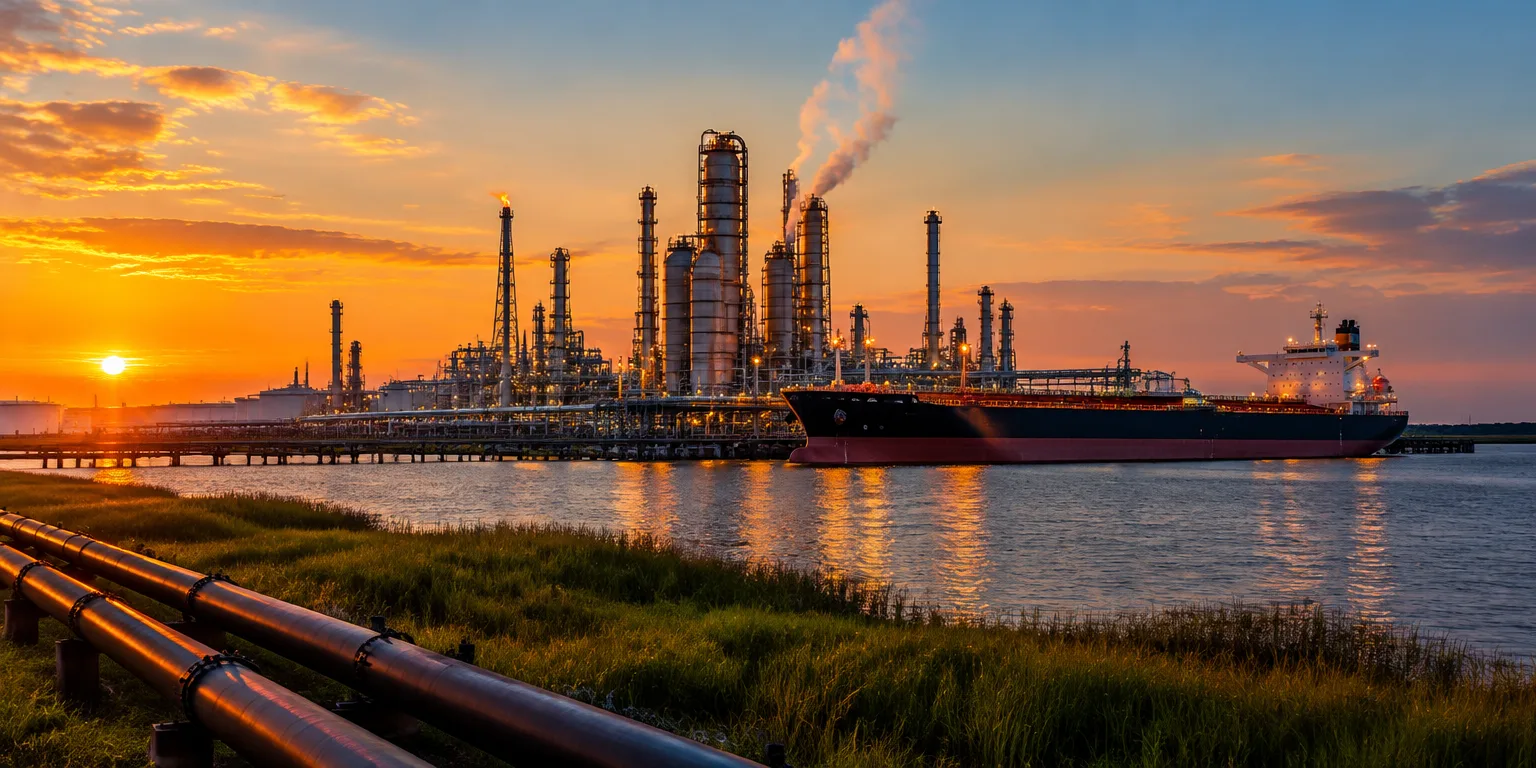
Most refineries cannot handle that kind of feedstock. Starting in the 1990s, refiners on the U.S. Gulf Coast spent billions to add the equipment that can. The key additions were coker units, superhot vessels that cook the thick, tarlike leftovers of a barrel until they crack into lighter fuels like gasoline and diesel, and related deep conversion capacity that strips out sulfur and metals.
That investment was aimed specifically at dense, high sulfur crude from Venezuela, Mexico, and Ecuador. The refiner Valero Energy has said its plants alone can handle 300,000 daily barrels from Venezuela with coking equipment already in place.
Independent analysis puts Venezuela on a path to about 1.5 million to 2 million daily barrels in three to five years if investment arrives. If it does, the Gulf Coast already has the hardware to buy it, which is the genuine long term case for U.S. energy security, even if getting there depends on repairs and investment that have yet to materialize.
Questions people ask
What does a coker unit actually do?
A coker takes residual fuel oil, the heavy bottom of the barrel left after simpler distillation, and heats it to around 900 degrees Fahrenheit until the long hydrocarbon chains break. That thermal cracking yields gasoline, diesel, and petroleum coke, a coal-like solid. It lets a refinery squeeze more high value fuel from cheap, heavy crude.
Why is high sulfur oil called sour?
Sour refers to the sharp, rotten egg smell of sulfur compounds in the crude. Those compounds must be removed because they corrode equipment, pollute the air, and poison the catalysts used to make clean fuels. Refineries built to desulfurize sour crude use extra hydrotreating units that use hydrogen to pull the sulfur out.
If Gulf Coast refineries need this oil, what did they run while Venezuela declined?
After Venezuelan output collapsed and sanctions tightened, many Gulf Coast coking refineries turned to similar heavy sour barrels from Canada, Mexico, the Middle East, and Colombia. Those substitutes kept the cokers full but often at higher prices or transport costs. A restored Venezuelan supply would give them a closer and familiar alternative.