Half of the U.S. Restaurant Market Ran on Old On-Site Systems
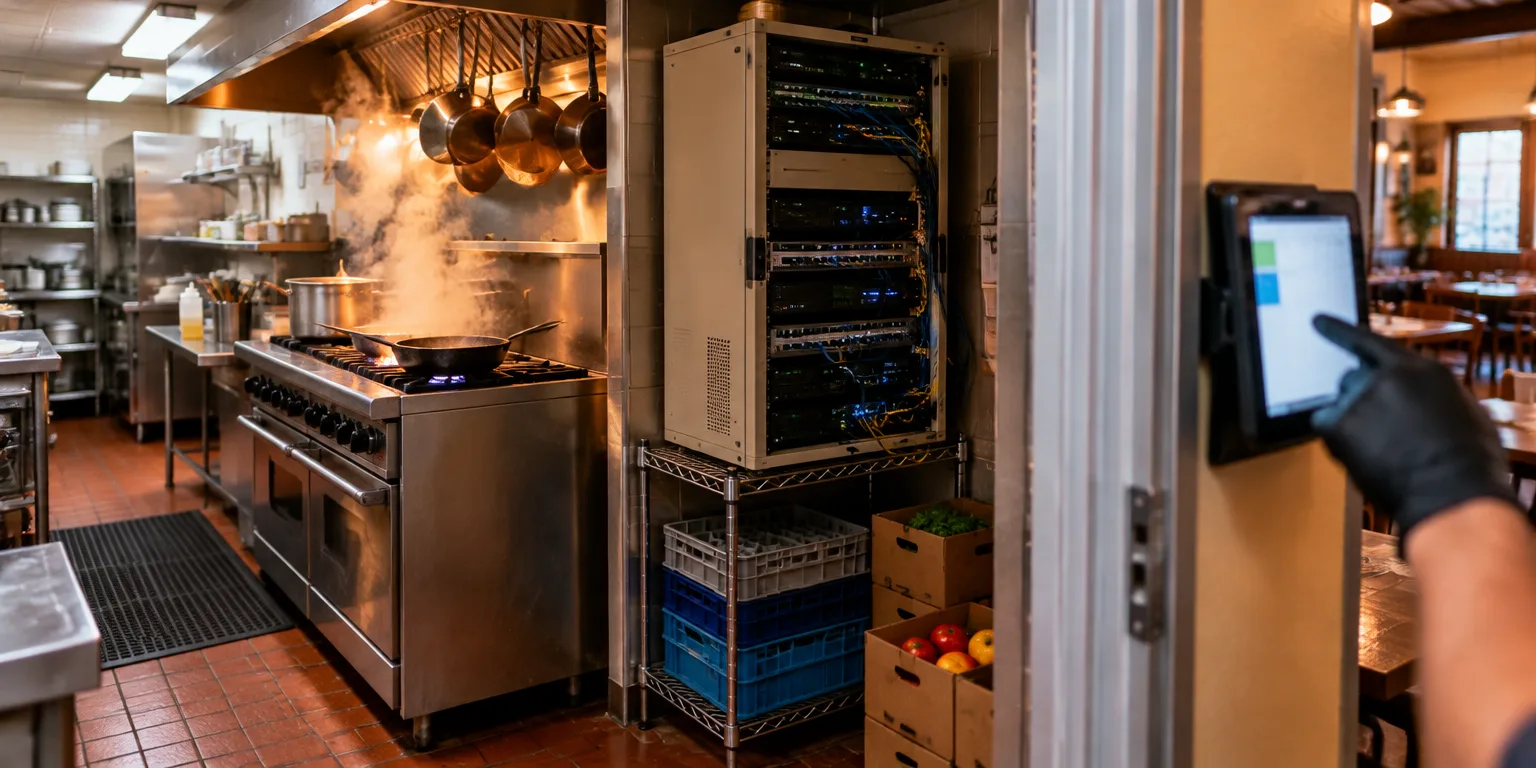
Older software kept on servers near the kitchen left room for a cloud-based replacement.
 Business Breakdowns · Toast: Sticky SaaS - [Business Breakdowns, EP.247]
As of May 2026, about half of the U.S. restaurant market ran on older on-site systems, including NCR, Aloha, and Oracle Micros. The software and servers lived inside the restaurant itself, often near the kitchen.
That is "a bad fit for a kitchen," in the view of Shawn Barrett, founder and CIO at Counter Global. As he put it, "You don't want a hot server sitting in the back of your kitchen or in a closet near your kitchen." That mismatch opened the door for Toast as "the first successful scaled cloud-based disruptor."
As of May 2026, Toast held about 20% of the U.S. market. Apart from Toast, other modern systems held smaller shares than that legacy half, with Square at about five to 10% for smaller restaurants with simpler needs, and Clover, owned by Fiserv, at about 15%.
In his May 2026 comments, Barrett said his work pointed to about 15% margins for Toast customers, compared with about 10% for a typical restaurant. That edge, he said, helped those restaurants survive longer and improved retention.
Questions people ask
What does on-site software mean here?
It means the programs and data live on computers inside the restaurant rather than in remote data centers reached over the internet. Staff use that local system on site, and updates and fixes generally require work on that equipment. Cloud software, by contrast, is delivered online and can be improved centrally for many locations at once.
Who are the other modern systems besides Toast?
Square holds about five to 10% of the restaurant market and does best with smaller restaurants, while Clover, owned by Fiserv, holds about 15%. Barrett describes only Square in product terms, as a less advanced offering focused on payments rather than a robust operating system like Toast's. He does not extend that product comparison to Clover.
Why would higher restaurant profit help Toast?
In his May 2026 comments, Barrett estimated about 15% margins for Toast customers versus about 10% for a typical restaurant. On that basis, he said Toast restaurants take home about 50% more dollars for the owner. Since restaurants close at a high rate, healthier restaurants that survive longer mean lower churn for the software provider.