Hamilton Meant to Miss at Weehawken. Did Burr Know?
On a New Jersey ledge in 1804, a ritual meant to let both men keep honor and life ended with one fatal wound.
 The Rest Is History · Was Alexander Hamilton Murdered? | Founding Fathers EP 3
Early on July 11, 1804, Aaron Burr, the sitting vice president, pulled on a black silk coat and rowed across the Hudson River accompanied by William Van Ness, who would act as his second. Their oarsmen were there to row, not to watch, and by standard practice they kept their backs to the passengers so they could later deny knowledge. They were bound for Weehawken, New Jersey, where officials pursued dueling cases less strictly than in New York.
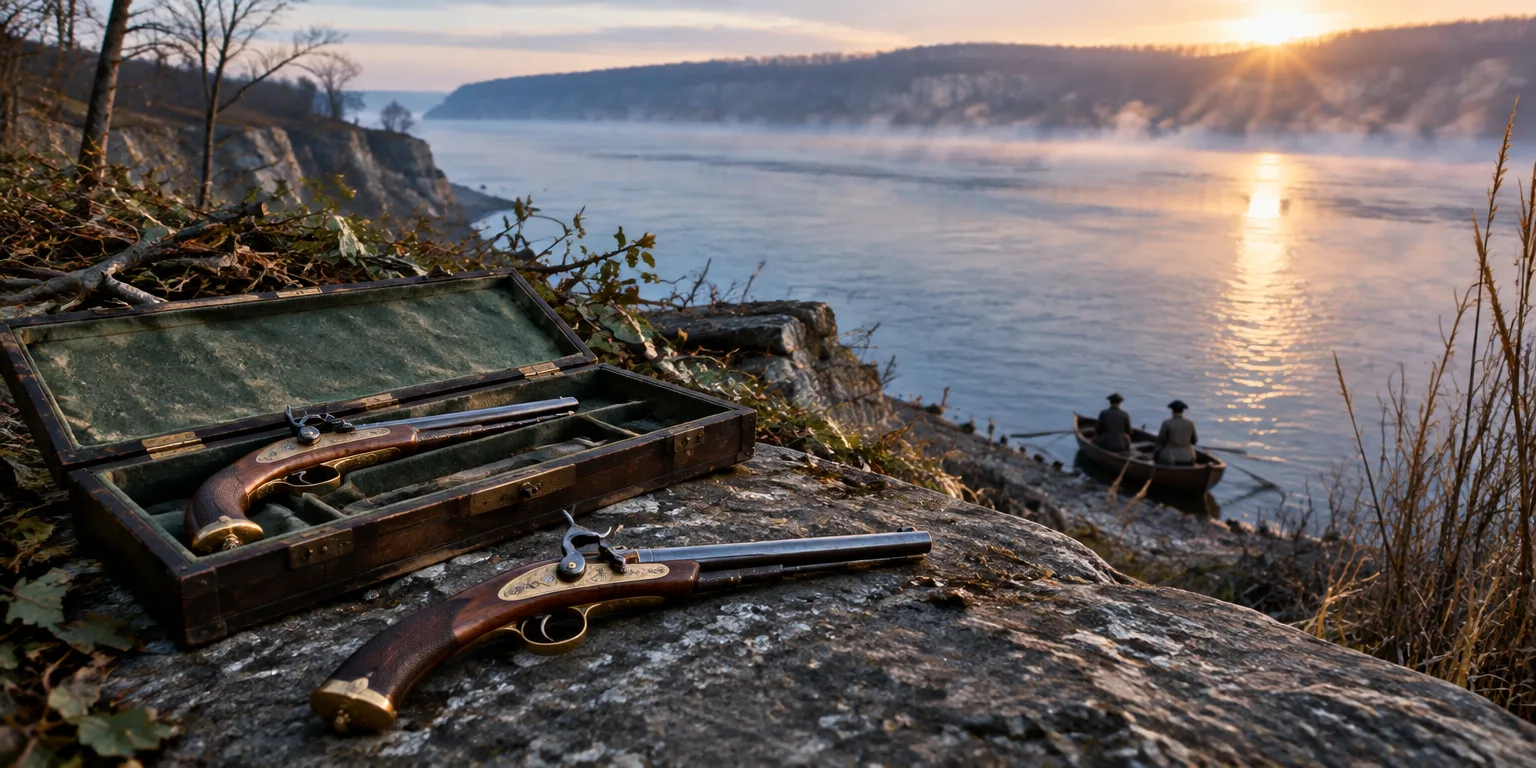
Burr's party landed around 6:30 a.m. and cleared the bushes from a ledge about 20 feet above the river, roughly level with what is now West 42nd Street in Manhattan. It was only minutes on foot from where Alexander Hamilton's teenage son Philip had lost his life in a duel three years before. Around 7 a.m., Hamilton, the former Treasury secretary, arrived with his second, judge Nathaniel Pendleton, and a single doctor, David Hosack, a medicine teacher at Columbia. There was only one doctor because Burr had said two were not needed, and Hosack had also attended Philip's fatal duel.
This is a story about a plan to survive a duel, and why it failed. Hamilton had written beforehand that he intended to waste his first shot, to miss deliberately and give Burr a chance to stop. That was normal under the strict rules of dueling, called the code duello, and about nine in 10 duels ended with nobody dying. The question that has lingered is whether Burr knew Hamilton meant to waste his shot.
The pistols, made in London by Wogdon and Barton, were lent by Hamilton's brother-in-law John Barker Church, a British member of Parliament who had himself dueled Burr in 1799 without injury. They may have been the same pistols Philip had used. Dueling pistols were showy, brass and gold, and deliberately inaccurate, but they had hair triggers that could be set in advance for a steadier and more accurate shot. Pendleton offered to set Hamilton's trigger but not Burr's, and Hamilton declined.
Hamilton then did something strange for a man planning to miss. He took aim, called Stop, put on glasses, and made a show of squinting at Burr. When Pendleton called Present, the seconds and the doctor had turned away to preserve deniability. Witnesses heard two shots within seconds. Burr was untouched. Hamilton fell, wounded low on his right side above the hip, the ball ricocheting off a rib, tearing through his diaphragm and liver, and lodging in his spine.
Burr stepped toward the fallen man with what Pendleton later called an expression of regret. Van Ness opened an umbrella to hide Burr from the approaching oarsmen and hurried him to the boat. Burr said he must go and speak to Hamilton, but Van Ness insisted they flee. Revived in the boat with spirits, Hamilton warned Hosack that his pistol was undischarged and still cocked, and added, in his words, "Pendleton knows that I did not intend to fire at him."
Pendleton later said Hamilton had never meant to fire, and that his gun went off by accident after he was hit, striking a branch 12 feet above Burr's head. Van Ness said Hamilton fired first and missed, and Burr waited about five seconds for the count before firing. Historian Joseph Ellis argues Burr could not have known Hamilton meant to miss, and was within his rights under the code to shoot. Biographer Ron Chernow argues the 12 foot miss proved the waste was obvious, and Burr shot to kill. Years later in London, the philosopher Jeremy Bentham, then a friend of the exiled Burr, recalled, "He was sure of being able to kill him, so I thought it little better than murder."
Questions people ask
What is a hair trigger and why did it matter?
A hair trigger is a setting that greatly reduces the pressure needed to fire. With less pull required, the hand shakes less, so a deliberate shot becomes steadier and more accurate.
What was the code duello?
The code duello was the formal rulebook for duels. After an insult and failed apology, seconds arranged time, place, and weapons, gave the commands to fire, and decided when honor had been satisfied, usually without anyone being hit.
Did Burr face punishment for killing Hamilton?
He was charged with murder in both New York and New Jersey. He was never tried, in part because the seconds, doctor, and oarsmen had all arranged to see nothing, leaving prosecutors without witnesses.