Hastert's College Banned Dancing and Movies While Students Protested for Beards
As the civil rights movement unfolded elsewhere, the school yearbook recorded a protest over facial hair.
 Behind the Bastards · Part One: Dennis Hastert: The Longest-Serving Republican Speaker of the House
When Dennis Hastert, the future Republican House speaker, arrived at Wheaton College, every student had to sign a pledge swearing off tobacco, alcohol, betting, dancing, and going to the cinema.
The rules dated to 1860, and students also promised to avoid propagating infidel principles, meaning influences outside the school's strict evangelical Christianity.
Hastert nearly majored in religion but said he was outmatched by the preachers' and missionaries' children around him, and he later credited Wheaton's religious grounding with guiding his conduct.
A 1999 profile noted the campus had seen no civil-rights sit-ins, and Hastert's senior yearbook contained only one protest photo.
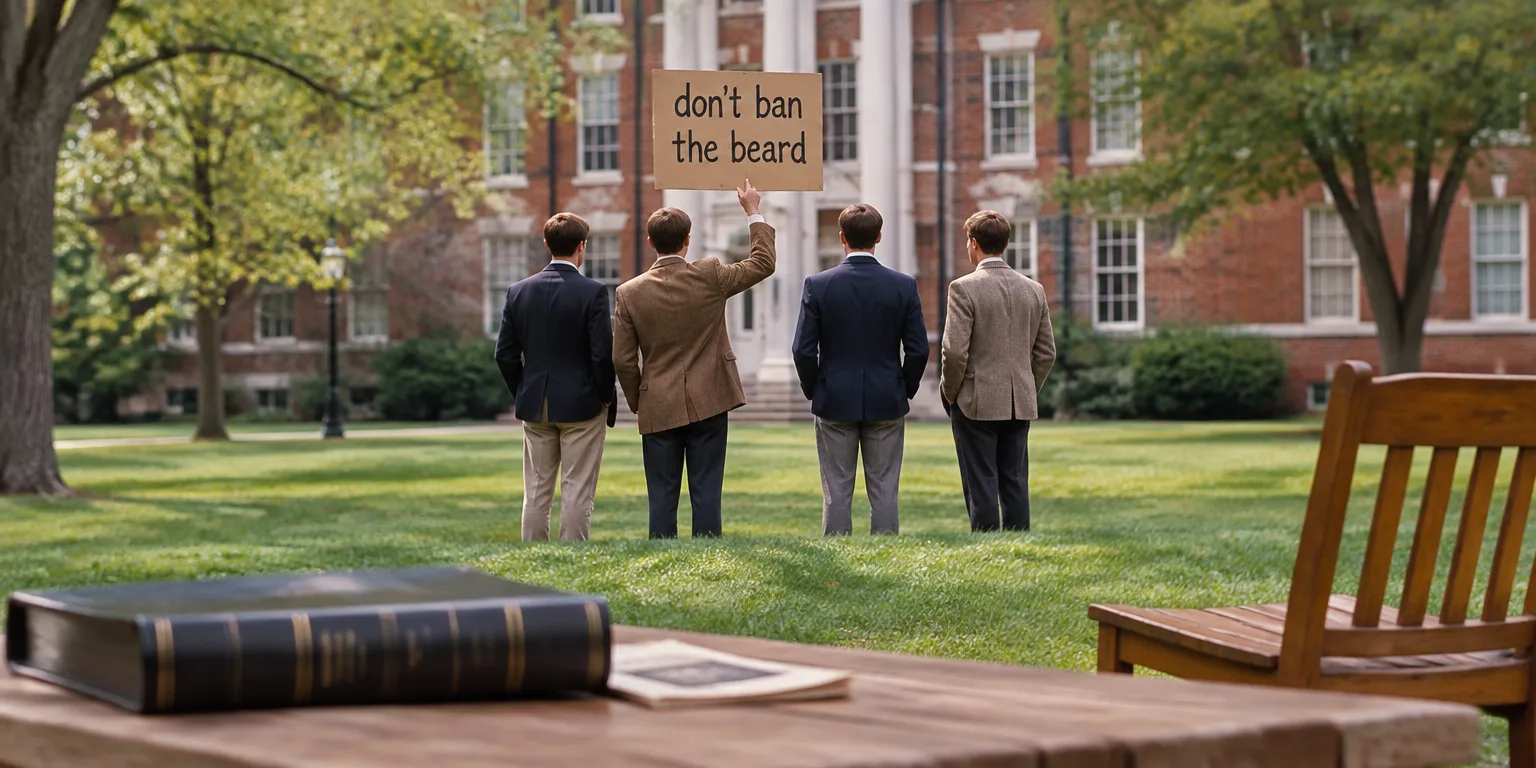
It showed clean-cut students protesting the no-beard rule around 1963 and 1964 as the civil rights movement unfolded elsewhere. One student sign read "don't ban the beard"; another named a person the account never identifies. The account gives no reason they opposed the rule.
Questions people ask
What kind of school is Wheaton College?
Wheaton College is a private evangelical Christian liberal arts college in Wheaton, Illinois, about 25 miles west of Chicago. It was founded in 1860 and has long educated missionaries, pastors, and evangelical writers. Students still sign a community covenant that governs drinking, drugs, sex, and other conduct.
Why would a college ban dancing and movies?
Many nineteenth and twentieth century evangelical schools treated theaters, dance halls, saloons, and gambling as gateways to immoral behavior. The pledges were meant to keep students separate from outside influences and focused on faith and study. Similar conduct codes were common at other conservative religious colleges.
What was happening off campus in 1963 and 1964?
Those were peak years of the civil rights movement in the American South. In 1963, Birmingham saw mass protests and the March on Washington drew about 250,000 people. In 1964, President Lyndon Johnson signed the Civil Rights Act, which outlawed segregation in public places and employment discrimination.