Hated fortunes buy forgiveness with beautiful buildings
After disaster and resentment, Rockefeller's son planned a Midtown complex to employ about 10,000 workers.
 My First Million · I put 80% of my money in the S&P after a billionaire investor told me not to
John D. Rockefeller Jr. stood in a company mining town where tens of thousands of workers were living in squalor. By one account, a flood had killed about 200 people there, and the town, built to serve the business empire of his father, the oil magnate who started Standard Oil, looked like proof of everything the public disliked about the family.
By the time the elder Rockefeller was 50, Standard Oil had grown into the biggest business on the planet. People saw him as a miserly monopolist, a Scrooge McDuck type. His son, who had taken a larger role in the family business, went to the mine and was appalled. This is horrible, he said. He felt the way the workers were living was garbage, and felt he had to do something about it. His father had urged him to do good in the world and bring the family name back.
One observer calls this reputation laundering. In his telling, a fortune made in ways the public resents is spent on beauty and jobs, on something the public can see, touch, and use, and the name slowly changes meaning.
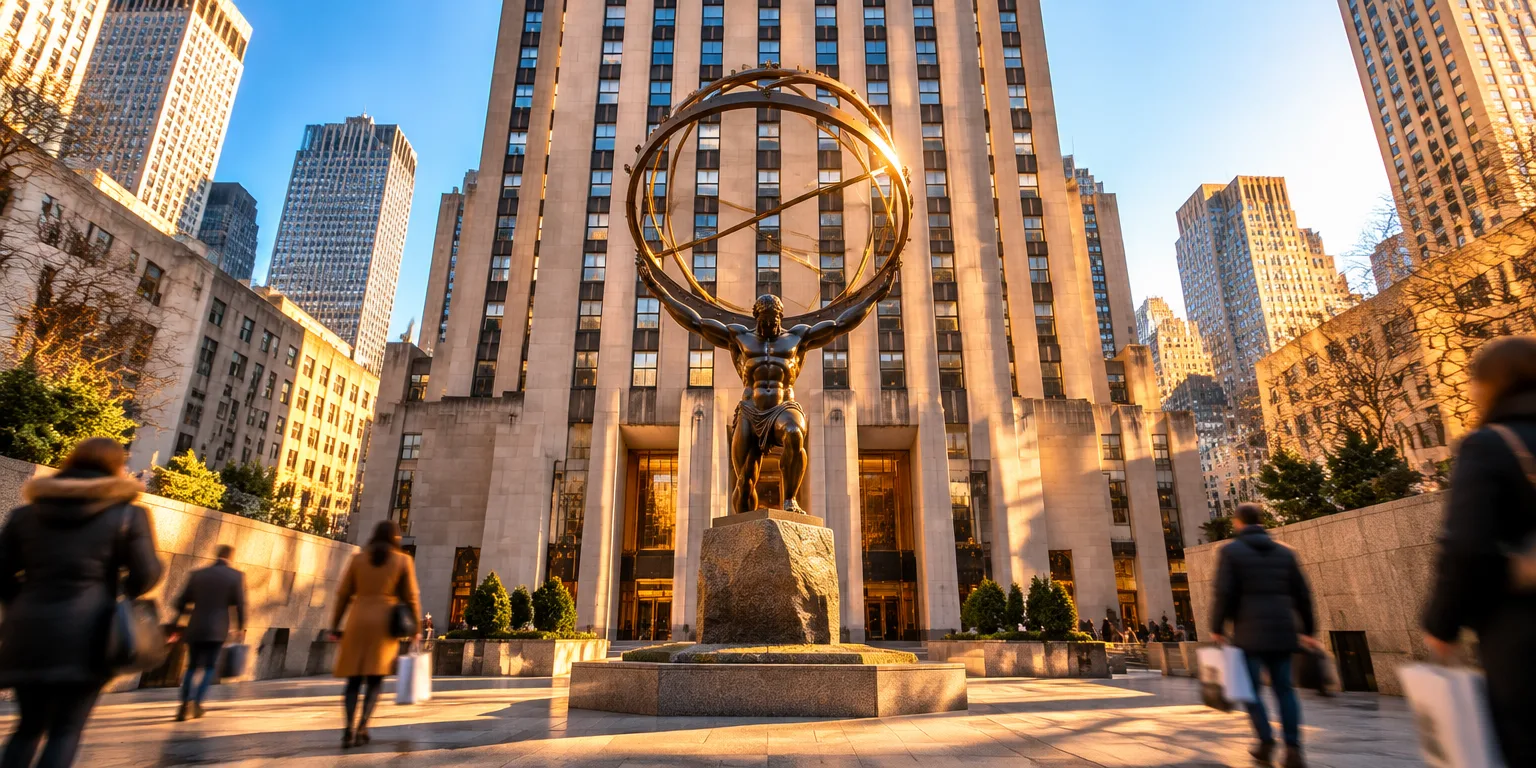
The turn came in New York City during the Great Depression, when blue collar workers were being laid off in large numbers. Rockefeller Jr. backed an architectural project in Midtown, a massive tower surrounded by smaller towers, designed to be a spectacular civic showpiece. The plan was to employ about 10,000 people and help revitalize the city.
That project became Rockefeller Center. In its courtyard stands a man lifting the world on his shoulders, the Greek figure Atlas, who holds up the sky. It was presented as a symbol of the effort, to take the bad of that era and try to make something amazing out of it. Junior came to have a much better reputation than his father, and many people credit Rockefeller Center in part for that change.
Steel magnate Andrew Carnegie, who owned Carnegie Steel, had done an earlier version of the same thing. While his company was known for brutal labor practices and faced huge strikes, he funded more than 1,600 libraries across America as gifts to local communities. Carnegie once said, "if you watch the cost the profits will follow," and in his mills that meant holding down what he spent on labor.
Builders later used a smaller version of the trick. When people objected to ugly steel cell towers, carriers disguised them as trees, complete with fake bark, fake branches, and plastic pine needles. The mono pine and the mono palm let the infrastructure get built.
Questions people ask
Did Rockefeller Center actually fix the family's reputation?
Yes, in large part. John D. Rockefeller Jr. became known more as a philanthropist and builder than as an oil heir, and Rockefeller Center remains one of the most visited places in New York. The family name is now attached to a university, a foundation, parks, and art collections as much as to Standard Oil.
What happened to Carnegie's libraries?
Many are. Carnegie funded more than 1,600 public libraries across the United States in the late 1800s and early 1900s, and hundreds of those buildings still serve as libraries, museums, or community centers. Others have been replaced, but the system helped establish the idea of free public libraries in America.
Are cell towers disguised as trees still built?
They are still common, especially along highways and in suburbs where residents oppose visible towers. Carriers now make monopines, monopalms, and even flagpoles and church steeples that hide antennas. Local zoning boards often require the disguise as a condition for approval.