Having a Baby Turns City Lovers Into Suburbanites
Millennials crowded downtown for restaurants and nightlife, then headed for farther out suburbs when children rewired how they spend time and money.
 Noahpinion · The American suburbs are better than you think
In your 20s, the ideal neighborhood has bars, restaurants, and late nights within walking distance. After your first child, it has separate bedrooms, a backyard, and room for a car full of groceries. That shift helps explain America's new suburbanization.
Through the past decade, Millennials have been moving not into walkable downtowns but into suburbs farther from the city center, according to researchers at the Joint Center for Housing Studies, which studies housing at Harvard University. The places with the largest gains of early Millennials were suburban and on the edges of metropolitan areas.
High rents explain part of the move. Cities that failed to build enough housing pushed young families out. But researchers say families are also being pulled out, because parenthood changes what people value.
Economists David Albouy and R. Jason Faberman, in a 2025 study, found that highly skilled workers crowd into places with lots of restaurants, bars, and nightlife relatively early in life, then drift toward quieter and lower cost areas in their 30s and 40s. Spending and time devoted to restaurants, nightlife, and other local entertainments falls into a U shape over a lifetime, high when young, low during the child raising years, and higher again later. The turning point, they write, is often the first child, especially for college educated parents.
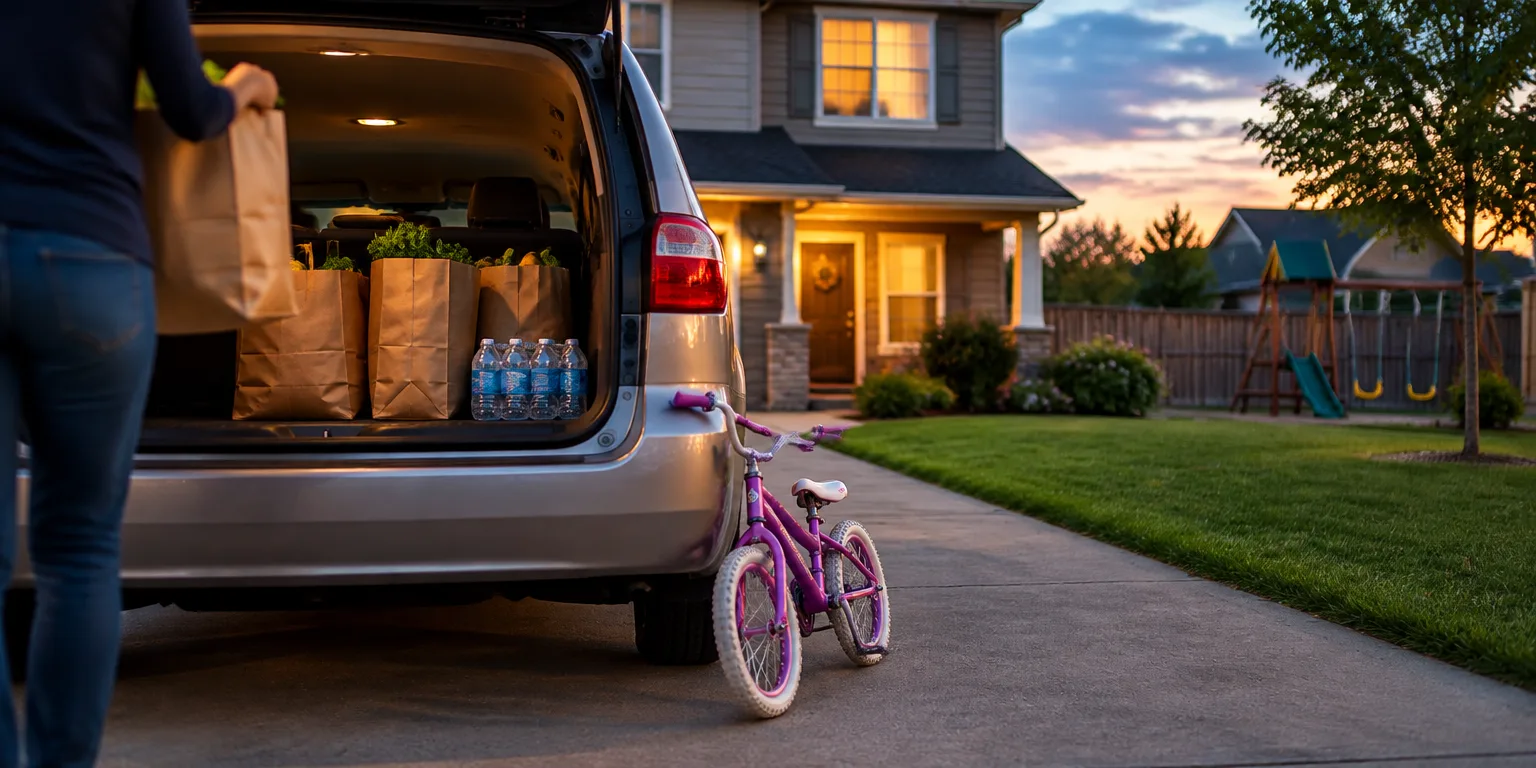
Anyone with kids can picture why. A bigger house means each child can have a bedroom, plus space to play and a yard to run around in safely. A car makes it far easier to ferry children to school, soccer practice, and everywhere else. It also makes it possible to haul home seven days of groceries for a household with children, a trip that is very hard without a car.
The familiar story goes: young people move to the city for work, friends and dates, then leave once they have kids. The cliche, the data suggest, is rooted in how children rewire daily life.
Questions people ask
Are city centers still losing Americans to the suburbs?
Yes. City center growth since the pandemic is more than fully explained by immigration, meaning domestic moves out of dense centers still outweigh moves in.
What do parents say they want from a neighborhood after they have kids?
The research points to practical space: separate bedrooms for kids, room to play, a yard to run around in safely, and a car to ferry kids to school and activities and to haul large grocery trips.
Do high city rents also push families out, or is it all about lifestyle?
Housing costs matter a lot. When dense cities do not build enough homes, rising rents push young families out even if they would prefer to stay. That forced move sits alongside the voluntary pull of space and cars.