He Almost Bought a Stormtrooper Suit He Never Wanted
A 30-year-old wish traced to his brother taught him to ask what he would want if he were starting fresh.
 The Tim Ferriss Show · #885: How to Simplify Your Life — Tips from Oliver Burkeman, Chip Conley, Elizabeth Gilbert, and More
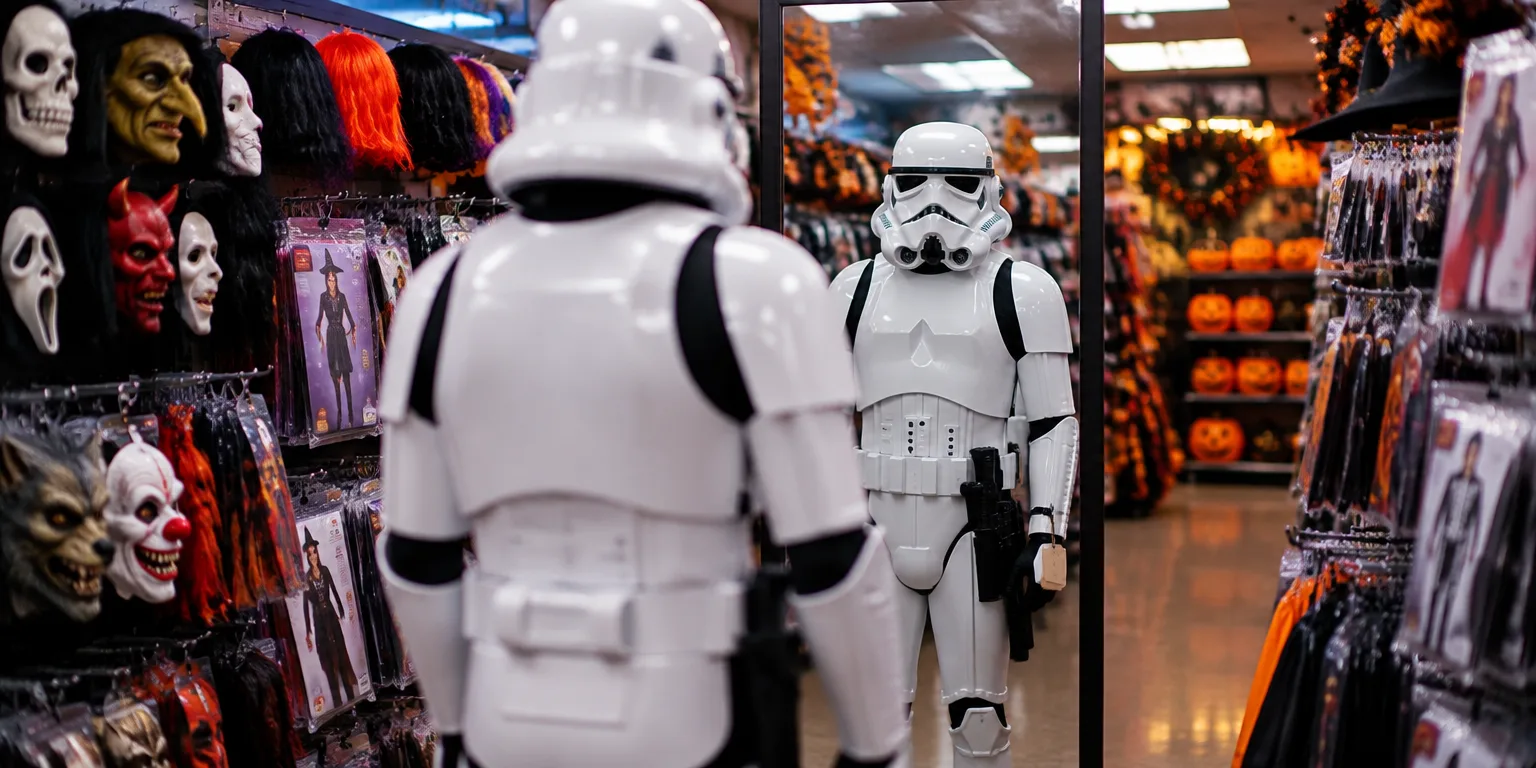
Greg McKeown stood in a Halloween store staring at himself in the mirror, dressed head to toe as a Stormtrooper, one of the white armored soldiers from the Star Wars movies. This was not a cheap costume, and he had been thinking about this moment, in some small way, for 30 years.
McKeown, an author who writes about paring life down to what matters most, uses the closet as his favorite metaphor for clutter. Most people, he says, keep more clothes, commitments, and goals than they can usefully use.
The reason is a quirk of the brain called the endowment effect. People value things more simply because they own them, which helps them care for a home but also keeps useless things in the closet.
In the mirror, McKeown suddenly remembered where the Stormtrooper idea came from. He was about 10 when one of his older brothers said with great enthusiasm, after a Star Wars film, would it not be great to own a real Stormtrooper outfit just like in the films.
That passing comment lodged in him, unquestioned. Because his big brother thought it was cool, it must be cool, and the idea lived in the back of his mind for three decades.
Then came the turn. Looking at himself in the suit, McKeown thought, “there is no part of me that wants this.” He said he was able to separate himself from the moment and ask why he was standing there in the suit.
Now his wife will sometimes ask him, “Is that the Stormtrooper that you're pursuing?” By that she means a goal kept only because it was once wanted, or simply because it feels like his.
His test for spotting those false wants is simple. Instead of asking how much you value something you have, ask how much you would pay, or sacrifice, to get it if you did not already have it.
Questions people ask
What exactly is the endowment effect?
It is the tendency to value something more once you own it, or feel it is yours. In lab tests, people given a coffee mug often demand more to sell it than others will pay to buy it. The gap comes from attachment, not added usefulness.
Why does asking what you would pay to get something help?
It puts your brain in the position of not owning the thing. Without the inflation that comes from ownership, history, or guilt, you judge its present usefulness more clearly. If you would not chase it now, you probably should let it go.
Why do old goals stick around even when we no longer want them?
Goals tied to identity, family, or admiration can run on autopilot. Because they were never questioned, they feel like your own even when your tastes and life have changed. A concrete moment, like trying on the suit, can expose the mismatch.