He Built a Newspaper Empire, Then Ran It Blind for 20 Years
Blind, sleepless, and painfully sensitive to noise, Joseph Pulitzer dictated hundreds of telegrams a week and kept his entire business in his head.
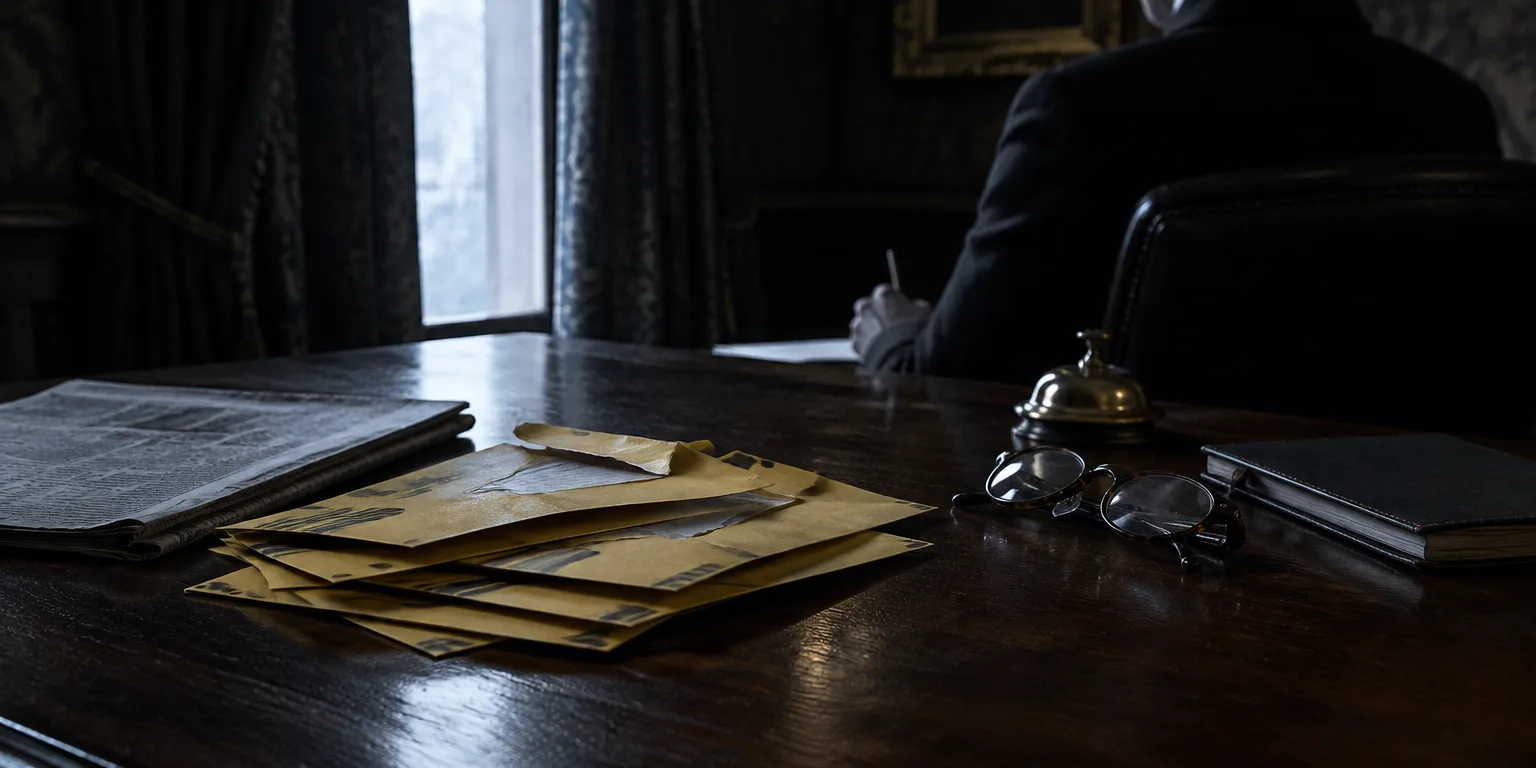
 Founders · Joseph Pulitzer: The Inventor of Mass Media
Joseph Pulitzer, the newspaper owner who insisted on reviewing everything in print before it appeared, said, "When I picked up the newspaper, I was astonished to find that I could hardly see the writing, let alone read it."
Pulitzer was in his early 40s and at the height of his influence. He had built his control by seeing every word, and he would keep control for 20 more years without seeing a word. A dark curtain seemed to have fallen across his right eye and partly across his left.
For years he had pushed himself to the limits of physical and psychological endurance, with insomnia, indigestion, anxiety, and depression. He had long suffered from poor eyesight, worsened by long nights reading under bright gas lamps. He first thought the blindness was temporary. The next day, when it had not improved, he saw a doctor, who saw immediately that the layer in his right eye that receives light had come loose and the left was at risk. Doctors said that in most such cases the general expectation was steady decline toward complete loss of sight.
He later called it the beginning of the end. For his final 20 years he was blind, in chronic pain, sleepless, and extremely sensitive to noise, yet he remained actively in charge of his paper. He never worked in the office again. Instead he wandered the globe, a recluse with no friends, surrounded only by paid companions.
He ran the business from memory. He sent hundreds, perhaps thousands, of telegrams a week, all dictated, and had every reply read aloud to him, keeping all the information in his head. New hires at the New York World, his New York newspaper, quickly learned that he planned to supervise them closely from afar, as though present in the newsroom. He told staff, "Never fear of troubling me with any suggestion concerning either the welfare of the paper or your own. Nothing looking to the elevation and improvement of our paper is too small to mention."
The money kept growing, and as a young homeless man he had been kicked out of a hotel lobby and slept outside. Twenty-three years after sleeping outside that lobby, he owned the building. A newspaper defending his wife Kate against criticism of her famously expensive jewelry wrote that "30 years ago her husband was shoveling coal and driving drays, but his indomitable energy and active brain have placed him where he can afford to buy out half a dozen royal families."
He could not enjoy it. He had once devoted most of his waking hours to books, which he adored. Losing sight, Pulitzer said, "This represents more suffering than all the rest of my life brought me. 10 times as much. I honestly think 50 times as much to the point where I cannot even finish this sentence."
His family offered no comfort. Married 30 years, he and Kate barely spent time together. They had six or seven children, two of whom died young. His early St. Louis connections were gone. He was cut off from his sole surviving brother, his final link to a Hungarian boyhood, and his children were a disappointment. His son, also named Joseph, wrote to him, "One of the strange differences between us two is the fact that you have never come near learning how to enjoy life."
Kate, his wife, wrote him a bleak letter on their 25th anniversary. She wrote, "When we think that 100 years hence, not one of us now living will be alive to care or to know or to enjoy or to suffer, what does it all amount to? To a puff of smoke which makes a few rings and then disappears into nothings. And yet we make tragedies of our lives, most of us not even making them serious comedies."
Questions people ask
What causes a detached retina, and could it have been fixed at the time?
A retinal detachment is when the light-sensing layer at the back of the eye pulls away from its blood supply. In Pulitzer's era, in the 1880s, there was no effective surgery, so doctors could only watch it progress. Today surgeons can often reattach the retina with laser, freezing, or gas bubble procedures, especially if treated quickly.
How did Pulitzer actually run a daily newspaper while blind?
They were his eyes and ears, reading every telegram, newspaper, and report aloud and writing down his dictated replies. Because he kept circulation, advertising, expenses, and press times in his head, the system worked. It also meant he was never truly off duty, since information only reached him through other people.
Are the Pulitzer Prizes connected to this same Pulitzer?
The prizes were established by his will in 1917 and are administered by Columbia University. He specified awards for reporting, history, biography, and other categories, reflecting his belief that newspapers should serve the public. They remain among the most prestigious awards in American journalism and the arts.