He Chased an Attacker in Heart Pajamas and Was Held at Gunpoint
It was his first day without cigarettes, and he cleared himself with old police photos of the real attacker kept in his toolbox.
 Armchair Expert with Dax Shepard · Mom's Car: Jonathan Tucker
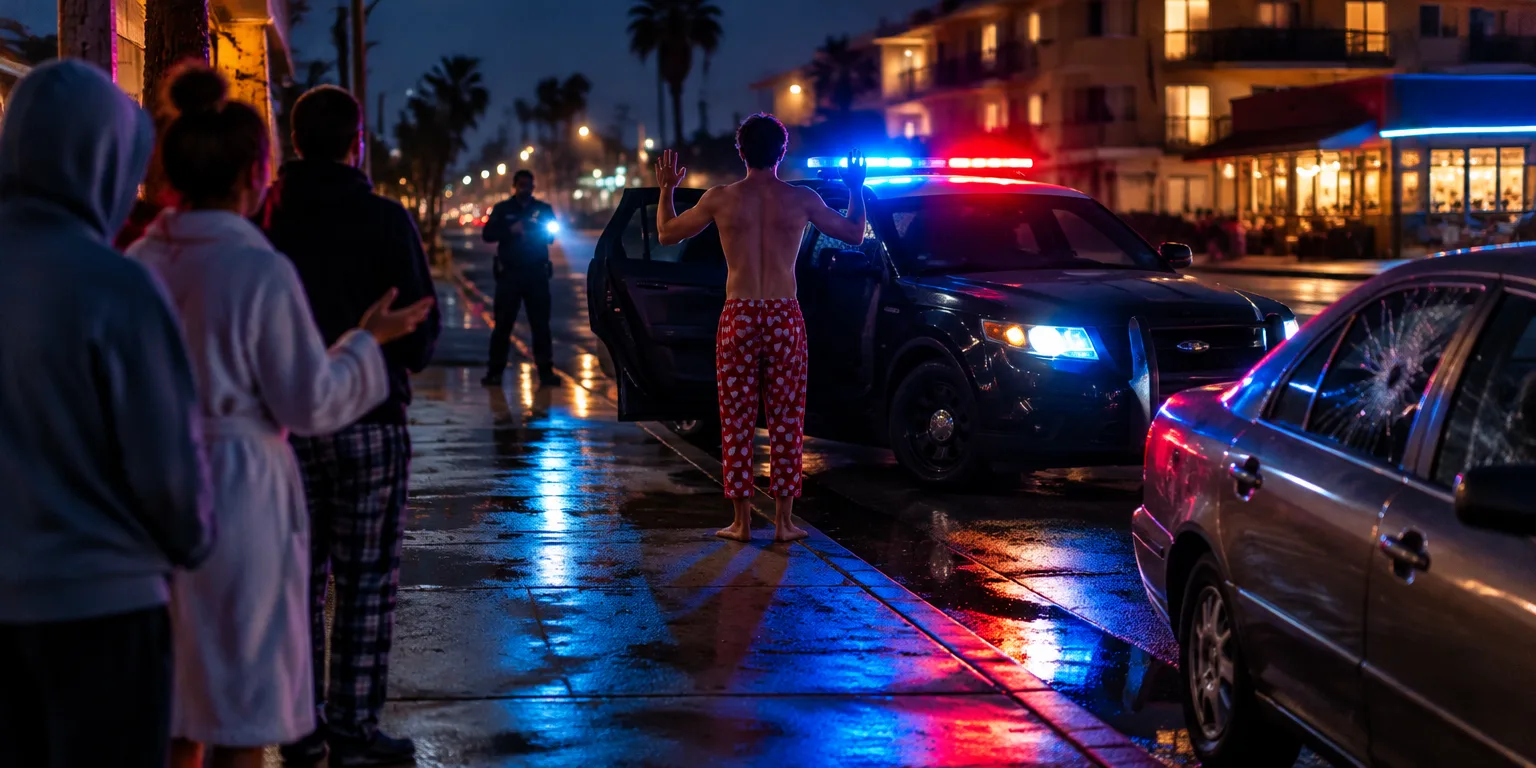
Actor and podcast host Dax Shepard had made it to bedtime on his first day without cigarettes. He was shirtless, barefoot, and wearing heart-print pajama bottoms his mother had sent him for Valentine's Day.
He was a heavy smoker trying to quit, and he was irritable and on edge. For 10 years he had lived in a run-down apartment on Euclid, a rough street in Santa Monica, with his girlfriend of nine years. She called him the sheriff of Euclid because he always watched what was happening outside.
Just as he lay down, bloodcurdling screams came through the window beside the bed. Below him lived a family he adored, six people in a one-bedroom apartment, and he had watched some of the children grow up from about eight years old. That night, two of those children, now teenagers, were being attacked in a parked car around the corner.
Shepard ran down the stairwell and found one boy in the driver seat with blood pouring from his nose. In the passenger seat, another boy was being dragged through the window by a man, while a young girl screamed from the back seat.
He recognized the man. Three years earlier, the man, who belonged to a local gang and lived two buildings away, had tried to mug him and they had fought. Running on nicotine withdrawal, Shepard screamed that he was going to teach him a lesson.
The man let go and sprinted down Euclid toward Broadway, and Shepard chased him in his pajamas. Someone had already called the police when the screaming started, though Shepard did not know it.
As Shepard neared the turn onto Broadway, a police car pulled fast onto the sidewalk in front of him. Officers saw a shirtless man sprinting in pajama bottoms and, working from a call about a man beating people up, pushed him to the ground at gunpoint.
As he complied, Shepard kept saying they had the wrong man and the attacker was getting away. Neighbors came down the street shouting that it was not him. It took about a minute to get the officers to listen.
Asked what the attacker looked like, Shepard described a Latino man about five feet nine or five feet 10 inches. Then he remembered he had photographs of the man from their earlier fight, when officers had photographed them both and he had later collected the prints. He kept them in his toolbox upstairs.
The officers walked him back to his apartment and waited while he dug out the pictures. In them, the attacker looked wrecked, with a broken nose and broken jaw from that earlier altercation.
The officers started laughing hard when they saw the photos. They took the pictures, drove around for a couple of hours looking for the man, then came back and returned them. They had not found him.
Questions people ask
Why would police hold the helper at gunpoint?
Officers arriving on a violent call have only a brief description, often just a man running and people screaming. If the first running, agitated person they see matches that rough picture, they will stop that person at gunpoint until they can sort out what happened.
Does quitting smoking make people aggressive?
Irritability, anxiety, restlessness, and trouble concentrating are common on the first day, along with strong cravings. The symptoms peak in the first few days and usually fade over two to four weeks, and they do not make most people violent.
Should you chase someone who just committed an assault?
Safety experts say usually not. They advise calling 911, staying at a distance, being a good witness, and helping victims afterward. Chasing can lead to injury or, as in this case, being mistaken for the attacker.