He Fired Shots in a Bank to Get Arrested Two Months Before Kennedy Was Shot
Two months before Kennedy was killed, Richard Case Nagell left clues in his car that later matched Lee Harvey Oswald's belongings.
 Who Killed JFK? · The Lead Up
On the morning of September 20, 1963, a suited man entered the El Paso post office. He mailed registered letters, walked across the street to the State National Bank, and asked for $100 worth of traveler's checks.
While the clerk prepared them, he drew a .45 handgun and fired twice at the ceiling. People dove for cover, and the man ambled out the door still holding the weapon.
That strange holdup that stole nothing is what makes the morning worth remembering. It happened two months before President John F. Kennedy was shot in Dallas, and journalist Dick Russell said Nagell had decided he would be safer locked up in prison.
Outside, Jim Bundren, a city policeman who had the day off, heard the gunfire. Bundren, who later said, "Believe it or not, I was on my day off," got a description of a blue suit, white shirt, and red tie, spotted a car pulling out of an alley, and saw the driver's flushed face. He drew his gun and made the arrest.
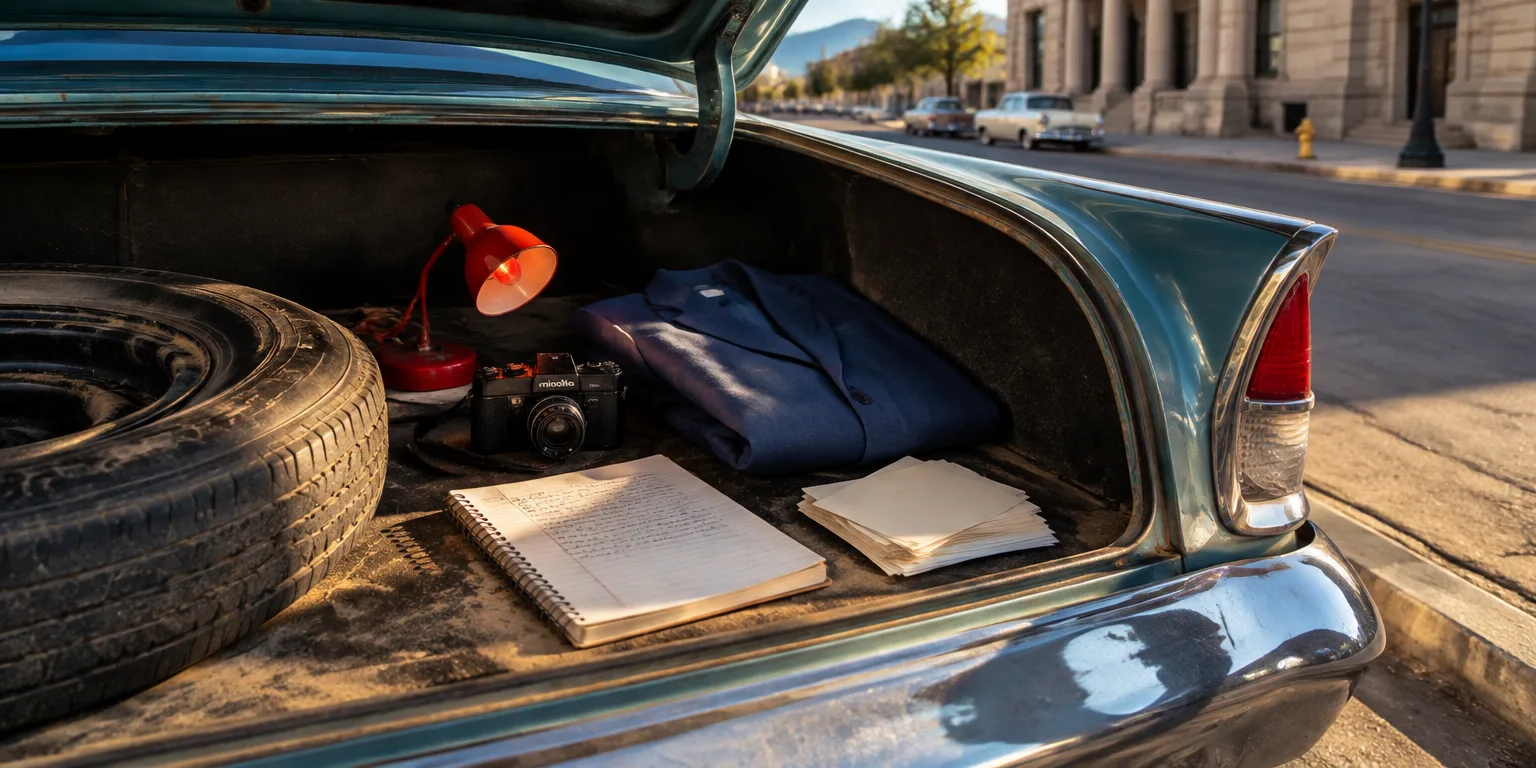
As he was being handcuffed, the prisoner did something odd. He invited Bundren to look in the trunk of his car. Inside, Bundren found a small Minolta camera, the kind he said they call a spy camera in the movies, along with a processing lamp, photos of restricted military sites and views inside secure facilities, and numerous images of corpses.
The man was identified as Richard Case Nagell, a former Army soldier decorated three times for combat wounds who had served in Army intelligence and carried out work for the CIA. He was charged with attempted bank robbery. At a preliminary hearing, as Bundren sat and talked with him, Nagell said, "I'm glad you caught me. I really don't want to be in Dallas."
Journalist Dick Russell, who later investigated Nagell, said the bank shooting was deliberate. Shortly before he fired inside the bank, Russell said, Nagell had mailed a note to FBI chief J. Edgar Hoover laying out his knowledge of a killing scheme, plus a separate alert to his CIA contacts. He then left a notebook in his car with information that only an insider would have, Russell said. Several entries closely matched what authorities would later find among Lee Harvey Oswald's possessions. Both men carried a small Minolta spy camera, each carried pamphlets from the pro-Castro Fair Play for Cuba group, and each listed the same private number for Cuba's embassy in the Mexican capital.
Nagell had not come to rob a bank. He had come, with letters mailed and clues planted, to get caught.
Questions people ask
Did he actually rob the bank?
No. He asked for $100 in traveler's checks, fired twice into the ceiling, and walked out without taking money. He was charged with attempted bank robbery, which was enough to put him in custody.
What did he mail before the shooting?
Russell describes a registered note to FBI chief J. Edgar Hoover laying out his knowledge of the plot, and a separate warning to his CIA contacts. The account says Nagell mailed registered letters that morning, but beyond those two it does not identify what the additional letter contained.
How closely did Nagell's notebook match Oswald's possessions?
Each had a small Minolta camera, pamphlets from the pro-Castro Fair Play for Cuba group, and the same private number for Cuba's embassy in the Mexican capital. Russell says Nagell left his notebook to back up his story.