He Hitchhiked 1,200 Miles to Find Woody Guthrie After Hearing One Record
He was playing pizza parlors for a few dollars and sleeping with his guitar when one record convinced him to sing nothing but Guthrie's songs.
 Founders · #429 Bob Dylan's Autobiography
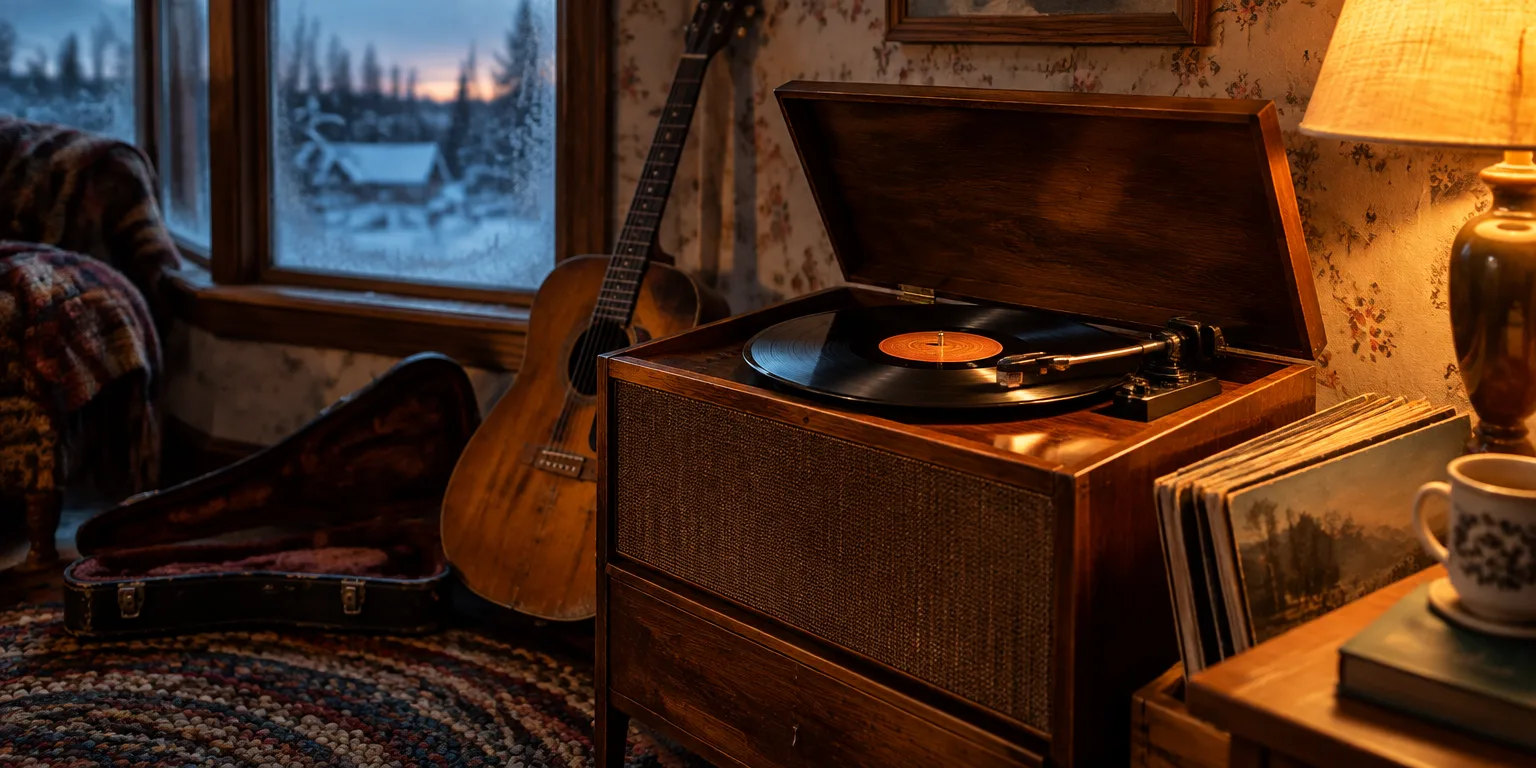
Flo, an aspiring actress Dylan knew in Minneapolis, took him to her brother's house to hear Woody Guthrie, the Oklahoma folk singer who wrote plain songs about working people, singing alone on his own records. When the music began, he was stunned. In his memoir Dylan wrote, "It was like the record player itself had just picked me up and flung me across the room."
That afternoon left him stunned and hungry to learn everything about Guthrie. He said hearing Guthrie on record in Minneapolis hit him like a million-megaton bomb. He left Minneapolis with only his guitar, one bag and ten dollars and hitchhiked about 1,200 miles east to find Guthrie. He reached New York in midwinter 1961 feeling he was closing in on something. The homage he later wrote to Guthrie became the song that won him his first music deal.
Dylan was then a hungry young player hunting for folk records in a local store, where he sat for hours in the listening booths, and then drifting to coffee houses to meet players with the same interests. There he met John Koerner, another young folk musician, and Dylan wrote he began to "feel like a character from within these songs" and to think like one. He played morning, noon, and night and usually fell asleep with his guitar in his hands. He earned $3 to $5 a show in coffee houses and pizza parlors and lived in a bare back room with a wash basin, a mattress on the floor and, in his words, "a toilet down the hall."
Flo had asked if he had ever heard Guthrie alone, by himself, and that was what he heard at her brother's house. He recalled that what he heard was Guthrie "singing a whole lot of his own compositions all by himself."
A friend lent him Guthrie's memoir, Bound for Glory, and he recalled that he "went through it from cover to cover like a hurricane." As Dylan describes him, Guthrie had grown up poor in Oklahoma, worked painting signs, headed west in the hard years, and was interested in "the liberation of the human race" and in creating "a world worth living in." He recalled, "I decided then and there to sing nothing but" Guthrie's songs. He recalled, "I said to myself I was going to be his greatest disciple."
He was not sure Guthrie was still alive until a friend said Guthrie was sick and living back East. To Dylan it felt like Guthrie was saying, "I'm going to be going away, but I'm leaving this job in your hands." He went to the outskirts of town and thumbed rides east to New York. He visited Guthrie in a New Jersey hospital. He later called Guthrie "the one man who would point out the starting place for my identity and destiny," and he built the song that convinced the talent scout John Hammond to bring him to Columbia Records from the melody of one of Guthrie's old songs.
Questions people ask
Did Dylan ever actually meet Woody Guthrie?
Yes. Guthrie was seriously ill with Huntington's disease and living in hospitals in New Jersey. Dylan visited him there, played his songs for him, and befriended both Guthrie and his family.
What is Bound for Glory?
It is Guthrie's autobiography about growing up poor, riding freight trains, and finding work and song during the Depression and Dust Bowl. Dylan read it in a rush and said the writing hit the ground running on every page.
What happened after Dylan arrived in New York with $10?
He played anywhere he could, on the street, in coffee houses, and in tiny clubs in Greenwich Village, often for one person or no people. His deep knowledge of old folk songs and his forceful style got him noticed, and he signed with Columbia Records in 1961.