He Memorized 23,000 Digits of Pi by Turning Numbers Into Stories
What looks like superhuman memory is really recognition, built one familiar pattern at a time.
 Veritasium · The Expert Myth
“Do you bring this trick out at parties?”
“Oh no. It’s a terrible party trick.”
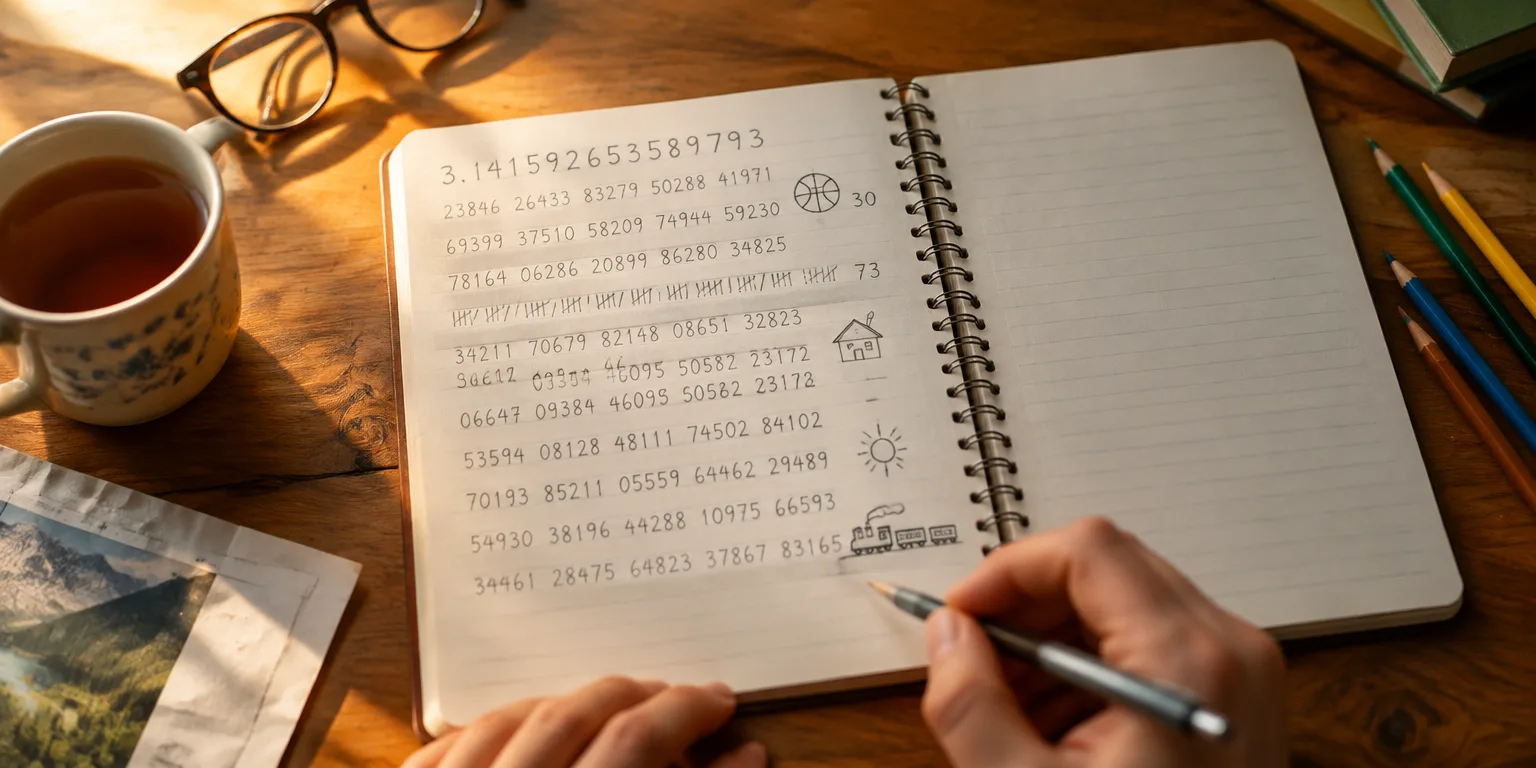
Then Grant Gussman, a man who set out to test how his own mind works, starts in anyway. “3.141592653589793,” he says, and keeps going. “Three eight four four six,” on and on, until he has recited 200 digits without stopping.
Gussman started with a much smaller goal. He had watched a video about two systems of thought, the slow, conscious, effortful system that puzzles things out, and the fast, subconscious, automatic system that just knows. To feel the difference in his own head, he decided to memorize 100 digits of pi, the number that begins 3.14159 and never ends.
What happened next is a plain demonstration of how real skill works, and why it looks like magic from the outside. The point is not that Gussman has a better memory in general, but that he trained his memory for one very specific thing.
Psychologists call the method chunking. Over time, the brain learns patterns from lots of examples and files them in long-term memory, so instead of seeing individual pieces, it sees a smaller number of recognizable groups. Rather than holding five separate digits, Gussman holds one familiar story.
He has a favorite example. The sequence 3-0-1-7-3 means nothing on its own. To him, it means basketball star Steph Curry, who wears number 30, and the 73 wins by Curry’s Golden State Warriors back in 2016, which was a record. Three, oh, one, seven, three becomes Curry and 73 wins, and five digits collapse into one memory.
That is why he could keep going long after 100 digits. By now he knows 23,000 digits, and is getting ready to go after the North American record, turning an endless string of random numbers into a long shelf of stories only he can see.
Questions people ask
How do officials check a 23,000-digit pi recitation?
Record attempts are done in public with witnesses, timed, and checked digit by digit against a computer printout of pi. Any single mistake usually ends the attempt, and breaks are tightly controlled. The North American record is maintained separately from the Guinness world record.
How long does it take to learn that many digits?
It typically takes months to years of daily work, often an hour or more a day. Memorizers add small groups of new digits while constantly reviewing old ones so they do not fade. The total time stretches into the thousands of hours.
Can anyone learn to use chunking?
Yes, and most memory competitors do. They convert numbers into images, dates, people, or events they already know, then link those images into scenes along a familiar route. With practice, the stories become automatic and much faster to recall than raw numbers.