An Investor Used AI to Rebuild a Lost Bulletin Board Game
Acharya says its creator had only a design document and a working program left, after earlier AI models failed to recreate it.
 The a16z Show · The Next Era of Games: Mods, Agents, and Infinite Worlds
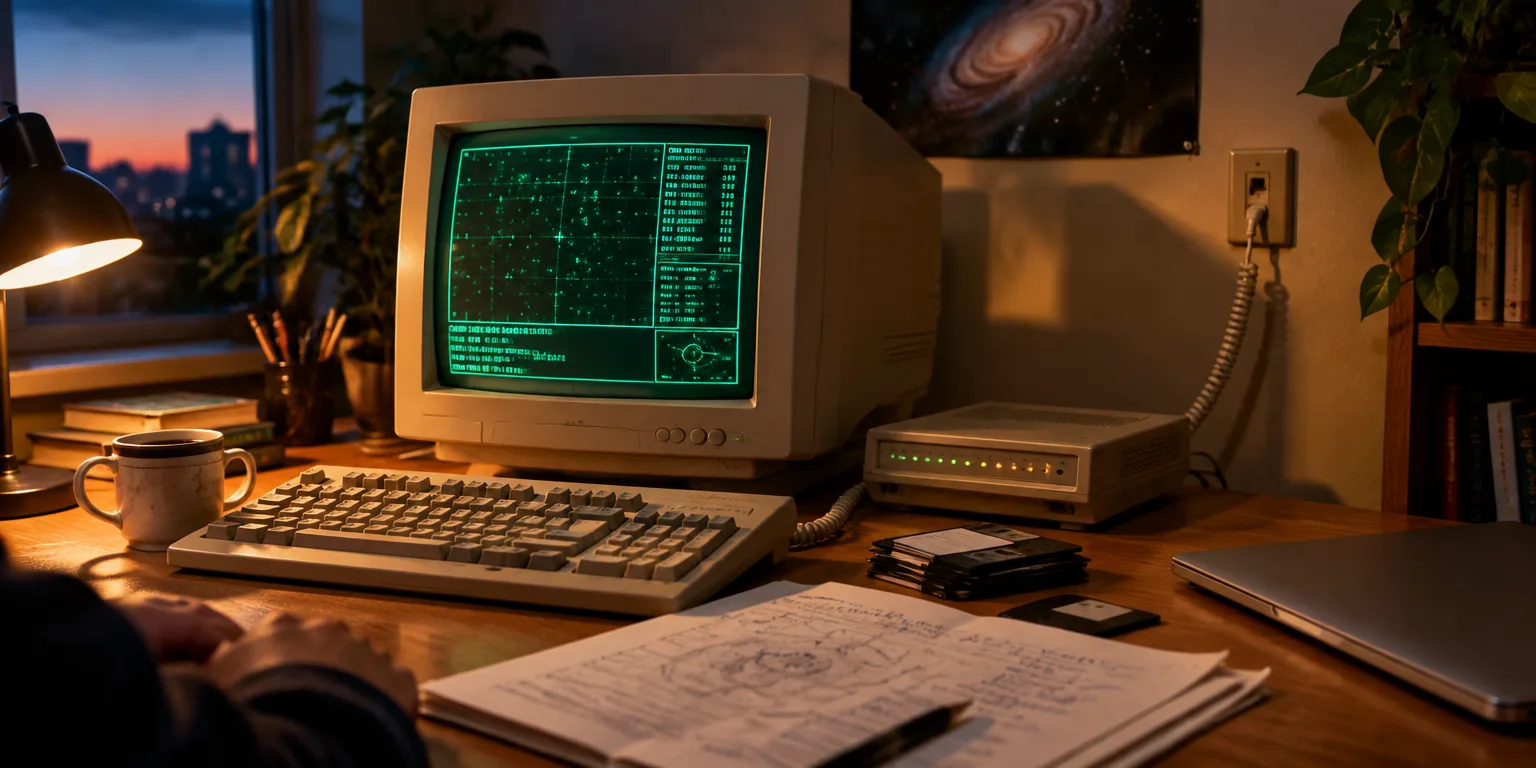
Anish Acharya, a general partner at venture firm Andreessen Horowitz, said he finally had Solar Realms Elite running on his computer again.
It was a small homecoming decades in the making. He had operated his own bulletin board system, a kind of pre internet clubhouse that members reached by dialing in over a phone line.
Because only one person could call in at a time, these systems became famous for asynchronous multiplayer games. A player would connect, take a turn, log off, and call back the next day to see what everyone else had done.
The game had been written by Amit Patel during his time at Stanford. Patel later became one of Google's first staff members, and he also made a companion game called Barren Realms Elite.
Patel had lost the original code behind Solar Realms Elite, the one Acharya rated more highly. What remained was the design document, which describes how the game was supposed to work, and the EXE, the finished program that computers can run but people cannot easily read or change.
Acharya said he tested each new wave of artificial intelligence models as it arrived, asking it to recreate the game. None of them could do it.
Then, Acharya said, a recent model produced a version he judges to be a faithful recreation. What appeared on his machine felt to Acharya like the original.
Questions people ask
Why does losing the source code matter if you still have the working program?
The EXE is the finished, machine readable version of a game. It will run, often only on old hardware or with workarounds, but it is very hard to read, fix, or update. The source code is the human readable original, and without it developers cannot easily repair bugs, add features, or move the game to modern computers.
What was it actually like to play a bulletin board game?
You dialed a specific computer with a modem, often hearing busy signals because only one caller got through at a time. Once connected, you might read messages, leave notes, and take turns in simple strategy, trading, and combat games. Your moves waited on the host computer until the next players dialed in.
Can this approach save other lost games?
Sometimes, especially when a design document, manual, or playable copy survives. The result depends on how complete those materials are and how complex the original was. Even a good recreation may differ in timing, balance, and hidden rules unless it can be carefully checked against the original.