Heat from a data center warms offices and melts snow
Cooling the computers provides heating, hot water, and clear walkways, with little energy and no extra water.
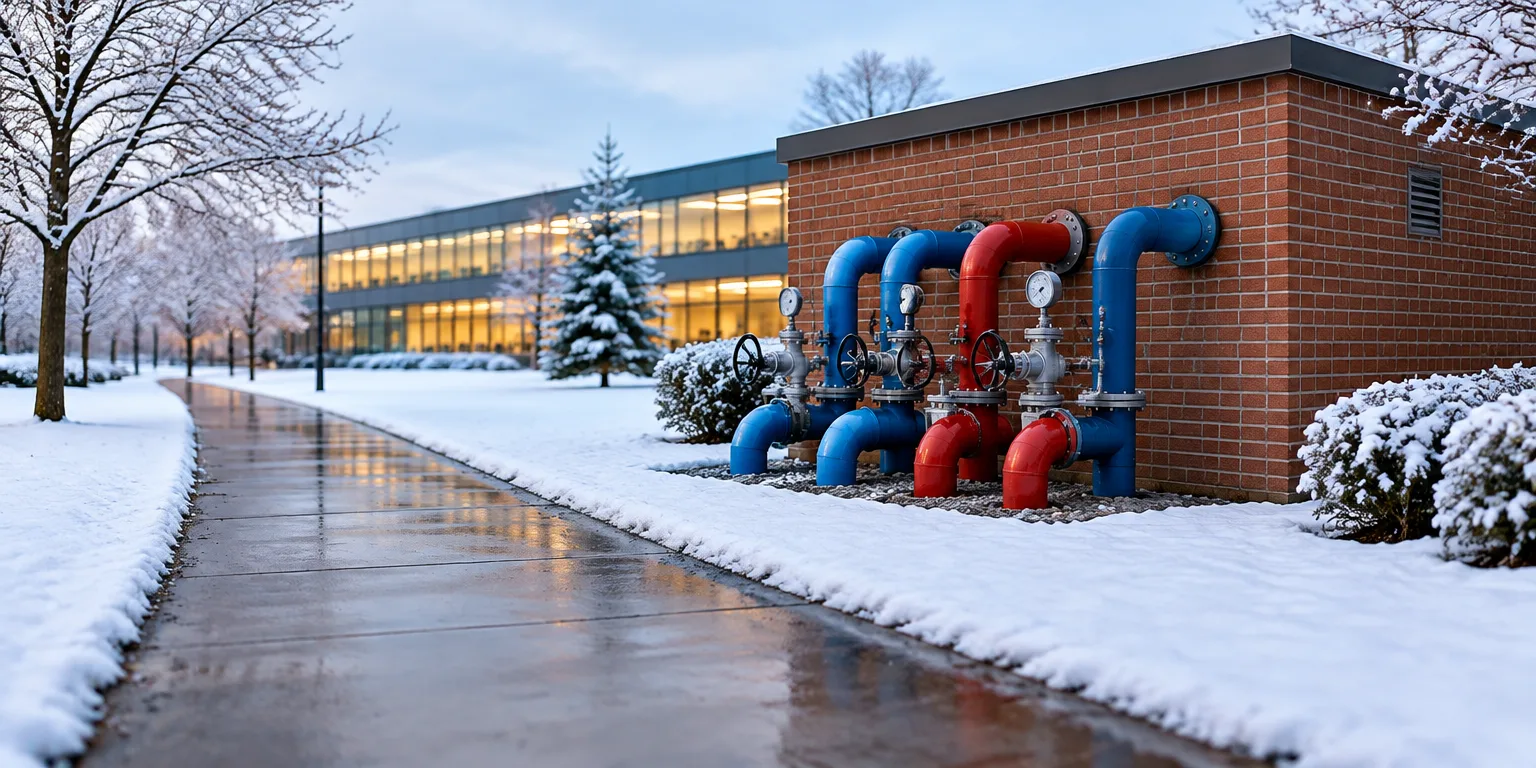
 Inside Climate News · One of the World’s Largest Geothermal Networks Is Buried Beneath a Corporate Campus in Rural Wisconsin
Epic Systems, the medical records software company, keeps its computers cool with a geothermal network, buried pipes of water that move heat into and out of the ground. The network pulls heat from the company's data center to cool the equipment.
Most of the captured heat is put to use warming office spaces, supplying hot water to some dining facilities, and melting snow from sidewalks. Reusing the heat in this way cuts both the energy and water that cooling would otherwise require.
Excess heat that cannot be reused is shed when needed through extra loops of pipe laid under the water in a flooded quarry and a stormwater pond. Shedding heat that way needs only a small amount of energy and no added water.
Questions people ask
Why does a data center get so hot in the first place?
Servers use large amounts of electricity to process and store information, and almost all of that electricity turns into heat. Packed closely together in racks, thousands of servers can feel like giant space heaters. Without constant cooling, they would overheat, slow down, or fail.
How does a geothermal system move heat around?
It circulates water through buried pipes, where the ground stays at a fairly steady temperature year-round. In summer, the water picks up extra heat from buildings and carries it underground. In winter, the process reverses, and stored warmth is brought back up to heat buildings.
How do most data centers get rid of heat?
Most use air conditioners, cooling towers, or evaporative systems that consume large amounts of electricity and often millions of gallons of water. That is why reusing the heat, rather than just venting it, can cut both energy and water use.