Herodotus Called a Buried Egyptian Labyrinth Grander Than the Pyramids
Joe Rogan said in a podcast conversation that the Hawara site flooded after a 1960s dam and cited scans he could not fully source.
 The Joe Rogan Experience · #2560 - David Grusch
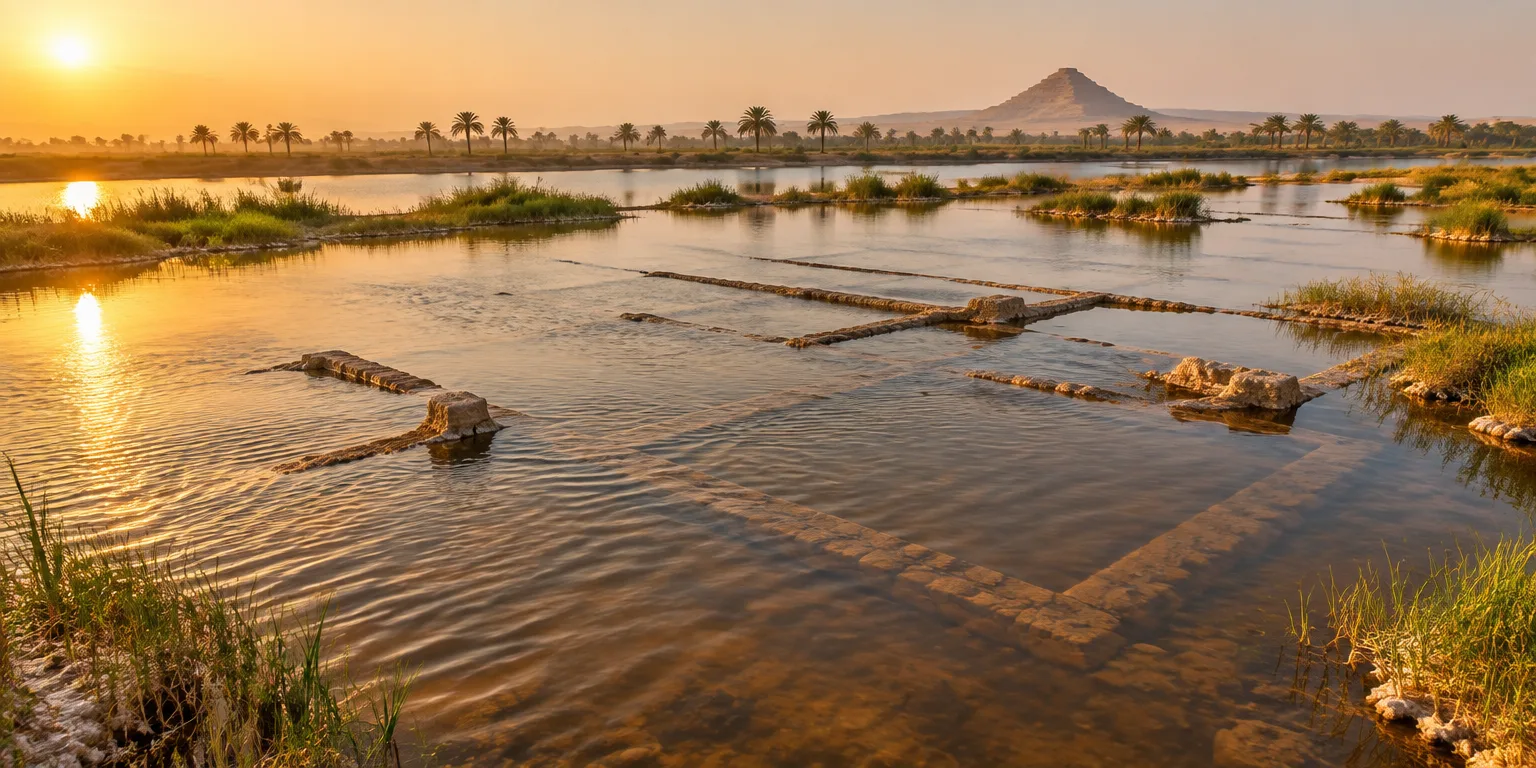
The Greek historian Herodotus described an underground compound at Hawara in Egypt as greater and more spectacular than the pyramids at Giza. Joe Rogan repeated that description and said people had studied the upper levels as recently as the 1800s. Rogan said a dam built in the 1960s to divert water for agriculture changed the water table and flooded the area.
Rogan said underground scans show symmetrical rooms and cavities below. He named no research team or study and described the method uncertainly as ground-penetrating radar and possibly radio tomography.
His guest, former intelligence official David Grusch, said he had seen videos about the site online. Rogan wondered whether one large room holds an object about 40 meters long that appears metallic and is of unknown origin. Rogan asked whether the setting was an atrium, said it did not register as copper, steel, or iron, and read a passage that called it hard to classify and likened its shape to mints, a disc, or an Egyptian eternity symbol. Rogan presented the idea as speculation about what it might be.
Questions people ask
Where is Hawara?
Hawara is an archaeological site south of Cairo, near the Faiyum Oasis, known for a pyramid built for the pharaoh Amenemhat III. Ancient writers described a vast temple complex beside it, but much of that complex is now buried, damaged, or waterlogged.
How does ground-penetrating radar work?
It sends radar pulses into the ground and records echoes from buried walls, voids, and dense objects. Differences in timing and strength let researchers map shapes without digging, though water and soil conditions can limit what it reveals.
What is the Egyptian eternity symbol mentioned in the discussion?
A shen ring is a circle with a small bar beneath it, used in ancient Egyptian art to represent eternity and protection. Gods and kings are often shown holding it to signify rule over endless time.