Hollywood Agents Gave Up Fees for a Share of Future Reruns
By giving up a one-time commission, agencies turned hit shows into income that could last for generations.
 Founders · #436 Ari Emanuel's Autobiography
The smartest deal in Hollywood was to stop taking a cut.
A normal talent agent negotiates one job for one client and collects 10 percent of the pay, once. A packaging deal works the other way. The agency assembles several of its own clients, for example an actor, a director, and a producer, and offers that ready-made group to a network buying a new show. The network gets a complete show in one purchase, with less haggling over separate hires. The agency gives up the upfront commissions. In exchange, it keeps a tiny percentage each time the show airs.
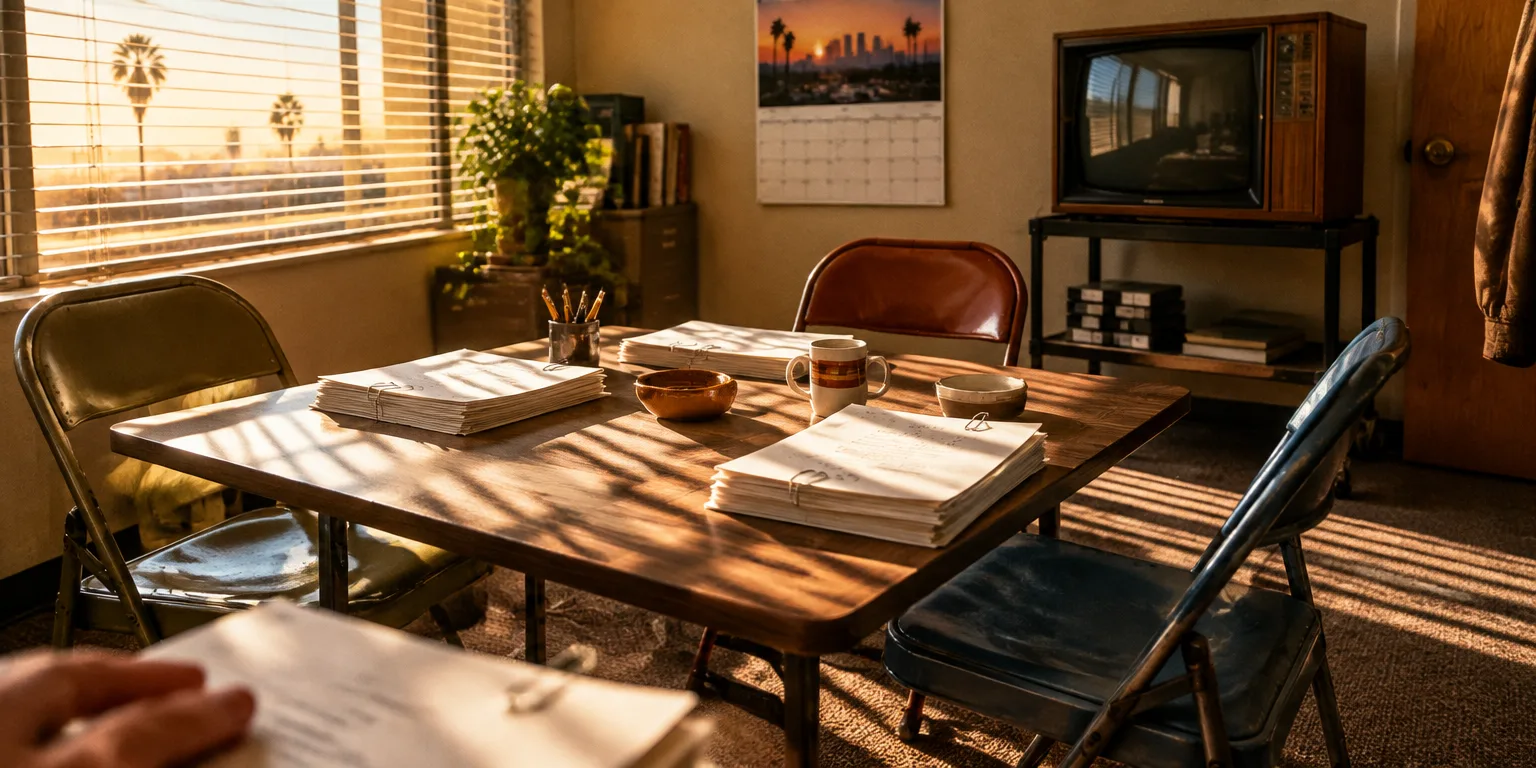
The trick grew out of weakness. When Michael Ovitz broke away from the William Morris agency with co-founders Ronnie Meyer and Bill Haber to start Creative Artists Agency, the new firm had no stars and no money. The three men crowded into a single cramped room with temporary seating, and the only clients they could sign were TV writers and actors, then looked down on by the movie business. Rivals mocked them as the TV boys.
They turned the insult into an engine. TV, with its many new shows each season and its endless reruns, was the ideal place to package. Ari Emanuel, who started as Haber's assistant before he became an agent, learned the business by meeting every writer, actor, and director he could to understand who the players were and what the rules were.
If a packaged show flopped, the agency earned little. If it became a hit that aired for years, the agency earned what Emanuel called "a steady drip of dollars." If it became a classic repeated for generations, that drip became what he called "a river of cash" that could flow for the rest of the agents' lives. In Emanuel's telling, packaging was older than Ovitz, but Ovitz expanded it and made it far more lucrative.
Packaging fees in TV have mostly disappeared. After a fight that began in 2019, television writers argued the practice favored agencies over clients, and the major agencies agreed to phase out packaging fees.
Questions people ask
Why would a TV network agree to a packaging deal?
Convenience and certainty. Instead of negotiating separately with a writer, a star, and a director, the network gets a complete show in one purchase. In recent years, writers have argued the practice favored agencies over their own clients, which led to a major legal fight and a retreat from packaging.
What was Creative Artists Agency?
Creative Artists Agency, known as CAA, is a large Hollywood talent agency founded in 1975 by Ovitz, Meyer, Haber, and two other agents who left William Morris. It grew from that one room startup into one of the most powerful agencies in entertainment, representing movie stars, directors, athletes, and others.
Do agents still get paid this way?
Largely no, at least not in TV packaging. After a dispute with the Writers Guild of America that began in 2019, the major agencies agreed to phase out packaging fees. Agencies now often act as producers or owners instead, which is a different way of chasing that same long lasting income.