Houses Cannot Chase Cheap Labor the Way Shirts and Sneakers Can
Garments, sneakers, ships, and toys all got cheaper by moving production, but a house must be built where it will stand.
 Construction Physics · Can We Lower Construction Costs with Cheaper Labor or Materials?
A long-standing way to lower labor costs is to move the work to where workers earn less. Clothing makers have done it for more than a century. In 1890, New York City accounted for 44 percent of American factory-made clothing. By the 1920s, the industry began migrating, first to the outer boroughs and nearby New Jersey. From there it shifted to New England, and once highways spread, to the Southern states and eventually abroad.
Nike, the footwear company, followed the same playbook. It began importing shoes from Japan in the 1960s and manufacturing its own shoes there in the 1970s. As Japanese wages rose, production moved to Taiwan and Korea, then to China, then to Vietnam and Indonesia. Shipbuilding moved from Britain to Japan to South Korea to China, and toy making moved from the United States to Japan to Hong Kong to China.
A house cannot follow that path because conventional construction happens on the building site. It cannot be relocated to a low wage city or country.
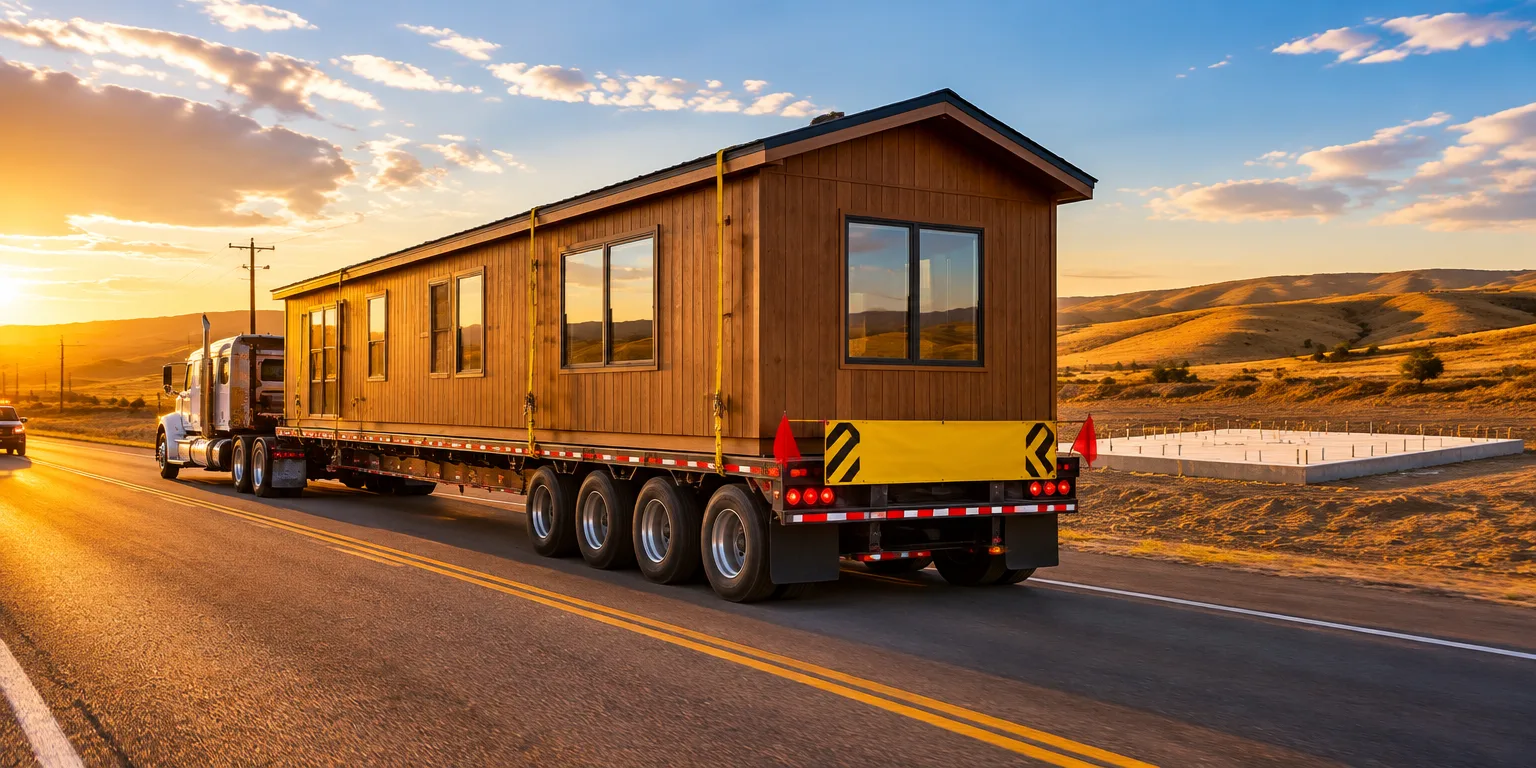
The workaround is to build parts of the house in a factory, a method called prefabrication, and then truck them to the site. But whole rooms and wall panels are bulky and costly to move. Many producers of manufactured homes stay within about 500 miles, roughly what a truck can cover in a day.
Some builders stretch that limit to chase wage differences. Using an industry cost index for installation work as a stand-in for construction wages, there is roughly a two to one difference between a 10th percentile city and a 90th percentile city. Autovol, a modular builder, assembles housing units in Nampa, Idaho, and trucks them long distances to Los Angeles and the San Francisco Bay Area, where site labor is far more expensive. Stack Modular goes further, making modules in China and sending them by bulk carrier to projects on the West Coast.
Volumetric Building Companies, another modular builder, says modular works best when the wage gap between factory and site is large, but the extra factory and shipping costs dull the benefit, leaving savings of 5 to 10 percent when they appear at all, and often no savings. Autovol says it beats conventional costs in high cost California markets. Stack makes no such claim, promising only more predictable costs and a faster schedule.
Because houses must be built where they stand, builders cannot simply move to cheaper labor. That constraint may help explain why construction and farming, which likewise must work where the land is, employ the highest proportions of undocumented labor, presumably lower cost labor.
Questions people ask
Why is it so expensive to ship a prefabricated house part?
A finished room or wall panel takes up a lot of space for its weight, so a truck can carry only one or two, and wide loads often need permits and escorts. Long trips also risk damage that must be fixed on site, which eats into any labor savings. That is why many factories try to stay within about a day's drive.
Could factories just use robots instead of cheap labor?
In principle, yes, and some modular and panel plants use automated saws, nail bridges, and handling equipment. But housing volumes are low and designs vary by project, so it is hard to keep expensive machines busy enough to pay for themselves. Automakers solved that problem by making millions of nearly identical cars.
If Idaho labor is so much cheaper, why doesn't all California housing get built there?
Some of it does, in the form of modules trucked from places like Nampa to Los Angeles. But the shipping bill, plus the cost of running the factory and setting the boxes with a crane, offsets much of the wage gap. Separately, approvals and site work still have to happen in California.