How a Free Taxi License Became an $80,000 Annual Rent Check
What began as a free permit for anyone became, after three rounds of lobbying, a fixed supply asset that paid its owner twice what each driver paid.
 David Senra · Travis Kalanick, Founder of Uber & Atoms
In New York, the taxi permit that made owners rich started as a free piece of paper anyone could get. That is how Travis Kalanick, the founder of Uber, tells the history, and the mechanics he describes explain how a license became rent.
In the early 1900s, drivers simply picked up people who needed to get from one part of town to another and charged them for it. The city decided the business should be licensed and controlled, with rules of the road. Anyone could get a taxi license, and it was free, after basic checks like making sure the applicant was not a felon. About 13,000 drivers got one.
Then the holders changed the rules. In the 1920s and 1930s, Kalanick says, they lobbied City Hall to issue no more licenses. As the city kept growing, demand for rides grew but the number of legal taxis did not. The same drivers who once competed for fares now held a fixed supply.
Next they lobbied for the right to sell that license, which became known as the medallion. Scarcity plus almost no competition meant the medallion carried an artificially high cash flow, and it could be sold to someone who wanted that income.
Finally they won the right to lease the license by the day or week. That created the math Kalanick cites from when Uber arrived in New York. A cab could run in two 12-hour shifts, and each driver paid about $40,000 a year to rent the car for half the day, seven days a week. The owner, whose grandfather may have gotten the license for free, collected about $80,000 a year from renting out one car, while the driver who paid for the privilege stayed poor.
Kalanick calls the result a government approved cartel that outlaws competition, where regulators and taxi owners are almost indistinguishable.
Questions people ask
What is a medallion, actually?
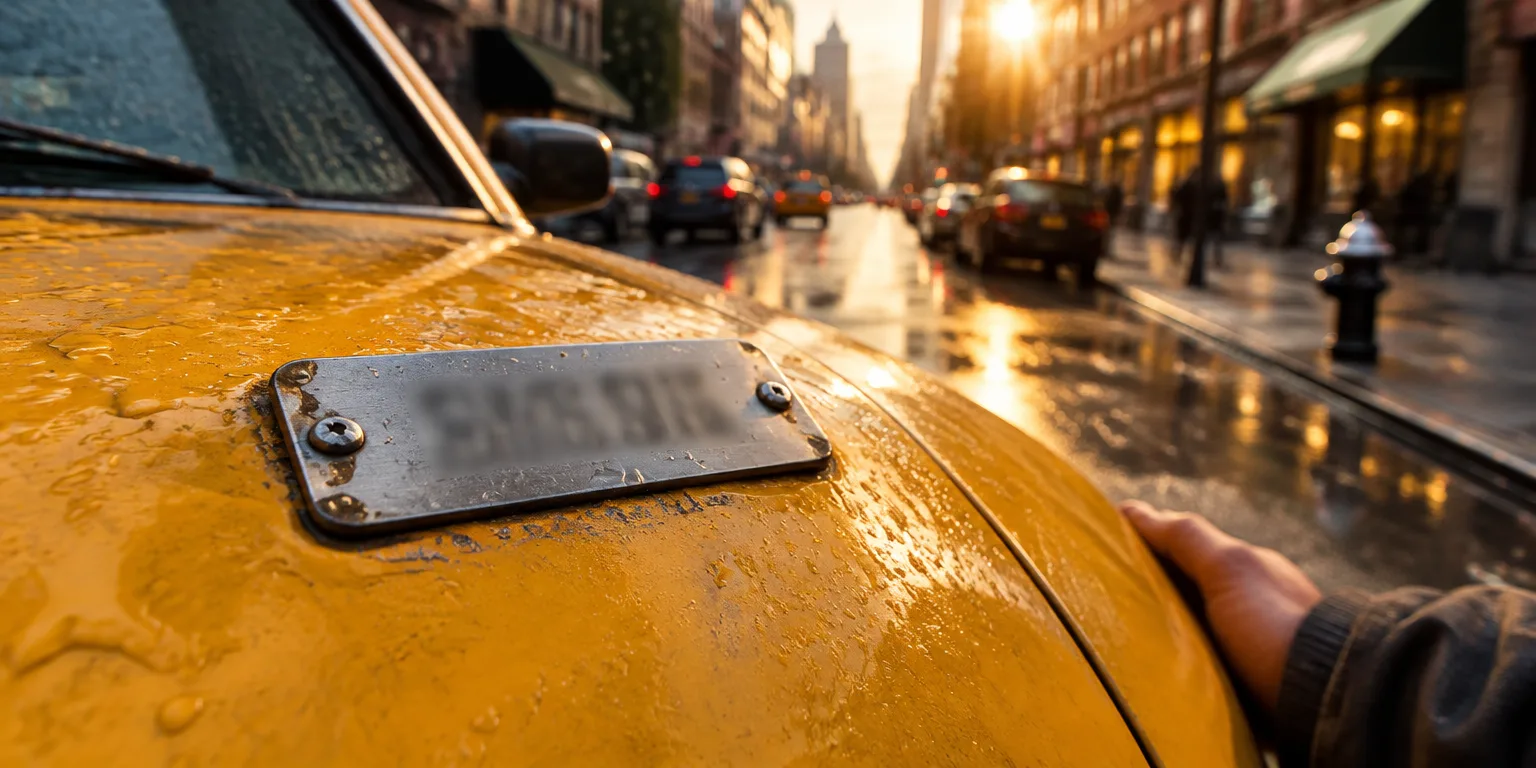
It is a small metal plate fixed to the hood of the cab, plus the legal right it represents to pick up street hails. Without a medallion on the car, a driver cannot legally pick up a passenger who waves down a taxi.
How much was a medallion worth?
At the peak in 2013 and 2014, individual New York medallions sold for more than $1 million. Prices later collapsed to a fraction of that after app based ride services expanded supply and after many owners defaulted on loans.
Why couldn't a driver just drive without one?
Driving people for money without a license was illegal and could lead to fines and impoundment. The cap on licenses is what gave the medallion its rental value, because legal supply could not grow with the city.