How cheap row houses turned into huge loans, then foreclosures
Bankruptcy records show landlords who could fill only a third of their homes kept buying at double or triple the old price.
 Planet Money · The loan at the heart of a new foreclosure crisis
The clue was in the bankruptcy file. One landlord's companies admitted they had been able to fill only about a third of their Baltimore houses with tenants, yet they kept buying more.
Reporters Jack Bologna and Hallie Miller, who cover Baltimore for the Banner, found a second clue in the prices. The buyers were spending roughly two to three times the prior sale price from only a few years before for the same row houses, with no sign of renovation to explain the jump.
Their theory, which they stress is only a theory, is a two person mortgage scheme built for a loan with no limit.
Step one is buying cheap. One person picks up a row house for very little in a distressed neighborhood.
Step two is selling high to a friend. The first buyer resells that same house to a close associate at a price far above what it is worth.
Step three is papering the price. An appraiser says the house is worth the inflated amount, giving the lender a justification for a large loan.
Step four is borrowing big. The friend uses that inflated valuation to apply for a DSCR loan, a landlord mortgage that does not cap how many homes one borrower can finance. The loan amount is based on the fake price, not the original cheap price, so the extra cash can be pocketed.
Step five is repetition, then disappearance. Done hundreds of times, the borrowing can reach tens of millions of dollars. Eventually one person is loaded with debt, stops paying, and the houses go into foreclosure.
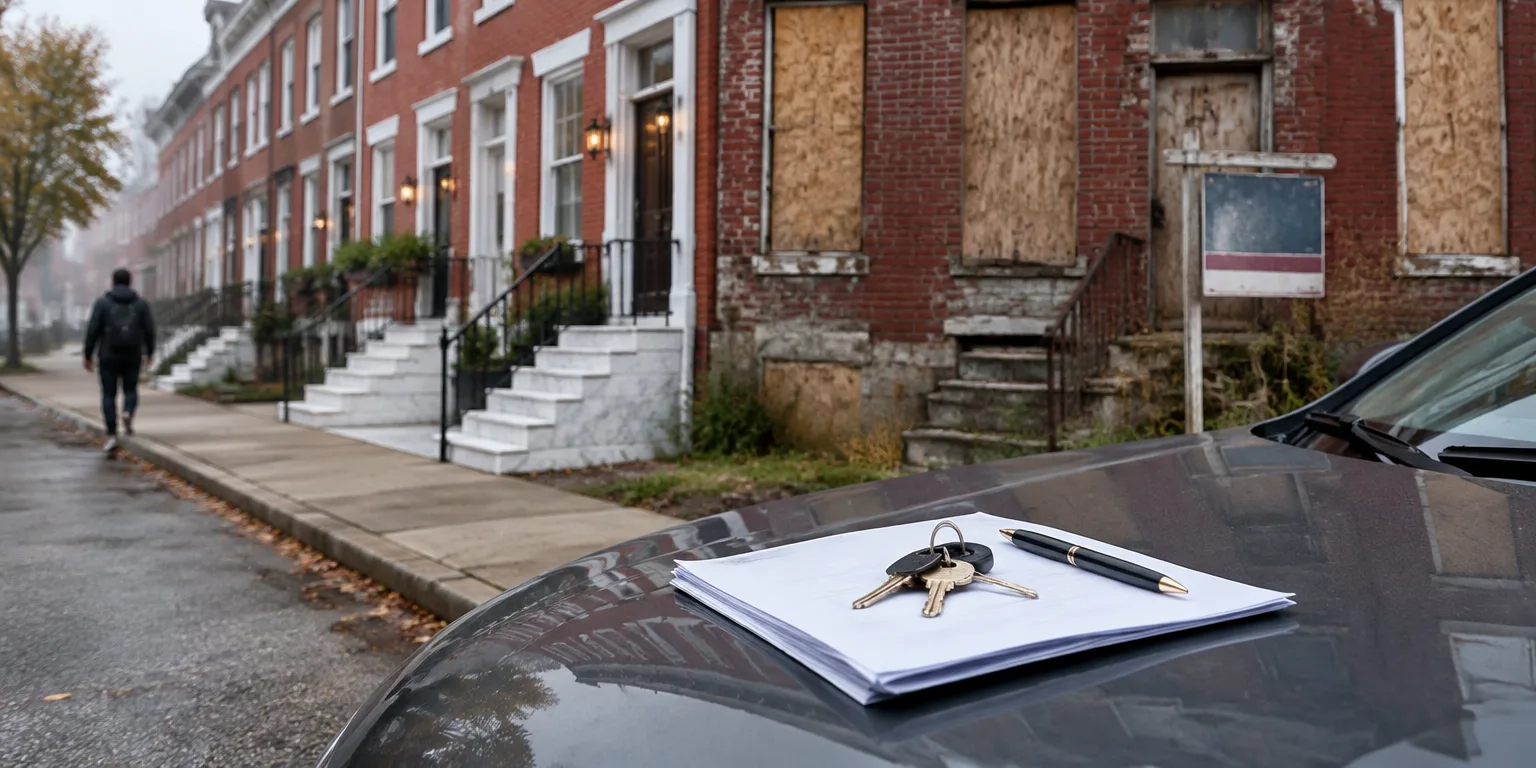
Baltimore is a place where cared for streets sit near streets filled with vacant and abandoned homes. To private lenders who do not know the city and are trying to close quickly, they can look alike.
The reporters say it is also possible the landlords made a sincere effort but simply got in over their heads. Eliezer Gold, whose LLCs bought more than 500 homes, and Benjamin Idles, who sold more than 100 homes to Gold according to property records, would not comment. Federal agents have started a probe, private lenders have blacklisted their names, and the case raises a larger question. Maybe DSCR loans are too simple to obtain, since lenders depend on valuation reports that at times can amount to one person's guess about future rent.
Questions people ask
What is a DSCR loan?
DSCR stands for debt service coverage ratio. It is a mortgage for landlords that is judged mainly on whether the property's rent is expected to cover the loan payment, not on the borrower's pay stubs or tax returns. That makes it faster to get, and there is generally no limit on how many a single investor can hold.
Who loses money if the appraisal was inflated?
The lender does first, and then whoever bought the loan. Many of these mortgages are bundled into bonds and sold to pension funds, insurers, and other investors. When the borrower stops paying and the house sells for far less in foreclosure, those investors absorb the loss.
Is this kind of price inflation illegal?
Lying to a lender to get a mortgage can be bank fraud or wire fraud under federal law, which is why the FBI investigates such cases. An overpayment alone is not a crime, so prosecutors would need to prove false statements, such as a rigged appraisal or hidden relationship between buyer and seller.