How the Clippers turned arena vendors into a secret payroll
The team offered arena contracts to companies that paid Kawhi Leonard, then dictated what they should pay him.
 Pablo Torre Finds Out · Clippers Judgment Day, the NBA's Hammer and the Investigation That Never Ends: Kawhi-Gate, Part XV
The strangest endorsement in basketball was for a company that makes giant video boards. There was no reason for Kawhi Leonard, a basketball star, to pitch scoreboards, and that was exactly the point.
A salary cap sets a league limit on what a team can pay its players directly. But a team building a new arena has something else valuable to offer: construction and service contracts worth tens or hundreds of millions of dollars.
The investigators were lawyers at the firm Wachtell, Lipton, Rosen and Katz, hired by the NBA to examine the Los Angeles Clippers. In their report, they concluded the Clippers turned that spending into a secret payroll.
The formula, in the report's words, was: "we will do business with you if you do business with Kawhi." Gillian Zucker, the Clippers president of business operations, introduced Leonard to companies that wanted Clippers work. The team helped develop and communicate the endorsement terms itself, and then steered team business to the companies that agreed. The report names four such companies: Aspiration, Boingo Wireless, Daktronics, and Lockton Insurance.
The money moved in a circle the report was able to trace. In early June 2020, Boingo, Daktronics, and Lockton had yet to sign deals to work with the Clippers, though all three were in talks to provide services for the team or its new arena. Within weeks of being introduced to Leonard, each signed a multimillion dollar advisory contract with the team.
Two of them got nearly all the money in advance, $10 million each, before they signed endorsement deals with Leonard. The third got its first $2 million advisory fee the day after it first paid Leonard. A person with firsthand knowledge told the investigators that one advisory deal was a sham, a way for the team to supply a company with cash to pass to Leonard, accepted on the promise of a much larger services contract to come.
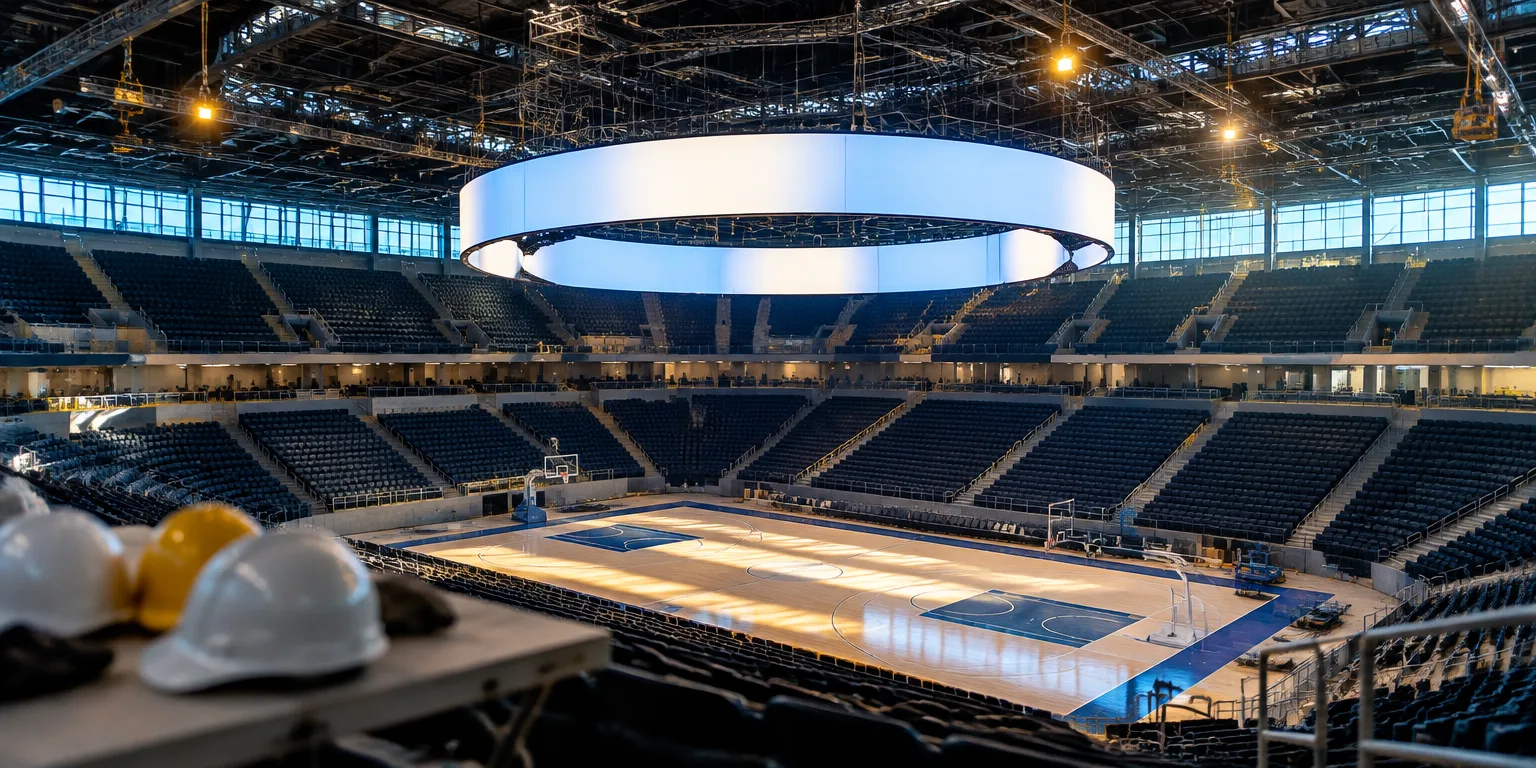
Daktronics made the exchange easiest to see. The South Dakota company builds video boards, including the halo shaped scoreboard planned for the Clippers new home, Intuit Dome. Daktronics believed that failing to sign Leonard could jeopardize its bid for that scoreboard job, which was worth about $100 million.
A senior Clippers executive told Daktronics exactly what to pay Leonard, $3 million per year for two years. Then, in February 2021, after the team decided to spend more on the scoreboard, the team told Daktronics it should pay Leonard $2 million more. After negotiation, Daktronics agreed to raise its second year payment by that amount in an amendment signed in May 2021 that called for additional services from Leonard. Wachtell wrote that the push for the extra payment "originated entirely from the Clippers."
In the report's reading, that is how a vendor becomes a middleman. The team pays the vendor for consulting, the vendor pays the player for endorsing, and the player gets millions that, in the investigators' conclusion, never counted against the cap.
Questions people ask
What is salary-cap circumvention?
It is any secret arrangement that pays a player outside his official contract to evade the league's limit on team payrolls. The cap is meant to keep rich teams from simply outspending everyone else for talent, so extra cash, unreimbursed perks, or third-party payments arranged by the team all count as violations.
Why would a company agree to pay a player to win team business?
Because the team contract can be worth far more than the endorsement. A scoreboard, wireless network, or insurance deal for a new $2 billion arena can sustain a company for years, so a few million dollars to a star can look like a cost of winning the bid. That leverage is what made the threat of losing the business so powerful.
What does Daktronics actually do?
Daktronics, based in Brookings, South Dakota, designs and builds large video displays and scoreboards for stadiums, arenas, and public spaces. Its best-known NBA work includes the huge center-hung displays that show replays, ads, and scores. The Clippers halo board at Intuit Dome is one of its largest projects.