Human Babies Are Born Helpless Because Pregnancy Would Need to Last Two Years
For some skills, becoming expert can take until around age 30.
 Modern Wisdom · How War Shaped Human Evolution - David Geary - #1172
A human baby arrives unfinished. To be born with a brain as mature as a newborn chimpanzee's, it would have to stay in the womb for almost two years.
The reason is bigger brains. As early humans got better at making tools, hunting, and pulling more food from the land, brains expanded to handle that work.
Bodies did not fully keep up. Delivering a bigger head would require a roomier pelvis, but there are limits to how wide it can get and how large a baby a mother can safely carry and deliver.
So babies are born early, in a sense premature, with much brain growth still to happen outside the womb. That is why they are so dependent on care for so long.
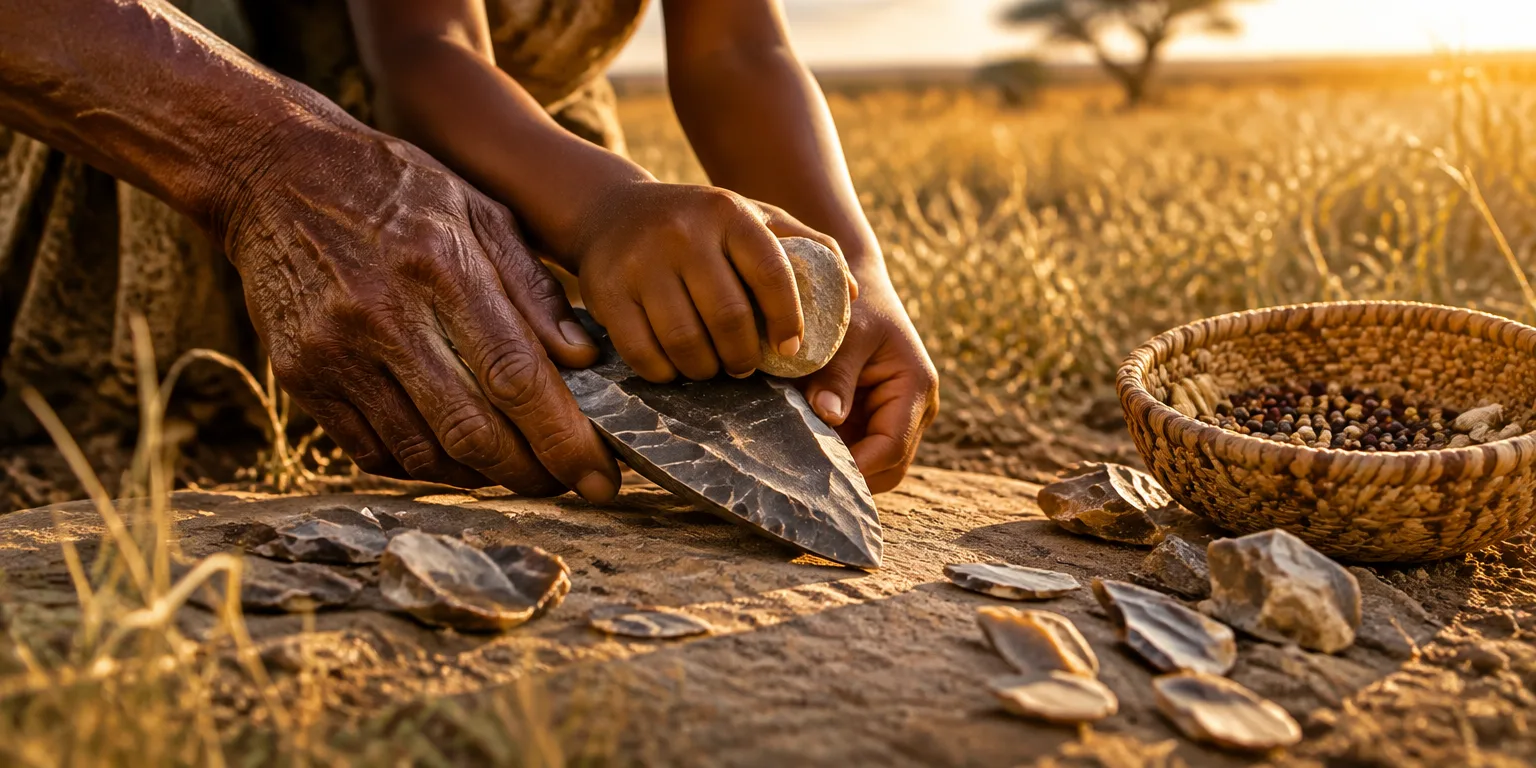
The long childhood is not only about growing a brain. It is about filling it. Children must learn how to make tools, find food, hunt, and succeed in their group's way of life.
Studies of hunter gatherers, people who live largely by hunting wild animals and gathering wild plants, suggest that mastery takes years. For some things, a person may not become an expert until around age 30.
A shorter pregnancy keeps birth possible, and a long childhood gives children time to learn the skills needed to succeed in their group's way of life.
Questions people ask
Why didn't the birth canal just keep getting wider?
A much wider pelvis would make walking and running less efficient and could raise risks for the mother. Evolution settled on a compromise: a pelvis that permits upright movement, plus earlier birth and more care after birth.
Why compare human babies to baby chimpanzees?
Chimpanzees are among our closest living relatives, so they offer a useful comparison for what primate development usually looks like. The gap shows how far humans have shifted toward more brain growth happening after birth.
Does every hunter-gatherer skill really take until 30 to learn?
No, many basic skills come much earlier, and children contribute for years before adulthood. The age of around 30 applies to some things, where success depends on strength, knowledge of animals and land, and judgment built over many seasons.