Hunter-gatherer children had no school and taught themselves
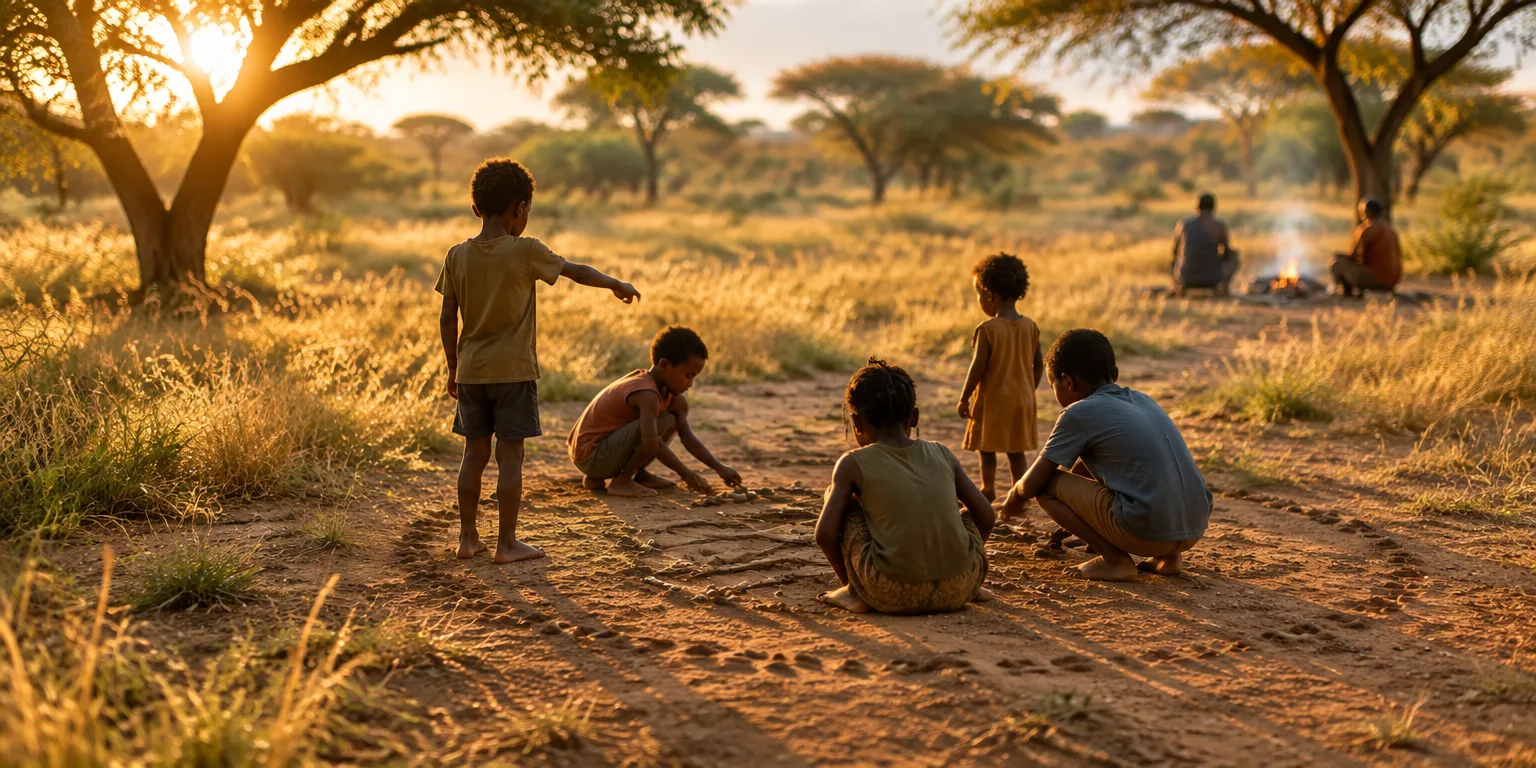
Anthropologists reported that kids spent the day playing and roaming on their own, with nothing like school.
 Passion Struck with John R. Miles · Your Kids Don’t Need More Achievement. They Need More Freedom | Dr. Peter Gray - EP 826
In seven band hunter-gatherer groups studied in the mid-20th century, kids spent the day playing and roaming on their own, with nothing like school.
That is what the anthropologists who lived among them reported, at least. Evolutionary psychologist Peter Gray said he and a graduate student surveyed 10 such anthropologists in the late 1990s, covering seven different groups around the world.
Gray said the big difference for these band hunter-gatherers is that they "are not told what to do." The children, in his words, were "trusted to essentially educate themselves."
Gray says it is through that kind of play, away from adults and with other children, that children learn "to take charge of their own activities." They have to solve problems, get along, negotiate with playmates, and make and enforce rules, lessons he says "apply to all of life."
Questions people ask
What is a band hunter-gatherer?
Band hunter-gatherers lived in small, mobile groups that hunted wild animals and gathered wild plants. The few such groups that survived into modern times, and could be studied by anthropologists in the mid-20th century, lived in Africa, Asia, Australia, and the Americas.
If there is no school, how do children learn what they need to know?
They learn by watching, listening, joining in, and playing. Anthropologists describe children staying near adults, hearing stories and explanations, trying small tasks, and practicing adult activities in play with other children, rather than receiving formal lessons.
Do any children still grow up this way today?
Few do in quite the same way, and most have changed. Modern hunter-gatherer life has been affected by contact with governments, markets, missionaries, and schooling, and many groups no longer live as they once did. Gray's survey describes groups living in a relatively traditional way around the middle of the last century.